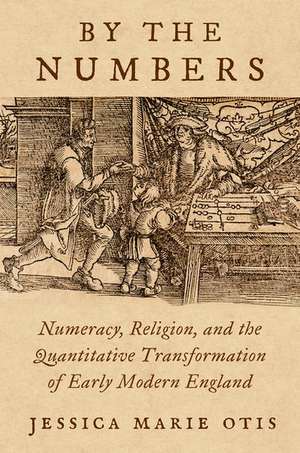
By the Numbers
Autor Jessica Marie Otisen Limba Engleză Paperback – 4 ian 2024
| Toate formatele și edițiile | Preț | Express |
|---|---|---|
| Paperback (1) | 139.49 lei 24-29 zile | +44.41 lei 5-11 zile |
| Oxford University Press – 4 ian 2024 | 139.49 lei 24-29 zile | +44.41 lei 5-11 zile |
| Hardback (1) | 481.51 lei 45-50 zile | |
| Oxford University Press – 4 ian 2024 | 481.51 lei 45-50 zile |
Preț: 139.49 lei
Preț vechi: 167.57 lei
-17%
Puncte Express: 209
Preț estimativ în valută:
24.68€ • 29.10$ • 21.43£
24.68€ • 29.10$ • 21.43£
Carte disponibilă
Livrare economică 05-10 martie
Livrare express 14-20 februarie pentru 54.40 lei
Specificații
ISBN-13: 9780197608784
ISBN-10: 0197608787
Pagini: 280
Ilustrații: 12 black and white halftones
Dimensiuni: 157 x 236 x 20 mm
Greutate: 0.39 kg
Editura: Oxford University Press
Locul publicării:New York, United States
ISBN-10: 0197608787
Pagini: 280
Ilustrații: 12 black and white halftones
Dimensiuni: 157 x 236 x 20 mm
Greutate: 0.39 kg
Editura: Oxford University Press
Locul publicării:New York, United States
Recenzii
Jessica Otis's brilliant study brings to light a hidden subterranean stream that runs beneath the surface reality of early modern England. By revealing the quiet growth and evolution of popular numeracy over the span of two centuries, Otis adds a new dimension to our understanding of every other aspect of this period.
This illuminating study provides a pathbreaking account of the characteristics of early modern numeracy and of the dynamics of change.
This is a remarkable book, much the best introduction to a fascinating subject and at the same time full of interest for the specialist who wants to learn more.
This interesting history...highlights how the transition was initiated to a numerate population and a more data driven society, which we know all too well these days.
This book is an enjoyable read. It is full of interesting information on how people usednumerical information in their daily lives during the early modern period in England. The historical accounts included make for fascinating reading. There are copious notes for each chapter. This book is a welcome and important addition to the history of mathematics literature.
Otis's By the Numbers brings new energy to discussions first opened by the brilliant Eva Germaine Rivington Taylor, E.P. Thompson, Keith Wrightson, and Bill Sherman, and others, across the important intersections of the histories of practice, social history, and the histories of the book. In doing so, she makes an important contribution to this critical yet long under-examined field of early modern British culture.
One of the key points of this excellent book is that numbers were no more a single technology than mills. As Otis carefully shows, the use of numbers was complex, multifaceted, and dynamic, involving a number (so to speak) of techniques; tools; media; and social, cultural, and intellectual commitments.
This illuminating study provides a pathbreaking account of the characteristics of early modern numeracy and of the dynamics of change.
This is a remarkable book, much the best introduction to a fascinating subject and at the same time full of interest for the specialist who wants to learn more.
This interesting history...highlights how the transition was initiated to a numerate population and a more data driven society, which we know all too well these days.
This book is an enjoyable read. It is full of interesting information on how people usednumerical information in their daily lives during the early modern period in England. The historical accounts included make for fascinating reading. There are copious notes for each chapter. This book is a welcome and important addition to the history of mathematics literature.
Otis's By the Numbers brings new energy to discussions first opened by the brilliant Eva Germaine Rivington Taylor, E.P. Thompson, Keith Wrightson, and Bill Sherman, and others, across the important intersections of the histories of practice, social history, and the histories of the book. In doing so, she makes an important contribution to this critical yet long under-examined field of early modern British culture.
One of the key points of this excellent book is that numbers were no more a single technology than mills. As Otis carefully shows, the use of numbers was complex, multifaceted, and dynamic, involving a number (so to speak) of techniques; tools; media; and social, cultural, and intellectual commitments.
Notă biografică
Jessica Marie Otis is Assistant Professor of History and Director of Public Projects at the Roy Rosenzweig Center for History and New Media at George Mason University.