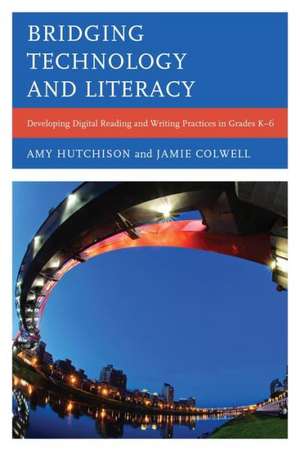
Bridging Technology and Literacy: Developing Digital Reading and Writing Practices in Grades K-6
Autor Amy Hutchison, Jamie Colwellen Limba Engleză Paperback – 18 iun 2015
Preț: 323.08 lei
Preț vechi: 398.75 lei
-19%
Puncte Express: 485
Carte tipărită la comandă
Livrare economică 08-22 decembrie
Livrare prin curier în România Termenul estimat este afișat lângă disponibilitate.
Transport gratuit de la 400.00 lei Plată online sau ramburs, în funcție de opțiunile comenzii.
Retur gratuit în 14 zile Comandă securizată și suport în română.
Specificații
ISBN-13: 9781442234956
ISBN-10: 1442234954
Pagini: 208
Dimensiuni: 154 x 227 x 16 mm
Greutate: 0.4 kg
Editura: Bloomsbury Publishing
Colecția Rowman & Littlefield
Locul publicării:New York, United States
ISBN-10: 1442234954
Pagini: 208
Dimensiuni: 154 x 227 x 16 mm
Greutate: 0.4 kg
Editura: Bloomsbury Publishing
Colecția Rowman & Littlefield
Locul publicării:New York, United States
Cuprins
Chapter 1- Digital Technology in the Literacy Classroom
Chapter 2- Planning for Digital Instruction
Chapter 3- Digital Reading In the Classroom
Chapter 4- Using Digital Images in the Classroom
Chapter 5- Using Digital Audio Tools in the Classroom
Chapter 6- Using Digital Graphic Organizer Tools in the Classroom
Chapter 7- Digital Writing
Chapter 8- Reading and Writing Multimodal Text
Chapter 9- Social Media and Collaboration in the Classroom
Chapter 10- The Flipped Classroom
Chapter 11- Managing the Digital Classroom
Chapter 12- Issues Relevant to Using Digital Tools in the K-6 Classroom
Chapter 2- Planning for Digital Instruction
Chapter 3- Digital Reading In the Classroom
Chapter 4- Using Digital Images in the Classroom
Chapter 5- Using Digital Audio Tools in the Classroom
Chapter 6- Using Digital Graphic Organizer Tools in the Classroom
Chapter 7- Digital Writing
Chapter 8- Reading and Writing Multimodal Text
Chapter 9- Social Media and Collaboration in the Classroom
Chapter 10- The Flipped Classroom
Chapter 11- Managing the Digital Classroom
Chapter 12- Issues Relevant to Using Digital Tools in the K-6 Classroom
Recenzii
Bridging Technology and Literacy blends a focus on teaching and learning with a rich collection of instructional practices for integrating technology. The clear descriptions and a wealth of practical activities and examples put directly into the hands of readers will help to ease the transition into the digital literacy skills so important in today's classrooms. The authors' experiences with both classroom activities and conducting research in the field work together to help teachers visualize and understand the integral connection between reading and writing, whether with print or digital texts. I especially appreciate the attention these authors have given to describing the constraints in the classroom that might put up speed bumps to technology integration. Let's talk about these issues and work through them together, rather than assuming everything will always run smoothly, or the opposite, that nothing will work correctly. Bridging Technology and Literacy arms teachers with the tips of the trade that will support their technology integration.
Bridging Technology and Literacy invites teachers and schools to reconsider the role of digital technology in today's literacy instruction, explores the complexities of digital literacies, and offers practical examples of how to teach these literacies to young learners. Teachers will find in this book application possibilities for both mobile and traditional technology platforms to engage students in digital reading and writing practices in their classrooms.
Bridging Technology and Literacy invites teachers and schools to reconsider the role of digital technology in today's literacy instruction, explores the complexities of digital literacies, and offers practical examples of how to teach these literacies to young learners. Teachers will find in this book application possibilities for both mobile and traditional technology platforms to engage students in digital reading and writing practices in their classrooms.