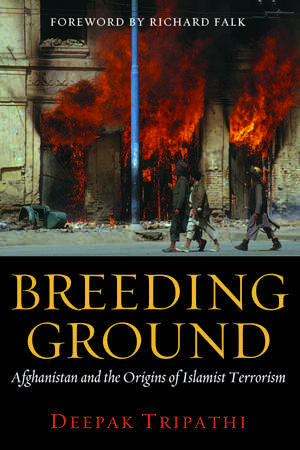
Breeding Ground: Afghanistan and the Origins of Islamist Terrorism
Autor Deepak Tripathi Cuvânt înainte de Richard Falken Limba Engleză Hardback – 2011
Ne-a atras atenția modul în care Breeding Ground utilizează analiza deciziilor politice de culise pentru a explica transformarea Afganistanului dintr-un teatru al Războiului Rece într-un incubator al terorismului global. Suntem de părere că valoarea practică a lucrării rezidă în studiile de caz privind negocierile eșuate dintre Washington, Moscova și Kabul, documentate de Deepak Tripathi din postura de corespondent rezident al BBC în perioada formării biroului din Kabul. Autorul nu se limitează la o cronologie a luptelor, ci investighează mecanismele prin care sprijinul extern pentru facțiunile radicale a creat o „imagine în oglindă” grotescă a intereselor occidentale.
Comparabil cu The Rise of the Taliban in Afghanistan de N. Nojumi în rigurozitatea cu care examinează ascensiunea mișcărilor islamiste, volumul de față este actualizat pentru a include perioada de după 2001, oferind o perspectivă critică asupra strategiei americane până în anul 2010. Credem că această lucrare completează organic opera anterioară a lui Deepak Tripathi, în special Imperial Designs, extinzând analiza sa despre modul în care marile puteri manipulează regiunile volatile. Dacă în The Impact of Wars on World Politics, 1775-2023 autorul urmărește ciclurile istorice de speranță și disperare, în Breeding Ground el aplică această lentilă asupra unui spațiu geografic specific, demonstrând cum intervențiile militare repetate au subminat structura socială afgană. Tonul este unul sobru, axat pe necesitatea reconstrucției interne și a reconcilierii, oferind o alternativă documentată la soluțiile pur militare care au dominat discursul politic al ultimelor decenii.
Preț: 156.73 lei
Carte disponibilă
Livrare economică 06-20 noiembrie
Specificații
ISBN-10: 1597975303
Pagini: 256
Ilustrații: illustrations
Dimensiuni: 152 x 229 x 26 mm
Greutate: 0.51 kg
Editura: Potomac Books Inc
Colecția Potomac Books
Locul publicării:United States
V-ar putea interesa
-
 One Bullet AwayNathaniel C FickPreț: 116.73 lei
 -
 Preț: 161.80 lei
 -
 Preț: 318.16 lei
 -
 Palestine's Horizon: Toward a Just PeaceRichard FalkPreț: 172.12 lei
 -
 British Battle Insignia (1)Mike Chappell-34%Preț: 64.80 lei97.61 lei
 -
 Brassey's Air Combat Reader: Historic Feats and Aviation LegendsPhilip HandlemanPreț: 60.62 lei
 -
 Patton's Photographs: War as He Saw ItKevin HymelPreț: 136.00 lei
 -
 Preț: 310.33 lei
 -
 Preț: 231.10 lei
 -
 Beyond the Killing Fields: War WritingsSydney SchanbergPreț: 234.75 lei
 -
 Global Air PowerJohn Andreas OlsenPreț: 242.62 lei
 -
 King of Poisons: A History of ArsenicJohn ParascandolaPreț: 163.15 lei
 -
 Preț: 250.69 lei
 -
 Cheerful Sacrifice: The Battle of Arras 1917Jonathan NichollsPreț: 115.04 lei
De ce să citești această carte
Pentru studenții de la relații internaționale și istorie contemporană, această carte oferă o analiză factuală a modului în care deciziile politice pot destabiliza o întreagă regiune. Veți câștiga o înțelegere profundă a rădăcinilor terorismului islamist, explicată de un jurnalist care a fost martor la evenimente în Kabul. Este un instrument esențial pentru a înțelege de ce reconstrucția societală este mai eficientă decât forța armată.
Despre autor
Deepak Tripathi, PhD, FRHistS, este un istoric britanic și fost jurnalist de marcă, a cărui carieră la BBC s-a întins pe parcursul a peste două decenii (1974-2000). Experiența sa este direct ancorată în realitățile afgane, fiind cel care a pus bazele biroului BBC în Kabul la începutul anilor '90, perioadă în care a activat ca corespondent rezident. Expertiza sa acoperă zone de conflict majore, inclusiv Siria și Pakistan. Membru al Royal Historical Society, Deepak Tripathi a dedicat o parte importantă a cercetării sale academice impactului intervențiilor străine în Orientul Mijlociu și Asia de Sud.
Descriere scurtă
Explaining how Afghanistan descended into a civil war from which the Taliban emerged, Tripathi explores the ways in which the country ultimately became a grotesque mirror image of the anticommunist alliance of U.S. forces and radical Islamists in the Cold War’s final phase. Calling for a departure from the current pursuit of military strong-arm tactics, he advocates an approach that is centered on development, internal reconciliation, and societal reconstruction in Afghanistan.