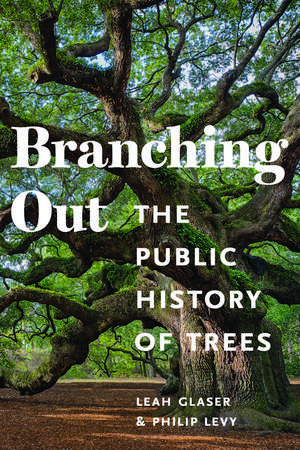
Branching Out
Autor Leah S Glaser, Philip Levyen Limba Engleză Paperback – 28 feb 2025
The fourteen new essays in this volume explore the many ways that trees are an integral part of public history practice and sites. The authors draw on a range of approaches and historiographies to look at how memories of race-based hate, patriotic stories, community identities, and changed places have all centered on trees. In addition to contributions from the volume editors, this collection features scholarship by Sonja Dümpelmann Andrew Hurley, Carolyn M. Barske Crawford, Brian Dempsey, Liz Sargent, Sasha Coles, Mariaelena DiBenigno, Evan Haefeli, Krista McCracken, Alena Pirok, Christian Kosmas Mayer Alaina Scapicchio, and David Glassberg.
Preț: 254.79 lei
Nou
Puncte Express: 382
Preț estimativ în valută:
45.09€ • 52.87$ • 39.60£
45.09€ • 52.87$ • 39.60£
Carte disponibilă
Livrare economică 22 ianuarie-05 februarie
Preluare comenzi: 021 569.72.76
Specificații
ISBN-13: 9781625348326
ISBN-10: 1625348320
Pagini: 360
Ilustrații: 12 illus.
Dimensiuni: 150 x 226 x 28 mm
Greutate: 0.48 kg
Editura: University of Massachusetts Press
ISBN-10: 1625348320
Pagini: 360
Ilustrații: 12 illus.
Dimensiuni: 150 x 226 x 28 mm
Greutate: 0.48 kg
Editura: University of Massachusetts Press
Notă biografică
Leah S. Glaser is professor of history at Central Connecticut State University. Her books include Interpreting Energy at Museums and Historic Sites and Electrifying the Rural American West: Stories of Power, People, and Place, and her work has appeared in numerous journals, including The Public Historian and Western Historical Quarterly.
Philip Levy is professor of history at University of South Florida and an OAH Distinguished Lecturer. His books include Yard Birds: The Lives and Times of America’s Urban Chickens and The Permanent Resident: Explorations and Excavations of the Life of George Washington, which won the 2024 James Deetz Book Award. His work has appeared in numerous journals, including William and Mary Quarterly, The Virginia Magazine of History and Biography, Northeastern Historical Archaeology, and The Florida Historical Quarterly.
Philip Levy is professor of history at University of South Florida and an OAH Distinguished Lecturer. His books include Yard Birds: The Lives and Times of America’s Urban Chickens and The Permanent Resident: Explorations and Excavations of the Life of George Washington, which won the 2024 James Deetz Book Award. His work has appeared in numerous journals, including William and Mary Quarterly, The Virginia Magazine of History and Biography, Northeastern Historical Archaeology, and The Florida Historical Quarterly.
Cuprins
List of Illustrations
Foreword: Tree Time
Sonja Dümpelmann, Rachel Carson Center for Environment and Society,
Ludwig Maximilian University of Munich, Germany
Acknowledgments
Introduction: Finding the Forest through the Trees
Leah S. Glaser, Central Connecticut State University
Philip Levy, University of South Florida
Part I: Trees, Place, and Communities
1. Arboreal Memories: Recovering Historical Meaning in Neighborhood Trees
Andrew Hurley, University of Missouri–St. Louis
2. “The Most Useful Tree”: American Chestnut Stories and Species Restoration
Carolyn Barske Crawford, University of North Alabama
3. An Island of Trees Called Old Hickory: History and Place in the Mississippi Delta
Brian Dempsey, University of North Alabama
4. When a Tree Falls: Listening to and Managing Connecticut’s Historic Landscape
Leah S. Glaser, Central Connecticut State University
5. The Trees of the South Mountain Cultural Landscape 99
Liz Sargent, Liz Sargent HLA, Charlottesville, Virginia
6. Mormon Women, Mulberry Trees, and Environmental Transformation in the American West
Sasha Coles, Penn State University
Part II: Trees as Symbols and Interpreted Objects
7. George Washington’s Cherry Tree: Ferry Farm’s Prunus serotina and Historical Placemaking
Philip Levy, University of South Florida
8. Sam Robinson’s Sycamore
Mariaelena DiBenigno, William & Mary’s Highland
9. The Fox Oaks of Flushing, New York: Quaker Pulpit and Bowne Family Shrine
Evan Haefeli, Texas A&M University
10. Pine Trees and the Legacy of the Shingwauk Site
Krista McCracken, Algoma University
11. Oaks of Ill Repute: Dark Tourism, Dissonant Heritage, and Savannah’s Hanging Trees
Alena Pirok, Georgia Southern University
12. Living Memory in Los Angeles: Cornelius Johnson’s 1936 Olympic Oak in Art, History, and Preservation; Christian Kosmas Mayer in Conversation with Alaina Scapicchio
Christian Kosmas Mayer, Vienna
Alaina Scapicchio, University of South Florida
Afterword: Branching Out Further
David Glassberg, Department of History, University of Massachusetts Amherst
Notes
Index
Foreword: Tree Time
Sonja Dümpelmann, Rachel Carson Center for Environment and Society,
Ludwig Maximilian University of Munich, Germany
Acknowledgments
Introduction: Finding the Forest through the Trees
Leah S. Glaser, Central Connecticut State University
Philip Levy, University of South Florida
Part I: Trees, Place, and Communities
1. Arboreal Memories: Recovering Historical Meaning in Neighborhood Trees
Andrew Hurley, University of Missouri–St. Louis
2. “The Most Useful Tree”: American Chestnut Stories and Species Restoration
Carolyn Barske Crawford, University of North Alabama
3. An Island of Trees Called Old Hickory: History and Place in the Mississippi Delta
Brian Dempsey, University of North Alabama
4. When a Tree Falls: Listening to and Managing Connecticut’s Historic Landscape
Leah S. Glaser, Central Connecticut State University
5. The Trees of the South Mountain Cultural Landscape 99
Liz Sargent, Liz Sargent HLA, Charlottesville, Virginia
6. Mormon Women, Mulberry Trees, and Environmental Transformation in the American West
Sasha Coles, Penn State University
Part II: Trees as Symbols and Interpreted Objects
7. George Washington’s Cherry Tree: Ferry Farm’s Prunus serotina and Historical Placemaking
Philip Levy, University of South Florida
8. Sam Robinson’s Sycamore
Mariaelena DiBenigno, William & Mary’s Highland
9. The Fox Oaks of Flushing, New York: Quaker Pulpit and Bowne Family Shrine
Evan Haefeli, Texas A&M University
10. Pine Trees and the Legacy of the Shingwauk Site
Krista McCracken, Algoma University
11. Oaks of Ill Repute: Dark Tourism, Dissonant Heritage, and Savannah’s Hanging Trees
Alena Pirok, Georgia Southern University
12. Living Memory in Los Angeles: Cornelius Johnson’s 1936 Olympic Oak in Art, History, and Preservation; Christian Kosmas Mayer in Conversation with Alaina Scapicchio
Christian Kosmas Mayer, Vienna
Alaina Scapicchio, University of South Florida
Afterword: Branching Out Further
David Glassberg, Department of History, University of Massachusetts Amherst
Notes
Index
Recenzii
“While Branching Out is written primarily by historians intent on showing how trees should be more fully integrated into the work of making history, it is easily accessible for the nonacademic reader. . . . Most of us already have some personal experience not just with trees, but of how they relate to public history, even if we haven’t thought of them that way.”—Paul Rosenberg, Barn Raiser
“Branching Out is a significant contribution because the field of public history has for too long ignored natural history, in general, and trees, in particular.”—Lincoln Bramwell is chief historian of the USDA Forest Service and author of Wilderburbs: Communities on Nature’s Edge
“By focusing on trees as witnesses to the past, living embodiments of generations of human memories, and markers of our care (or carelessness) towards the environment, public historians can learn much from Branching Out about better preservation practices and protections.”—Leisl Carr Childers, author of The Size of the Risk: Histories of Multiple Use in the Great Basin
“Branching Out is a significant contribution because the field of public history has for too long ignored natural history, in general, and trees, in particular.”—Lincoln Bramwell is chief historian of the USDA Forest Service and author of Wilderburbs: Communities on Nature’s Edge
“By focusing on trees as witnesses to the past, living embodiments of generations of human memories, and markers of our care (or carelessness) towards the environment, public historians can learn much from Branching Out about better preservation practices and protections.”—Leisl Carr Childers, author of The Size of the Risk: Histories of Multiple Use in the Great Basin