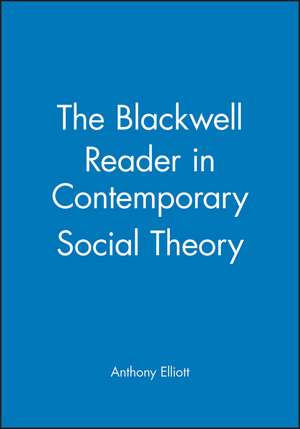
Blackwell Reader in Contemporary
Autor Elliotten Limba Engleză Paperback – 31 aug 1999
Preț: 545.84 lei
Puncte Express: 819
Carte tipărită la comandă
Livrare economică 09-23 noiembrie
Livrare prin curier în România Termenul estimat este afișat lângă disponibilitate.
Transport gratuit pentru acest produs Plată online sau ramburs, în funcție de opțiunile comenzii.
Retur gratuit în 14 zile Comandă securizată și suport în română.
Specificații
ISBN-13: 9780631206507
ISBN-10: 0631206507
Pagini: 412
Dimensiuni: 170 x 244 x 22 mm
Greutate: 0.71 kg
Ediția:New.
Editura: Wiley
Locul publicării:Chichester, United Kingdom
ISBN-10: 0631206507
Pagini: 412
Dimensiuni: 170 x 244 x 22 mm
Greutate: 0.71 kg
Ediția:New.
Editura: Wiley
Locul publicării:Chichester, United Kingdom
V-ar putea interesa
-
 Madness: A Brief HistoryRoy Porter-20%Preț: 84.74 lei105.64 lei
 -
 The Science of MusicRobin Maconie-29%Preț: 516.88 lei723.68 lei
 -
 -22%Preț: 396.77 lei505.87 lei
 -
 The Right and the GoodDavid Ross-17%Preț: 212.50 lei255.82 lei
 -
 Concepts of JusticeD. D. Raphael-19%Preț: 352.03 lei436.00 lei
 -
 Spinoza's Heresy: Immortality and the Jewish MindSteven Nadler-29%Preț: 350.58 lei490.48 lei
 -
 Globalization: A ReaderCharles LemertPreț: 482.01 lei
 -
 Mobile LivesAnthony Elliott-15%Preț: 420.28 lei494.45 lei
 -
 -15%Preț: 434.49 lei511.17 lei
 -
 Moral Philosophy from Montaigne to KantJerome B. SchneewindPreț: 390.73 lei
 -
 Arabic Thought in the Liberal Age 1798-1939Albert HouraniPreț: 279.33 lei
 -
 The Foundations of Modern Political ThoughtQuentin SkinnerPreț: 200.92 lei
 -
 BodinJean BodinPreț: 272.15 lei
 -
 The Cambridge Companion to Logical EmpiricismAlan RichardsonPreț: 291.06 lei
 -
 Sweet ViolenceEagletonPreț: 276.95 lei
 -
 Genealogies of ReligionTalal AsadPreț: 268.69 lei
 -
 de la Mettrie's GhostC. NunnPreț: 139.80 lei
Public țintă
advanced undergraduates, graduates and scholars in the fields of social theory, sociology, media/cultural studies, and literary or political theoryNotă biografică
Anthony Elliott is Research Fellow in the Department of Political Sciences at the University of Melbourne. His recent books include Psychoanalytic Theory: An Introduction (1994), Subject to Ourselves: Social Theory, Psychoanalysis, and Postmodernity (1996), and The Mourning of John Lennon (1999). He is the editor of Freud 2000 (1998) and coeditor, with Dr. Stephen Frosh, of Psychoanalysis in Contexts (1995).
Cuprins
Preface. Acknowledgements.
Introduction: Anthony Elliott.
Part I: The Theory of the Subject:.
1. The Obsolescence of the Freudian Concept of Man: Herbert Marcuse. 2. Language and Speech: Roland Barthes.
3. The Mirror Stage as Formative of the Function of the I in Psychoanalytic Experience: Jacques Lacan.
4. Revolution in Poetic Language: Julia Kristeva.
5. The Individual and Representation: Cornelius Castoriadis.
Part II: Social Structure and Institutional Analysis:.
6. The Means of Correct Training: Michel Foucault.
7. Structures, Habitus, Practices: Pierre Bourdieu.
8. Elements of the Theory of Structuration: Anthony Giddens.
9. Society Turns Back upon Itself: Alain Touraine.
10. The Concept of Society: Niklas Luhmann.
11. Individualization and "Precarious Freedoms": Perspectives and Controversies of a Subject-Centered Sociology: Ulrich Beck and Elisabeth Beck-Gernsheim.
Part III: Contemporary Critical Theory:.
12. The Uncoupling of System and Lifeworld: Jurgen Habermas.
13. Patterns of Intersubjective Recognition: Love, Rights, and Solidarity: Axel Honneth.
14. Truth, Semblance, Reconciliation: Adorno's Aesthetic Redemption of Modernity: Albrecht Wellmer.
Part IV: Race, Multiculturalism, Difference: .
15. DissemiNation: Homi K. Bhabha.
16. Freud and the Epistemology of Race: Sander L. Gilman.
17. Masters, Mistresses, Slaves, and the Antinomies of Modernity: Paul Gilroy.
18. Subaltern Studies: Deconstructing Historiography: Gayatri Chakravorty Spivak.
Part V: Feminism, Gender, and Sexual Difference: .
19. The Reproduction of Mothering: Nancy Chodorow.
20. This Sex which Is Not One: Luce Irigaray.
21. Gender Trouble: Judith Butler.
22. Living with Uncertainty: Jeffrey Weeks.
23. Situated Knowledges: The Science Question in Feminism and the Privilege of Partial Perspective: Donna J. Haraway.
Part VI: The Modernity/Postmodernity Debate:.
24. Postmodernism: David Harvey.
25. The Postmodern Condition: Jean-Francois Lyotard.
26. Simulations: Jean Baudrillard.
27. Postmodernism, or The Cultural Logic of Late Capitalism: Frederic Jameson.
28. Feminism and the Question of Postmodernism: Seyla Benhabib.
29. Postmodernity, or Living with Ambivalence: Zygmunt Bauman.
Index.
Introduction: Anthony Elliott.
Part I: The Theory of the Subject:.
1. The Obsolescence of the Freudian Concept of Man: Herbert Marcuse. 2. Language and Speech: Roland Barthes.
3. The Mirror Stage as Formative of the Function of the I in Psychoanalytic Experience: Jacques Lacan.
4. Revolution in Poetic Language: Julia Kristeva.
5. The Individual and Representation: Cornelius Castoriadis.
Part II: Social Structure and Institutional Analysis:.
6. The Means of Correct Training: Michel Foucault.
7. Structures, Habitus, Practices: Pierre Bourdieu.
8. Elements of the Theory of Structuration: Anthony Giddens.
9. Society Turns Back upon Itself: Alain Touraine.
10. The Concept of Society: Niklas Luhmann.
11. Individualization and "Precarious Freedoms": Perspectives and Controversies of a Subject-Centered Sociology: Ulrich Beck and Elisabeth Beck-Gernsheim.
Part III: Contemporary Critical Theory:.
12. The Uncoupling of System and Lifeworld: Jurgen Habermas.
13. Patterns of Intersubjective Recognition: Love, Rights, and Solidarity: Axel Honneth.
14. Truth, Semblance, Reconciliation: Adorno's Aesthetic Redemption of Modernity: Albrecht Wellmer.
Part IV: Race, Multiculturalism, Difference: .
15. DissemiNation: Homi K. Bhabha.
16. Freud and the Epistemology of Race: Sander L. Gilman.
17. Masters, Mistresses, Slaves, and the Antinomies of Modernity: Paul Gilroy.
18. Subaltern Studies: Deconstructing Historiography: Gayatri Chakravorty Spivak.
Part V: Feminism, Gender, and Sexual Difference: .
19. The Reproduction of Mothering: Nancy Chodorow.
20. This Sex which Is Not One: Luce Irigaray.
21. Gender Trouble: Judith Butler.
22. Living with Uncertainty: Jeffrey Weeks.
23. Situated Knowledges: The Science Question in Feminism and the Privilege of Partial Perspective: Donna J. Haraway.
Part VI: The Modernity/Postmodernity Debate:.
24. Postmodernism: David Harvey.
25. The Postmodern Condition: Jean-Francois Lyotard.
26. Simulations: Jean Baudrillard.
27. Postmodernism, or The Cultural Logic of Late Capitalism: Frederic Jameson.
28. Feminism and the Question of Postmodernism: Seyla Benhabib.
29. Postmodernity, or Living with Ambivalence: Zygmunt Bauman.
Index.
Descriere
Selections from the best-known intellectuals and researchers in social theory around the globe. Includes discussion of not only traditional aspects of social theory, but also recent controversies surrounding such topics as self, identity and subjectivity; race, multiculturalism; modernism and postmodernism.