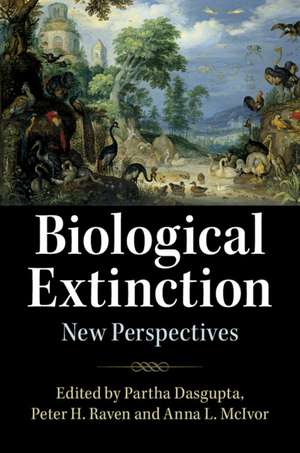
Biological Extinction: New Perspectives
Editat de Partha Dasgupta, Peter Raven, Anna McIvoren Limba Engleză Hardback – 4 sep 2019
Observăm astăzi o presiune fără precedent asupra resurselor naturale, unde activitatea economică globală a depășit capacitatea de regenerare a biosferei. În acest context critic, Biological Extinction nu este doar o avertizare ecologică, ci un instrument de analiză riguros care demonstrează că pierderea biodiversității reprezintă o amenințare directă la adresa sistemului de suport al vieții umane. Reținem din această lucrare coordonată de Partha Dasgupta și Peter Raven faptul că extincția speciilor este ireversibilă și are consecințe economice la fel de devastatoare ca schimbările climatice.
Abordarea acestui volum diferă de cea din Dodging Extinction prin gradul ridicat de multidisciplinaritate; în timp ce alte lucrări se concentrează pe paleontologie sau conservare pură, aici descoperim o integrare profundă a economiei cu biologia și demografia. Este o viziune mai puțin abstractă și mult mai aplicabilă în politici publice. Cartea continuă și extinde temele fundamentale abordate de Partha Dasgupta în The Economics of Biodiversity, trecând de la analiza teoretică a valorii naturii la soluții concrete pentru sisteme socio-ecologice complexe.
Structura volumului este una progresivă: debutează cu o perspectivă istorică asupra extincțiilor geologice, analizează starea actuală a biodiversității oceanice și terestre, și culminează cu examinarea driverilor demografici și economici. Capitolele dedicate Revoluției Verzi și impactului asupra solului oferă o înțelegere clară a modului în care securitatea noastră alimentară este intrinsec legată de diversitatea biologică. Tonul este unul de autoritate academică, oferind date esențiale pentru decidenții care doresc să înțeleagă riscurile sistemice ale Anthropocenului.
Preț: 680.21 lei
Preț vechi: 790.94 lei
-14%
Carte tipărită la comandă
Livrare economică 13-27 iulie
Specificații
ISBN-10: 1108482287
Pagini: 462
Dimensiuni: 159 x 235 x 24 mm
Greutate: 0.86 kg
Editura: Cambridge University Press
Colecția Cambridge University Press
Locul publicării:Cambridge, United Kingdom
De ce să citești această carte
Această carte este esențială pentru profesioniștii din drept internațional, economie și politici de mediu. Cititorul câștigă o perspectivă sistemică asupra modului în care degradarea naturii afectează stabilitatea economică și socială. Este o lectură obligatorie pentru a înțelege de ce conservarea nu este doar un act moral, ci o necesitate pragmatică pentru supraviețuirea civilizației, oferind argumentele necesare pentru implementarea unor strategii de sustenabilitate reale.
Despre autor
Partha Dasgupta este profesor emerit de economie la Universitatea din Cambridge (Frank Ramsey Professor) și unul dintre cei mai influenți gânditori contemporani la intersecția dintre economie și ecologie. Recunoscut la nivel mondial pentru lucrările sale despre bunăstare și sărăcie, el a coordonat celebrul raport 'The Economics of Biodiversity' pentru Trezoreria Marii Britanii. Alături de Peter Raven, un botanist de renume mondial, și Anna McIvor, Dasgupta aduce în acest volum o rigoare științifică ce transformă datele biologice în argumente economice și etice solide.
Descriere scurtă
Cuprins
Recenzii
'Partha Dasgupta, unexcelled among economists for his contributions to ecological economics, and Peter Raven, revered for his leadership in biodiversity science, have combined to assemble a collection of papers by a virtual who's who of experts on the subject of biodiversity loss and sustainability. This volume, the product of an obviously remarkable meeting at the Vatican, will be a touchstone for all those concerned with our declining biodiversity, and the implications for the future welfare of humanity.' Simon A. Levin, James S. McDonnell Distinguished University Professor in Ecology and Evolutionary Biology, Princeton University
'This volume provides an informative reference for policy makers and practitioners, offering new perspectives on biological extinction that adopt principles of social justice and sustainability.' R. A. Delgado, Jr, Choice