
Bioactive Compounds in Edible Flowers
Editat de Hosakatte Niranjana Murthyen Limba Engleză Hardback – 4 feb 2026
The book provides information on the nutritional value, phytochemical makeup, and bioactivity of both wild and cultivated flowers. It also describes edible flowers in depth to make them better-known to consumers and the food business. Each chapter discusses the possible toxicological effects of floral components.
Preț: 1564.18 lei
Preț vechi: 1907.54 lei
-18%
Puncte Express: 2346
Carte tipărită la comandă
Livrare economică 07-21 decembrie
Livrare prin curier în România Termenul estimat este afișat lângă disponibilitate.
Transport gratuit pentru acest produs Plată online sau ramburs, în funcție de opțiunile comenzii.
Retur gratuit în 14 zile Comandă securizată și suport în română.
Specificații
ISBN-13: 9781041079866
ISBN-10: 1041079869
Pagini: 430
Ilustrații: 84
Dimensiuni: 178 x 254 mm
Greutate: 0.96 kg
Ediția:1
Editura: CRC Press
Colecția CRC Press
ISBN-10: 1041079869
Pagini: 430
Ilustrații: 84
Dimensiuni: 178 x 254 mm
Greutate: 0.96 kg
Ediția:1
Editura: CRC Press
Colecția CRC Press
V-ar putea interesa
-
 Flower Day: A Story of 24 Hours and 24 Floral LivesSandra KnappPreț: 102.46 lei
 -
 Wildflowers: Discover the Science and Secrets Behind the World of WildflowersDr. Chris Thorogood-21%Preț: 157.33 lei198.83 lei
 -
 -16%Preț: 80.92 lei96.61 lei
 -
 -27%Preț: 1488.37 lei2035.63 lei
 -
 Taste Buds: A Field Guide to Cooking and Baking with FlowersNikki Fotheringham-22%Preț: 165.31 lei210.77 lei
 -
 The Edible Flower GardenKathy BrownPreț: 53.84 lei
 -
 The Little Wild Library: DandelionClare GogertyPreț: 63.40 lei
 -
 Edible FlowersMonica Nelson-20%Preț: 165.97 lei208.25 lei
 -
 -27%Preț: 1218.51 lei1660.18 lei
 -
 Bioactive Molecules in Plant FoodsFlorence Ojiugo Uruakpa-27%Preț: 833.39 lei1134.53 lei
 -
 Edible FlowersConstance L. Kirker-14%Preț: 93.36 lei108.72 lei
 -
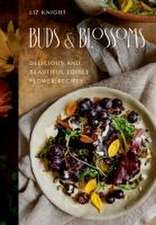 Buds and BlossomsLiz Knight-29%Preț: 157.40 lei220.46 lei
 -
 -25%Preț: 103.55 lei138.26 lei
 -
 A Floral FeastCarolyn Dunster-18%Preț: 132.31 lei160.44 lei
 -
 Bioactive Compounds in the Storage Organs of PlantsHosakatte Niranjana Murthy-18%Preț: 2899.06 lei3535.45 lei
 -
 The Edible Flower GardenRosalind CreasyPreț: 111.46 lei
 -
 Medicinal Plants and their Bioactive Compounds in Human Health: Volume 1Mohammad Azam Ansari-18%Preț: 1272.55 lei1551.89 lei
 -
 The Fern Pharmacy: Indigenous Wisdom and Modern PharmacologyRobert Dale Rogers-22%Preț: 145.78 lei187.69 leiRecomandat
 -
 -26%Preț: 174.30 lei236.86 leiRecomandat
Public țintă
Academic and PostgraduateCuprins
Preface. PART I: INTRODUCTORY ARTICLES. 1. Edible Flowers: An Updated Review on Nutritional Composition, Phytochemicals, and Biological Activities. 2. Phytochemicals and Biological Activities of Mexican Edible Flowers. PART II: SPECIFIC EDIBLE FLOWERS. 3. Phytochemicals and Biological Activities of Flowers of Clitoria ternatea (Butterfly Pea). 4. Phytochemicals and Biological Activities of Flowers of Chrysanthemum. 5. Phytochemicals and Biological Activities of Flowers of Cucurbita moschata (Pumpkin). 6. Phytochemicals and Biological Activities of Flowers of Cucurbita Species. 7. Phytochemicals and Biological Activities of Flowers of Dahlia. 8. Phytochemicals and Biological Activities of Flowers of Diplotaxis Species (Wall-rocket). 9. Phytochemicals and Biological Activities of Flowers of Hibiscus x Rosa-sinensis (Chinese Rose). 10. Chemistry and Biological Activities of Hibiscus sabdariffa L. Flowers. 11. Phytochemicals and Biological Activities of Flowers of Lavandula Species (Lavender). 12. Phytochemicals and Biological Activities of Flowers of Oxalis Pes-caprae. 13. Phytochemicals and Biological Activities of Damask Rose (Rosa damascena Mill.) Flowers. 14. Phytochemicals and Biological Activities of Flowers of Crocus sativa L. (Saffron). 15. Phytochemical and Biological Activities of Flowers of Calendula. 16. Phytochemicals and Biological Activities of Flowers of Thymus vulgaris (Thyme). PART III: EXTRACTION AND APPLICATIONS. 17. Extraction Strategies for Bioactive Compounds Recovery from Edible Flowers. Index.
Notă biografică
Hosakatte Niranjana Murthy was professor at the Postgraduate Department of Botany, Karnatak University, Dharwad, India, where he has served in several positions. He has a PhD from the same university. Apart from teaching experience in the area of plant biotechnology, Prof. Murthy is the recipient of various prestigious fellowships including, Brian Pool Fellowship (awarded by Korean Society of Science and Technology, and National Research Foundation, South Korea), visiting fellowship (awarded by Korean Science and Engineering Foundation, South Korea), Commonwealth Postdoctoral Fellowship (awarded by Korean Association of Commonwealth Universities, UK) and Prof. Raja Ramanna Chair (awarded by Department of Atomic Energy, Government of India). He has completed more than 15 research projects funded by various agencies and supervised 22 PhD students. Prof. Murthy has published 330 research articles in international peer-reviewed journals with high impact factors. His research has been cited more than 7600 times by fellow researchers and his H-index (Hirsch Index) of 45 as recorded by Scopus. Prof. Murthy is currently a Research Professor, Department of Life Sciences, CHRIST (Deemed to be University), Bengaluru, India.
Descriere
The book provides information on the nutritional value, phytochemical makeup, and bioactivity of both wild and cultivated flowers. It also describes edible flowers in depth to make them better-known to consumers and the food business. Each chapter discusses the possible toxicological effects of floral components.