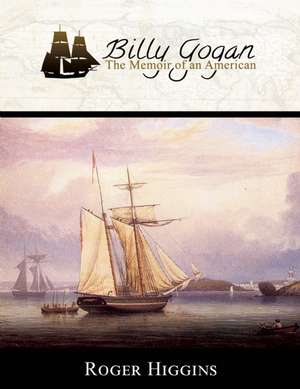
Billy Gogan, American
Autor Roger Higginsen Limba Engleză Paperback – 24 mai 2016 – vârsta de la 16 ani
Observăm în proza lui Roger Higgins o forță narativă brută, lipsită de artificii inutile, care reușește să captureze ritmul sacadat al supraviețuirii. Stilul său este unul cinematic, unde limbajul dur al străzii se împletește cu inserții de gaelică, oferind o textură autentică experienței de imigrant. În Billy Gogan, American, autorul nu se mulțumește doar să descrie mizeria, ci construiește o atmosferă în care fiecare dialog pare o luptă pentru demnitate. Imaginați-vă tensiunea și lupta pentru maturizare din Exile on Bridge Street, mutată într-un decor de mahala din Five Points, unde corupția politică a anilor 1840 dictează soarta fiecărui nou-venit. Putem afirma că romanul este o frescă socială a New York-ului istoric, privit prin ochii unui adolescent orfan de 15 ani. Structura cărții urmărește o traiectorie geografică și emoțională precisă: de la părăsirea unei Irlande care l-a abandonat, la „Marea Furtună” de pe ocean, până la realitatea înghețată a „Pământului Făgăduinței” din Gotham. Capitolele ne poartă prin momente de cotitură, de la încercarea de a strânge un capital minim până la participarea involuntară la jocurile politice de ziua alegerilor. Remarcăm o evoluție interesantă față de cealaltă lucrare a sa, Surf Sounds; dacă acolo poezia sa era șlefuită și subtilă ca sticla de mare, aici Higgins adoptă un ton mult mai direct și bătăios. Cartea funcționează ca o fundație solidă pentru seria ce continuă cu Billy Gogan Gone Fer Soldier, stabilind temele recurente ale autorului: reziliența în fața forțelor care depășesc individul și căutarea unei identități într-o lume care te privește ca pe un străin.
Preț: 99.22 lei
Carte disponibilă
Livrare economică 06-20 noiembrie
Specificații
ISBN-10: 1609521153
Pagini: 416
Dimensiuni: 132 x 201 x 13 mm
Greutate: 0.41 kg
Editura: TRAVELERS' TALES
V-ar putea interesa
-
 The Wilderness WayAnne MaddenPreț: 79.02 lei
 -
 GypsyLesley PearsePreț: 72.67 lei
 -
 Bad BridgetElaine Farrell-31%Preț: 64.28 lei93.11 lei
 -
 Nory Ryan's SongPatricia Reilly GiffPreț: 45.34 lei
 -
 A Slice of the MoonSandi Toksvig-17%Preț: 48.86 lei58.91 lei
 -
 The Runaway GirlsJacqueline Wilson-26%Preț: 48.92 lei65.73 lei
 -
 The Gods of GothamLyndsay Faye-25%Preț: 59.55 lei79.55 lei
 -
 Heap Earth Upon It - EXPORT EDITIONChloe Michelle Howarth-19%Preț: 88.37 lei108.49 lei
 -
 Wildflower GirlMarita Conlon-MckennaPreț: 70.54 lei
 -
 Preț: 61.47 leiRecomandat
 -
 Eden's ShoreOisín Fagan-26%Preț: 91.75 lei123.41 lei
 -
 -25%Preț: 60.02 lei79.68 lei
 -
 The Crooked BranchJeanine Cummins-26%Preț: 58.06 lei78.67 lei
 -
 -12%Preț: 51.39 lei58.63 lei
 -
 Life SentencesBilly O'Callaghan-18%Preț: 52.96 lei64.92 lei
 -
 The Irish Girl: A NovelAshley E. SweeneyPreț: 99.59 lei
 -
 17 Martin StreetMarilyn TaylorPreț: 98.09 lei
 -
 A Long Way From HeavenSheelagh Kelly-18%Preț: 51.44 lei63.09 lei
 -
 The Heart in WinterKevin BarryPreț: 71.48 lei
 -
 A More Perfect UnionTammye HufPreț: 73.48 lei
De ce să citești această carte
Recomandăm această carte celor pasionați de ficțiune istorică autentică, ce nu evită aspectele dure ale trecutului. Cititorul va descoperi o perspectivă nefiltrată asupra imigrației irlandeze, câștigând o înțelegere profundă a contextului social din New York-ul secolului XIX. Este o poveste despre ingeniozitate și curaj, ideală pentru cei care au apreciat romanele lui Eamon Loingsigh sau Paul Brown.
Despre autor
Roger Higgins este un scriitor polivalent, a cărui operă pendulează între sensibilitatea poetică și realismul istoric dur. În volumul de poezie Surf Sounds, el explorează ritmurile hipnotice ale oceanului și provocările lumii moderne prin versuri șlefuite. Trecerea către ficțiunea istorică cu Billy Gogan, American demonstrează capacitatea sa de a stăpâni narațiuni ample, bazate pe o documentare riguroasă a diasporei irlandeze. Higgins este recunoscut pentru stilul său „bare-knuckled”, reușind să injecteze tandrețe și umanitate în contexte istorice marcate de violență și lipsuri, creând personaje care rămân vii în memoria cititorului mult timp după încheierea lecturii.
Descriere scurtă
Here, Billy completes his education. Already able to declaim Cicero and construe Aristotle, he learns voting fraud from Bill Tweed, the future head of Tammany Hall, and the numbers game from Charlie Backwell, Tammany's top bookie. Finally, Brannagh O’Marran, the beautiful mulatta daughter of the Irish madam of Gotham’s finest brothel, teaches him about love.
Billy eventually finds Máire and Fíona, and the three of them plan their future together. But that future is taken in a cruel stroke, and nothing will ever be the same.
Cuprins
PART I
TÁ ÉIRE TAR ÉIS THRÉIG MÉ (IRELAND HAS FORSAKEN ME)
Dublin and County Cork, Ireland
September 1844
CHAPTER 1
Cricket
CHAPTER 2
Be Gone … and Damn Yer Hide
CHAPTER 3
If No One Sees It
PART II
THE WESTERN OCEAN
September 1844 – January 1845
CHAPTER 4
Anchored
CHAPTER 5
An t-Anfa Mór (The Great Tempest)
CHAPTER 6
Scéal Mháire (Mary’s Story)
CHAPTER 7
Slíghe go Mheiriceá—Arís (Passage to America—Again)
PART III
GOTHAM
The Promised Land
January – August 1845
CHAPTER 8
I’m So Cold I Could Die
CHAPTER 9
Right in Front of Me
CHAPTER 10
Building the Grubstake
CHAPTER 11
Dells, Swells and Fires
CHAPTER 12
Free Mulattas and Texas Slaves
CHAPTER 13
Brannagh’s Story
CHAPTER 14
Election Day
CHAPTER 15
Citizen Gogan
CHAPTER 16
Saving Her Flesh and Blood
CHAPTER 17
Taking a Round Turn
CHAPTER 18
The Waste of It All
Glossary
Recenzii
“Higgins writes with a masterful sense of place. His argot and descriptions are so spot-on, you need to close the book and look around your own room to remind yourself that you really are safe and sound in the here and now.”
—Gary Buslik, author of A Rotten Person Travels the Caribbean, and Professor of English, University of Illinois, Chicago
Extras
“No mittens?” Cassidy asked in a roar.
“No mittens, Cassidy,” Magee confirmed. “And no London Prize Ring rules. No rounds or time. All we be needin’ is a scratch.”
As if on cue, Con Donoho bounded out from the crowd and landed between the two milling coves. He raised his hand. The crowd once more quietened. He said, “I’ll be drawin’ the scratch now.” Donoho scraped a rough line in the muddied cobblestones. “Come close, the both o’ yers. Don’t ye be shy, now. Shake yer dandles now. Like the foin swells you is.”
The two men went toe-to-toe at the scratch, each barely touching the other’s hand, almost as if they both suspected the other of wanting to do mischief as they shook hands. The crowd went berserk. Cassidy towered over Magee, staring down ominously at the smaller man. Magee was poker-faced. Con leaned up to both of them and spoke so that only they could hear him.
Then he stepped back and faced the crowd with a big grin on his face. “Come out milling, me boyos, when I drops me fogle,” whereupon he drew an immense scarlet silk handkerchief from under his cloak. He raised his hand and let the handkerchief flutter slowly to the muddy cobblestones. He whisked it out of harm’s way just before it landed, and the crowd went berserk yet again.
The two sloggers circled each other, feinting this way and that, each seeming to take the measure of the other. Cassidy shot a hard rib-ender to Magee, who danced just beyond range, beckoning Cassidy to follow him. Twice more, Cassidy advanced. Each time he threw a swift combination of punches. Each time, Magee danced just beyond range, taunting Cassidy to come at him again.
There was a lull in the noise, and a tough-looking palooka next to me screamed in frustration, “Lend the pam a polt in the muns, Cassidy. Fer the love o’ Christ. Put him on his beam-end, will yers?”
The two men circled some more, each jollying the other. I couldn’t hear what was being said over the roar of the crowd. Magee backed up once more, into a space newly cleared of the crowd by Blackie and a couple of what appeared to be his mates, who had spread their arms and pushed at the crowd, where Tweed and I stood. The two fighters were now very close. I hopped up to see over Blackie’s shoulder. I heard Magee say, “Come and get me, you ponce. Come on, you old catamite.” And come Cassidy did as Magee made to once again dance away. Except this time, he didn’t. Cassidy threw a punch, slower than his last several, and Magee danced underneath the haymaker, and engaged in a little fibbing against Cassidy’s exposed ribs. Both men broke apart, their chests heaving with the effort. Sweat poured from them, and steam rose in the frigid air.
The crowd murmured as the two men once again circled each other. Magee was bleeding a little from his nose, and the side of his forehead was reddened and beginning to swell. So he had not been quite as quick to dance beyond Cassidy’s range as I’d thought. He dropped his hands just a little, as if fatigued and Cassidy pounced, with a chopper right to Magee’s potato trap. So severe was the blow that I expected to see teeth explode from Magee’s mouth. But Magee once again danced away and the blow slid harmlessly down his shoulder. As the momentum took Cassidy past him, Magee grabbed Cassidy’s extended arm and threw Cassidy across his hip, sending him sprawling into the mud.
“Sweet Jesus, what a cross-buttock!” exclaimed Tweed.
Cassidy started to spring to his feet, his hands and elbows raw from the fall. But before he could fully right himself, Magee smashed a chopper to his beak, and it exploded in a gout of claret, and Cassidy sank to his knees. Magee made to back away to allow his opponent to rise to his feet. But as soon as Cassidy made a move, Magee pounced with a flurry of blows and a hard kick or two, which put Cassidy face down in the mud, inert and insensate. The crowd exploded, half in delight, half in fury. Fistfights broke out everywhere. Several shots from a repeating pistol rang out, and the crowd stopped cold at the shocking noise.
Magee had vanished, as had Blackie and his minions. Cassidy was being pulled away by his allies, and stuffed unceremoniously into the four-in-hand he had so proudly arrived in hardly fifteen minutes before. Tweed was nowhere to be found. I walked back to the ’Points alone, quite bemused at how alien the Jonathans and their blood lust were from my sheltered upbringing. Then again, I thought, perhaps they aren’t so different from the Irishman in the street. Growing up in Dublin, I had seen any number of fights, and worse.
* * * * *
On a rainy March day a couple of weeks later, one of Donoho’s minions asked me to stand guard at the grocery because Donoho was away on business, and so I found myself trying to stay dry under the narrow eave over the front door, once again missing my father’s oilskin coat. I must have looked quite pathetic, because after an hour or two Mrs. Donoho invited me inside to stand at the coal stove glowing in the middle of the store. I say stand advisedly. There was quite literally nowhere to sit, not even behind the bar that Mrs. Donoho patrolled, a great oak and brass affair, incongruous in the relatively humble half-basement which the store occupied. That is, there was nowhere but a half-pipe of “Swan” gin lying on its side near the bar or one of the Binghamton whiskey barrels stacked against the walls and, more precariously, on the steps leading down to the main floor from the front door.
Donoho’s grocery was called such, not because it boasted comestibles of every sort, but because it was an unlicensed saloon that served as a waystation to other groggeries for homemade whiskey and gin, and it had to be called something other than a saloon. In its defense, Donoho’s grocery did have a number of open barrels that did not contain liquor of one sort or another. In one there were a few brooms. Another was half full of the herring that Mrs. Donoho occasionally sold, and one was always full of charcoal, which was fed steadily into the pot-bellied stove that was slowly baking me dry.
After a few minutes of thawing my hands and feet while Mrs. Donoho bustled about, I thanked her and made to go outside again before I outstayed my welcome.
“Oh, don’t be so daft. It’s cold out there, and wet, and I’d just as soon have someone to talk to. There’s been hardly anyone in all morning.”
I thanked her again.
“So how did you come to land here in the ’Points? You don’t seem like the usual mick fresh off the boat,” she said archly. Tweed had told me that, although she was married to a fine Irish ward boss, Mrs. Donoho was a Londoner, and she was not at all shy about her views on the worth of the average Irish denizen of the Five Points. Apparently, Anglo-Irish marriages were not unknown here in the New World, although I wondered at them, sometimes, given the sort of conventional Sassenagh prejudice with which Mrs. Donoho seemed to have been infected.
I told Mrs. Donoho my story—suitably edited to preserve a story that provoked her to gasp in shocked outrage that I, a poor orphan, had been tossed so cruelly from the bosom of my only remaining family (with another arch aside about Irish savagery). She also complimented me on being a smart, educated boy who was sure to go far in this world. When I mentioned my expeditions into the Old Brewery—I declined to elaborate as to why and she did not enquire, Mrs. Donoho sympathized with me about the wretched state of its denizens, and agreed with me that Mr. Pease and the Temperance Man, John Burke, were truly doing the Lord’s work over at the Old Brewery. It was such a good thing that they were keeping the menfolk from liquoring too much. Although, she observed, if they did too good a job, they’d put her man, Mr. Donoho himself, out of business right quick. “But,” she sighed, “that don’t stop Mr. Donoho from making sure those wretched folk stay safe from those bloody Bowery gangs what get riled up over the Irish every once in a while. And then there’s those Shouting Methodies.” She shook her head in exasperation. “All they care about is how many souls Mr. Pease has converted. Mr. Pease, bless his heart. He don’t set store by those Shouting Methodies, and he tells ’em that the souls should be kept with the body as long as possible, and it don’t matter whether any of those poor folks are ever converted.”
Mrs. Donoho then fed me a cup of strong hot tea, and asked me to run an errand for her, which I did. After a while, the sun broke through, and I left to return to my street-sweeping.
* * * * *
A few days later, I was unsuccessfully trying to chase off a couple of pigs rooting about on Mott Street so that I could attack a moderately sized pile of filth blocking the wooden sidewalk. I stopped to catch my breath and felt someone tap my shoulder.
It was Blackie, his face expressionless. “Da boss wants t’see yers.”
I wondered how long he had been standing there.
When Blackie ushered me into Magee’s saloon, Magee wrinkled his nose, and I noted that the signs of the fight had almost vanished from his face.
“Sweet Jaysus, Gogan. Go get yersel’ cleaned up, for God’s sake. You too, Blackie. What shit hole did you drag him out of? Clean him up, fer the love of … something. Jaysus.”
Needless to say, I “got cleaned up” and duly presented myself back at Magee’s about an hour later.
“Better,” Magee said dubiously. “Have a drink.”
He put a good Irish whiskey in front of me. It brought home to me the smell of the fireplace in the parlor—and the last time I’d had a whiskey—that last Christmas with my father.
“Well don’t go getting lost on me.” Magee brought me back. “Seo do shláinte.”
“Do shláinte.” We touched glasses.
“So yer not too Sassenagh in yer ways, are yers?”
“I s’pose those’d be fighting words,” I drawled self-consciously. “But I don’t want to be dueling with you like Cassidy did.”
“No chance o’ that, kid.” Magee chuckled. “No chance o’ that.”
He leaned against the bar. I mimicked him.
“Had enough o’ that street-sweeping yet, kid?”
“It’s good ’til something else comes along.”
“Well, perhaps something has. Mrs. Donoho’s taken a shine to yers. Thinks yer Quality.” He looked at me and smiled.
“No, not like that. Yer no high n’ mighty swell.”
We leaned against the bar some more.
“I’ve got a bit o’ something for yers. Interested?”
No more sweeping shit? Oh, frabjous day. Well, I would have said that if Carroll hadn’t waited another twenty-five years to invent the damned word.
“I want to try yers out here in the lushery. Actually, in the ten-pin saloon. Settin’ pins.” Magee looked up and called to someone skulking in the gloom. “Cian, come on over here.”
The figure materialized out of the gloom into the very picture of a Bowery b’hoy: a battered black silk hat tipped well forward above a sly, calculating look and a cheroot in the corner of his mouth, a long black frock coat over a flowered silk vest partially concealing a fiery red serge shirt tucked carelessly into tight, black pantaloons, and heavy black boots more suited to stomping someone’s face in than for ballet.
“Cian,” Magee said in a mock pretentious tone, “This is Billy Gogan.”
“Cian Dineen,” he said though his cheroot. “Nice to meet you.”
He reached to shake my hand, and I glimpsed a knife stuck through his heavy leather belt.
Magee explained to me, “Cian may look and sound the part of a Seventh Ward swell, but he ain’t no Nativist ‘know nothing.’ He’s as Irish as yer and me and Paddy Murphy’s pig.” He added affectionately, “And a good kid. Ain’t cha?”
Cian gave Magee a long-suffering look.
Magee said, “Take care o’ Billy here, kid. He’s been paying his dues. Time for him to set a few pins in the ten-pin saloon.” Magee gestured through the gloom at a curtain, and left the bar without another word.
Cian replied to his back, “Sure thing, boss.”
* * * * *
That night, Magee’s ten-pin saloon was crawling with uptown swells and pigeons from Poughkeepsie (so Cian called the befuddled rural merchants with money to lose), every last one of them ready to be plucked. I was setting pins for some punter who claimed to all who would listen that he owned 100 slaves and a thousand acres of cotton in the Carolinas. “Up here in Gotham to meet with my banker and my English shipping agent, don’t you know,” he drawled to me at one point, as he tipped me a shilling for a cigar and a brandy well diluted (by his request) with water.
The Carolina planter had been bowling with an increasingly drunken Yankee merchant for several games, and the merchant had just won two straight, with the Carolina planter seemingly gracious in defeat. They bantered over the stakes at the end of each game as I fed them waters and brandy (heavy on the cheap brandy—and no water—for the merchant). Just before they began their fifth game, the Carolina planter leaned over to the merchant while I lit their fresh cigars.
“You’re getting the better of me,” he drawled. “But I think I might make it up.” He paused to consider his words. “Why don’t we double down?”
The merchant beamed at the prospect, and he and the Carolina planter each clattered their gold coins onto the table. The Carolina planter fell steadily behind through the first eight frames. On the penultimate frame, the Carolina planter sent a particularly wild ball crashing improbably down the lane to miss an easy spare.
As I skedaddled to reset the pins, the Carolina planter said to the Yankee merchant, “You make this next strike or spare, I can’t win, even if I hit three perfect strikes.”
The merchant again beamed his approval, asking the Carolina planter if he wanted to once again double the stakes. The Carolina planter agreed in a seeming haze of gracious inebriation, although I thought I may have seen the merest hint of a spark in his eye.
I felt Cian’s hot, sour breath in my ear, “Give that pigeon a split. Like I showed yers. His lordship’s gonna tip us real good.” Cian gestured to the Carolina planter. I glared at the pins for a moment, and then resolutely thrust all thoughts of cricket and fair play from my mind as a luxury I couldn’t afford.
With my back to the Carolina planter and the merchant, I set all but two of the pins in their triangle, each equally placed from the other on top of faint marks painted on the polished wood. I then placed the corner pins some inches away from their respective marks on the floor, on top of two stained and slightly sticky spots. Even if the merchant bowled perfectly, he’d leave the two back corner pins—seven and ten—standing, and too far apart to get them both on the spare—just as Cian had carefully instructed me that afternoon, when my conscience had panged even more strongly at the mere prospect of cheating.
So it came to pass. The merchant cleared his head of the brandy fumes long enough to roll what should have been a perfect strike, sending pins scattering all about, but the seven and ten pins remained upright. The merchant rolled again and missed, badly, swearing at his “infernal bad luck.” I quickly reset the pins—properly this time, and the Carolina planter rolled three quick strikes, to the merchant’s mounting frustration.
As the pins clattered from the last strike, the Carolina planter laughed and gathered the money stacked on the table, gesturing to me to bring him a celebratory “seegar.” The merchant let out an anguished cry. It was clear that the Carolina planter had tapped him dry.
“You cheated.” The merchant’s voice shook with fury.
“Watch it, sonny,” the Carolina planter drawled slowly, suddenly very sober.
The merchant lunged at the smirking Carolina planter, but he never made it. Blackie and another equally large and dark Irish ruffian grabbed him firmly, without undue cruelty, and unceremoniously dumped him—with a couple of swift parting kicks—into the alley behind Magee’s saloon. Two or three hours later, when Cian and I emptied the slop buckets into the alley, we saw that the merchant was still lying there in a heap in the filth. Cian stooped over the merchant, and felt through his pockets.
Cian swore and said, “Some scalawag’s already been at him. Should’a checked him earlier. Never mind. We made a half eagle between us off’n that Carolina swell. That’s a good night.”
I ignored my conscience and agreed with Cian. I’d made as much from my share of that single tip, twenty shillings, as I would have in half-a-week’s work hodding bricks. And it was a damned sight better than sweeping shit.
We left the merchant to sleep off his brandy.