Cantitate/Preț
Produs

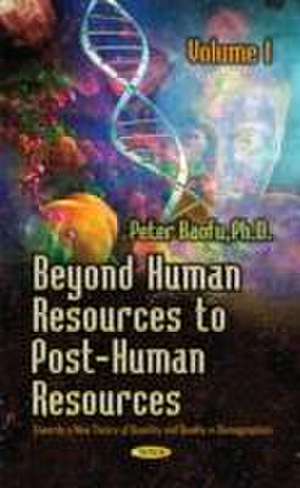
Beyond Human Resources to Post-Human Resources: Towards a New Theory of Quantity and Quality, Volume 1

Autor Peter Baofu PhD
en Limba Engleză Hardback – sep 2014

Bazându-ne pe bazele de date academice și pe premisele fundamentale ale teoriei post-umane, Beyond Human Resources to Post-Human Resources reprezintă o analiză filozofică riguroasă a dihotomiei dintre cantitate și calitate în contextul demografic. Peter Baofu PhD pornește de la interogația clasică a lui Seneca și Ruskin pentru a demonstra că viziunile extreme asupra resurselor umane sunt insuficiente în fața complexității viitorului. Credem că valoarea acestui prim volum rezidă în capacitatea sa de a depăși ideologiile actuale, propunând în schimb „teoria post-umană a demografiei”.

Din punct de vedere structural, lucrarea este organizată în patru secțiuni ce examinează resursele umane prin prisma minții, naturii, societății și culturii. Această abordare multidimensională extinde cadrul propus de The Classical Foundations of Population Thought cu date noi din perspectiva filozofiei post-umane, trecând dincolo de simpla istorie a conceptelor populaționale către o prognoză a evoluției speciei. Spre deosebire de Resources and Population, care se concentrează pe contradicțiile creșterii demografice și sărăciei, Peter Baofu PhD alege o cale teoretică abstractă, similară cu modul în care a tratat subiectele în Future of Post-Human Health Care sau The Future of Post-Human Waste.

Suntem de părere că autorul reușește să recalibreze discuția despre managementul resurselor umane și economia muncii prin refuzul de a favoriza o singură școală de gândire. Tonul este unul academic și analitic, evitând soluțiile simpliste în favoarea unei înțelegeri dialectice a destinului uman. Este o contribuție semnificativă la literatura de specialitate care nu doar chestionează validitatea „resursei” umane, ci prefigurează o transformare radicală a structurilor sociale.

Citește tot Restrânge

Specificații

ISBN-13: 9781633214941
ISBN-10: 163321494X
Pagini: 400
Dimensiuni: 140 x 216 x 21 mm
Greutate: 0.48 kg
Editura: Nova Science Publishers Inc
Colecția Nova Science Publishers, Inc (US)
Locul publicării:United States

De ce să citești această carte

Această lucrare este esențială pentru cercetătorii din filozofie, demografie și management care caută o perspectivă teoretică nouă. Cititorul câștigă un instrument critic pentru a evalua viitorul societății dincolo de parametrii clasici de productivitate. Este un argument solid pentru redefinirea calității vieții într-o eră a transformărilor tehnologice și sociale profunde, oferind o bază teoretică inovatoare pentru studiile de dezvoltare durabilă.


Descriere

Is it really true that, as the Roman philosopher Seneca famously said in antiquity, "It is the quality rather than the quantity that matters"? (TE 2013) This popular view on quality can be contrasted with an opposing view by John Ruskin, who wrote that "the strength and power of a country depends absolutely on the quantity of good men and women in it." (TE 2013a) Contrary to these opposing views (and other ones as will be discussed in the book), human resources (in relation to quantity and quality) are neither possible (nor impossible) nor desirable (or undesirable) to the extent that the respective ideologues (on different sides) would like us to believe. Of course, this questioning of the opposing views on human resources does not imply that the study of quantity and quality is worthless, or that those fields (related to human resources)like demographics, human resource management, labor economics, development studies, environmental migration, modernization, organizational studies, sustainable growth, and so onare unimportant. (WK 2013) Needless to say, neither of these extreme views is reasonable. Instead, this book offers an alternative (better) way to understand the future of human resources in regard to the dialectic relationship between quantity and quality (especially, though not solely, in the context of demographics)while learning from different approaches in the literature but without favoring any one of them (nor integrating them, since they are not necessarily compatible with each other). More specifically, this book offers a new theory (that is, the post-human theory of demography) to go beyond the existing approaches in a novel way and is organized in four chapters. This seminal project will fundamentally change the way that we think about human resources in relation to quantity and quality (especially, though not solely, in the context of demographics) from the combined perspectives of the mind, nature, society, and culture, with enormous implications for the human future and what I originally called its "post-human" fate.

Cuprins

List of Tables Acknowledgments List of Abbreviations Volume 1For Complete Table of Contents, please visit our website athttps://www.novapublishers.com/catalog/product_info.php?products_id=50602