
Beyond Diversity Day: A Q&A on Gay and Lesbian Issues in Schools: Curriculum, Cultures, and (Homo)Sexualities Series
Autor Arthur Lipkin, Ed.Den Limba Engleză Hardback – 19 noi 2003





Preț: 757.10 lei
Preț vechi: 1148.17 lei
-34%
Puncte Express: 1136
Carte tipărită la comandă
Livrare economică 01-15 decembrie
Livrare prin curier în România Termenul estimat este afișat lângă disponibilitate.
Transport gratuit pentru acest produs Plată online sau ramburs, în funcție de opțiunile comenzii.
Retur gratuit în 14 zile Comandă securizată și suport în română.
Specificații
ISBN-13: 9780742520332
ISBN-10: 0742520331
Pagini: 272
Dimensiuni: 158 x 236 x 22 mm
Greutate: 0.46 kg
Ediția:New.
Editura: Bloomsbury Publishing
Colecția Rowman & Littlefield
Seria Curriculum, Cultures, and (Homo)Sexualities Series
Locul publicării:New York, United States
ISBN-10: 0742520331
Pagini: 272
Dimensiuni: 158 x 236 x 22 mm
Greutate: 0.46 kg
Ediția:New.
Editura: Bloomsbury Publishing
Colecția Rowman & Littlefield
Seria Curriculum, Cultures, and (Homo)Sexualities Series
Locul publicării:New York, United States
V-ar putea interesa
-
 -12%Preț: 255.58 lei290.23 lei
 -
 Laud Humphreys: Prophet of Homosexuality and SociologyJohn F. GalliherPreț: 161.18 lei
 -
 Drama QueenPatrick PricePreț: 110.63 lei
 -
 Preț: 61.69 lei
 -
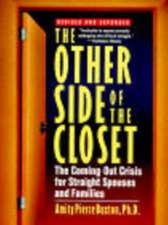 The Other Side of the ClosetAmity Pierce BuxtonPreț: 143.32 lei
 -
 Love UndetectableAndrew SullivanPreț: 103.79 lei
 -
 Beyond ShamePatrick MoorePreț: 164.15 lei
 -
 Coming Out SpirituallyChristian de la HuertaPreț: 138.06 lei
 -
 Star-Bright LieColeman DowellPreț: 119.75 lei
 -
 Leatherfolk: Radical Sex, People, Politics, and PracticeMark ThompsonPreț: 103.63 lei
Cuprins
Chapter 1 Introduction
Chapter 2 Chap. 1: Homophobia and Heterosexism
Chapter 3 Chap. 2: Homosexualities
Chapter 4 Chap. 3: Counseling GLBT Students and Their Families
Chapter 5 Chap. 4: Gay Teachers and Gay Families
Chapter 6 Chap. 5: Effective School Reforms
Chapter 7 Chap. 6: Progress and Resistance
Chapter 8 Chap. 7: Changing the Curriculum
Chapter 9 Appendices
Chapter 2 Chap. 1: Homophobia and Heterosexism
Chapter 3 Chap. 2: Homosexualities
Chapter 4 Chap. 3: Counseling GLBT Students and Their Families
Chapter 5 Chap. 4: Gay Teachers and Gay Families
Chapter 6 Chap. 5: Effective School Reforms
Chapter 7 Chap. 6: Progress and Resistance
Chapter 8 Chap. 7: Changing the Curriculum
Chapter 9 Appendices
Recenzii
A highly informative guide in Q&A format that provides advice to educators on working with sexual-minority youth and improving the learning climate of schools. The book itself is highly readable, while the appendixes and promised index make it a handy reference worth keeping long after reading it cover to cover. Middle-school through college educators, parents, students, and school board members will all find this valuable. Recommended for all libraries and education collections....
If every teacher, physician, and mental health professional were to read this book, tens of thousands of children would be happier, safer, and better prepared for productive adult life. Arthur Lipkin's good sense, humane vision, and long experience resonate through every answer to the most important questions about children's emerging sexualities.
At last! A lucidly argued case and clearly written manual to launch the difficult but necessary project of bringing antigay prejudice educational programming into our public schools. This book offers a roadmap to guide educators to a future where schoolhouse and schoolyard bullying are exceptions, not norms, of student behavior. All the hate crimes laws in the world cannot prevent bias violence and harassment of those who exercise the freedom to differ. Prevention requires education and education requires action. Let's get to it!
Homophobia is, these days, the most ingrained American prejudice. Yet the more education a person has, the less likely he or she is to be homophobic. Schools are also places where different people meet and learn about each other. It seems sensible, then, to work on these issues deeply and carefully while still at school. Arthur Lipkin's new book, which presents important questions and informed answers, shows how it can be done.
The book is an excellent resource for teachers, counselors, and administrators who want to become better informed about issues related to LGBT [Lesbian, Gay, Bisexual, and Transgendered] students and teachers and who want to discover ways to create effective school reform.
An essential guide for educators and policymakers who want to understand and affirm sexuality differences. Written in a question and answer format, this book includes a masterful presentation of research and practice suggestions for principals, counselors, teachers, and parents.
School counselors and others interested in making the school environment receptive and nurturing to all kinds of children are likely to find this book useful. Students, teachers, and school personnel, whether gay or straight, are likely to find the book informs and offers hope. Families, especially those with GLBT children, will find a reassuring, knowledgeable voice in Lipkin. Counselor educators could use this book as a secondary text in a diversity course to offer students a blueprint for initiating change into community organizations of all types.
This is a handbook for teachers, counselors, administrators, policymakers, parents, and students who want to understand and affirm sexuality differences; promote and protect all students' well-being; and reduce bigotry, self-hatred, and violence.
This is a valuable resource for teachers and school counselors who want to adopt a positive attitude to gay, lesbian, bisexual, transsexual, and other sexual minority students. Beyond Diversity Day will be very useful for those who want to help students who are questioning their sexuality or know that they are not heterosexual.
Lipkin's book is a handy resource that addresses a wide range of LGBT-related education issues-from how to change community attitudes on bringing gay issues into schools to how much information is too much for gay teachers to share with their students-in an easily digested question-and-answer format. Real-world examples of the issues Lipkin raises, culled from classrooms and the mass media, are sprinkled throughout the text.
Arthur Lipkin, employing a writing style that is understandable and nonthreatening to the overarching community, creates an extremely readable text that is inviting to multiple levels of readers. By moving beyond the typical boundaries of educationese, Lipkin increases the viability of his audience and avoids the reductionistic view of diversity that is palatable for the current dominant heterosexist majority who control all aspects of society, which, of course, draws into play the public schools. [The author] provides a compelling read that draws on the narratives of people who surround the heterosexual majority constantly, and by naming their issues, he encourages thought processes to begin that leads to accessibility of what, in actuality, is a complex message.
Until a generation of nonhomophobes has a chance to grow and develop, a safe and secure environment for diverse peoples cannot be guaranteed within the supposedly 'public' schools. This is why initiating programs that expand definitions of diversity are so necessary today. Only when one learns not to fear 'the other' does the other become the self. Lipkin names the problem. He also proposes some steps toward working to eradicate the hurt which the GLBT population has incurred. It remains to those who work in universities and schools to find their courageous voices and to speak out so that diversity is something other than just another reason for setting aside a day when people pretend to accept difference while keeping their minds and their hearts firmly shut.
If every teacher, physician, and mental health professional were to read this book, tens of thousands of children would be happier, safer, and better prepared for productive adult life. Arthur Lipkin's good sense, humane vision, and long experience resonate through every answer to the most important questions about children's emerging sexualities.
At last! A lucidly argued case and clearly written manual to launch the difficult but necessary project of bringing antigay prejudice educational programming into our public schools. This book offers a roadmap to guide educators to a future where schoolhouse and schoolyard bullying are exceptions, not norms, of student behavior. All the hate crimes laws in the world cannot prevent bias violence and harassment of those who exercise the freedom to differ. Prevention requires education and education requires action. Let's get to it!
Homophobia is, these days, the most ingrained American prejudice. Yet the more education a person has, the less likely he or she is to be homophobic. Schools are also places where different people meet and learn about each other. It seems sensible, then, to work on these issues deeply and carefully while still at school. Arthur Lipkin's new book, which presents important questions and informed answers, shows how it can be done.
The book is an excellent resource for teachers, counselors, and administrators who want to become better informed about issues related to LGBT [Lesbian, Gay, Bisexual, and Transgendered] students and teachers and who want to discover ways to create effective school reform.
An essential guide for educators and policymakers who want to understand and affirm sexuality differences. Written in a question and answer format, this book includes a masterful presentation of research and practice suggestions for principals, counselors, teachers, and parents.
School counselors and others interested in making the school environment receptive and nurturing to all kinds of children are likely to find this book useful. Students, teachers, and school personnel, whether gay or straight, are likely to find the book informs and offers hope. Families, especially those with GLBT children, will find a reassuring, knowledgeable voice in Lipkin. Counselor educators could use this book as a secondary text in a diversity course to offer students a blueprint for initiating change into community organizations of all types.
This is a handbook for teachers, counselors, administrators, policymakers, parents, and students who want to understand and affirm sexuality differences; promote and protect all students' well-being; and reduce bigotry, self-hatred, and violence.
This is a valuable resource for teachers and school counselors who want to adopt a positive attitude to gay, lesbian, bisexual, transsexual, and other sexual minority students. Beyond Diversity Day will be very useful for those who want to help students who are questioning their sexuality or know that they are not heterosexual.
Lipkin's book is a handy resource that addresses a wide range of LGBT-related education issues-from how to change community attitudes on bringing gay issues into schools to how much information is too much for gay teachers to share with their students-in an easily digested question-and-answer format. Real-world examples of the issues Lipkin raises, culled from classrooms and the mass media, are sprinkled throughout the text.
Arthur Lipkin, employing a writing style that is understandable and nonthreatening to the overarching community, creates an extremely readable text that is inviting to multiple levels of readers. By moving beyond the typical boundaries of educationese, Lipkin increases the viability of his audience and avoids the reductionistic view of diversity that is palatable for the current dominant heterosexist majority who control all aspects of society, which, of course, draws into play the public schools. [The author] provides a compelling read that draws on the narratives of people who surround the heterosexual majority constantly, and by naming their issues, he encourages thought processes to begin that leads to accessibility of what, in actuality, is a complex message.
Until a generation of nonhomophobes has a chance to grow and develop, a safe and secure environment for diverse peoples cannot be guaranteed within the supposedly 'public' schools. This is why initiating programs that expand definitions of diversity are so necessary today. Only when one learns not to fear 'the other' does the other become the self. Lipkin names the problem. He also proposes some steps toward working to eradicate the hurt which the GLBT population has incurred. It remains to those who work in universities and schools to find their courageous voices and to speak out so that diversity is something other than just another reason for setting aside a day when people pretend to accept difference while keeping their minds and their hearts firmly shut.