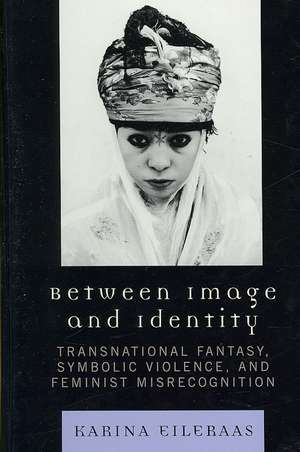
Between Image and Identity
Autor Karina A. Eileraasen Limba Engleză Hardback – 18 iul 2007
| Toate formatele și edițiile | Preț | Express |
|---|---|---|
| Paperback (1) | 313.15 lei 6-8 săpt. | |
| Bloomsbury Publishing – 9 iul 2007 | 313.15 lei 6-8 săpt. | |
| Hardback (1) | 681.85 lei 6-8 săpt. | |
| Rowman & Littlefield – 18 iul 2007 | 681.85 lei 6-8 săpt. |
Preț: 681.85 lei
Preț vechi: 885.52 lei
-23%
Puncte Express: 1023
Preț estimativ în valută:
120.55€ • 142.14$ • 105.39£
120.55€ • 142.14$ • 105.39£
Carte tipărită la comandă
Livrare economică 04-18 aprilie
Specificații
ISBN-13: 9780739118115
ISBN-10: 0739118110
Pagini: 177
Dimensiuni: 160 x 236 x 20 mm
Greutate: 0.44 kg
Editura: Rowman & Littlefield
ISBN-10: 0739118110
Pagini: 177
Dimensiuni: 160 x 236 x 20 mm
Greutate: 0.44 kg
Editura: Rowman & Littlefield
V-ar putea interesa
-
 -34%Preț: 1079.64 lei1624.46 lei
 -
 American and British Writers in Mexico, 1556-1973Drewey Wayne GunnPreț: 231.19 lei
 -
 The Criticism of Henry Fielding (Routledge Revivals)Ioan Williams-18%Preț: 1359.27 lei1657.65 lei
 -
 The Cambridge History of French LiteratureWilliam Burgwinkle-14%Preț: 1457.74 lei1695.05 lei
 -
 The last tabooKarin Lesnik-ObersteinPreț: 216.37 lei
 -
 C.S. Lewis, Poetry, and the Great War 1914-1918John Bremer-28%Preț: 336.36 lei469.12 lei
 -
 Image and Imagination: Picturing the Old French EpicSandra Malicote-26%Preț: 292.06 lei394.47 lei
 -
 Kerouac in Ecstasy: Shamanic Expression in the WritingsThomas R. BierowskiPreț: 295.25 lei
 -
 Joseph Campbell on Myth and MythologyRichard L. Sartore-35%Preț: 332.11 lei512.27 lei
 -
 Preț: 184.46 lei
 -
 Preț: 366.11 lei
 -
 The Canadian Short Story – InterpretationsReingard M. NischikPreț: 365.79 lei
 -
 Traumatic VersesAndrés NaderPreț: 264.67 lei
 -
 Preț: 267.35 lei
 -
 American Literature Root and Flower 2: Journalistic Reflections on the Class War at HomeAnnette T. RubinsteinPreț: 199.23 lei
 -
 -8%Preț: 599.24 lei651.35 lei
 -
 A Grammar of the Arabic Language (Two Volumes in One)William WrightPreț: 255.39 lei
 -
 -23%Preț: 700.48 lei909.71 lei
 -
 Crossing BordersKathleen James-ChakrabortyPreț: 301.96 lei
 -
 -13%Preț: 136.86 lei156.45 lei
 -
 Chicago Literary Experience: Writing the City, 1893-1953Frederik Byrn Køhlert MAPreț: 171.10 lei
Notă biografică
Descriere
Examines how contemporary postcolonial artists and writers actively participate in the violence of representation in order to re-imagine the relationship between image and identity. This book addresses the autobiographical literature, visual, and performance art of postcolonial women from Maghreb and Southeast Asia including Leila Sebbar.
Cuprins
Chapter 1 Fantasizing the Self: Violence and the (Im)possibilities of Representation
Chapter 2 Disorienting Looks, Ecarts d'Identité" Colonial Photography, Ownership, and Identity
Chapter 3 Misrecognizing the Family Album: Blood, Fantasy, and Nationality in the Works of Hèléne Cixous and Theresa Hak Kyung Cha
Chapter 4 Dismembering the Gaze: Speleology and Vivisection in Assia Djebar's L'amour, la fantasia
Chapter 2 Disorienting Looks, Ecarts d'Identité" Colonial Photography, Ownership, and Identity
Chapter 3 Misrecognizing the Family Album: Blood, Fantasy, and Nationality in the Works of Hèléne Cixous and Theresa Hak Kyung Cha
Chapter 4 Dismembering the Gaze: Speleology and Vivisection in Assia Djebar's L'amour, la fantasia
Recenzii
In this wide-ranging transnational study of the ways in which women postcolonial writers have re-staged the relationship between image and identity, Karina Eileraas trains an exquisitely honed critical gaze on the creative forms of aesthetic and political resistance put into practice by such diverse authors as Assia Djebar, Hélène Cixous, and Theresa Hak Kyung Cha. Although her book is informed by the ideas of an impressive array of theorists, it is Eileraas's own engaging voice that, at every turn of the page, drives home the profoundly ethical dimensions of her project.