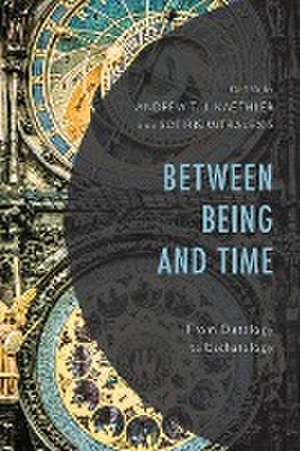
Between Being and Time: From Ontology to Eschatology: Fortress Academic
Editat de Andrew T. J. Kaethler, Sotiris Mitralexis Contribuţii de Matthew Baker, David W. Fagerberg, Demetrios Harper, Isabel C. Troconis Iribarren, Logan M. Issac, Nikolaos Loudovikos, Giulio Maspero, Daniel S. Robinson, Jared Schumacher, Dionysios Skliris, Chris Doude van Troostwijk, Maxim Vasiljevic, Haralambos Ventis, Daniel B. Wright, Christos Yannarasen Limba Engleză Paperback – 3 mai 2023
Din seria Fortress Academic
- 27%
 Preț: 268.04 lei
 - 24%
 Preț: 308.39 lei
 - 22%
 Preț: 318.80 lei
 - 27%
 Preț: 254.83 lei
 - 24%
 Preț: 310.42 lei
 - 26%
 Preț: 258.60 lei
 - 27%
 Preț: 256.21 lei
 - 31%
 Preț: 462.98 lei
 - 32%
 Preț: 632.90 lei
 - 32%
 Preț: 584.40 lei
 - 34%
 Preț: 570.62 lei
 - 27%
 Preț: 253.34 lei
 - 27%
 Preț: 258.08 lei
 - 27%
 Preț: 257.19 lei
 - 34%
 Preț: 597.72 lei
 - 28%
 Preț: 223.03 lei
 - 27%
 Preț: 256.60 lei
 - 27%
 Preț: 258.00 lei
 - 22%
 Preț: 331.35 lei
 - 28%
 Preț: 222.43 lei
 - 18%
 Preț: 258.08 lei
 - 27%
 Preț: 253.54 lei
 - 27%
 Preț: 255.62 lei
 - 27%
 Preț: 255.62 lei
 - 33%
 Preț: 517.72 lei
 - 33%
 Preț: 569.50 lei
 - 25%
 Preț: 209.19 lei
 - 25%
 Preț: 209.19 lei
 - 26%
 Preț: 207.60 lei
 - nou
 Preț: 210.32 lei
 - nou
 Preț: 209.19 lei
 - nou
 Preț: 209.19 lei
 - nou
 Preț: 214.19 lei
Preț: 259.28 lei
Preț vechi: 351.97 lei
-26%
Puncte Express: 389
Carte tipărită la comandă
Livrare economică 07-21 decembrie
Livrare prin curier în România Termenul estimat este afișat lângă disponibilitate.
Transport gratuit de la 400.00 lei Plată online sau ramburs, în funcție de opțiunile comenzii.
Retur gratuit în 14 zile Comandă securizată și suport în română.
Specificații
ISBN-13: 9781978701823
ISBN-10: 1978701829
Pagini: 320
Dimensiuni: 152 x 229 x 23 mm
Greutate: 0.47 kg
Editura: Bloomsbury Publishing
Colecția Fortress Academic
Seria Fortress Academic
Locul publicării:New York, United States
ISBN-10: 1978701829
Pagini: 320
Dimensiuni: 152 x 229 x 23 mm
Greutate: 0.47 kg
Editura: Bloomsbury Publishing
Colecția Fortress Academic
Seria Fortress Academic
Locul publicării:New York, United States
Descriere
This book explores the relationship between being and time -between ontology and history- in the context of both Christian theology and philosophical inquiry. Each chapter tests the limits of this multifaceted thematic vis-à-vis a wide variety of sources: from patristics (Maximus the Confessor, Gregory of Nyssa) to philosophy (Kant, Kierkegaard, Heidegger) to modern theology (Berdyaev, Ratzinger, Fagerberg, Zizioulas, Yannaras, Loudovikos); from incarnation to eschatology; and from liturgy and ecclesiology to political theology. Among other topics, time and eternity, protology and eschatology, personhood and relation, and ontology and responsibility within history form core areas of inquiry. Between Being and Time facilitates an auspicious dialogue between philosophy and theology and, within the latter, between Catholic and Orthodox thought. It will be of considerable interest to scholars of Christian theology and philosophy of religion.
Cuprins
Part I. Rethinking Ontology within History
1. Ontology versus Fideism: Christianity's Accountability to History and Society
Haralambos Ventis
2. Ontology, History and Relation (schesis): Gregory of Nyssa's Epektasis
Giulio Maspero
3. Syn-odical Ontology: Maximus the Confessor's Proposition for Ontology within History and in the Eschaton
Dionysios Skliris
4. The Liturgy behind Liturgies: The Church's Metaphysical Form
David W. Fagerberg
5. The Kantian "Two-images" Problem, Its Lesson for Christian Eschatology, and the Path of Maximian Analogy
Demetrios Harper
Part II. Beyond Being and Time: Eschatological Hermeneutics
6. Zizioulas and Heidegger: "Eschatological Ontology" and Hermeneutics
Matthew Baker
7. What Does "Rising from the Dead" Mean? A Hermeneutics of Resurrection
Maxim Vasiljevic
8. Ecstatic or Reciprocal Meaningfulness?: Orthodox Eschatology between Theology, Philosophy, and Psychoanalysis
Nikolaos Loudovikos
Pa
1. Ontology versus Fideism: Christianity's Accountability to History and Society
Haralambos Ventis
2. Ontology, History and Relation (schesis): Gregory of Nyssa's Epektasis
Giulio Maspero
3. Syn-odical Ontology: Maximus the Confessor's Proposition for Ontology within History and in the Eschaton
Dionysios Skliris
4. The Liturgy behind Liturgies: The Church's Metaphysical Form
David W. Fagerberg
5. The Kantian "Two-images" Problem, Its Lesson for Christian Eschatology, and the Path of Maximian Analogy
Demetrios Harper
Part II. Beyond Being and Time: Eschatological Hermeneutics
6. Zizioulas and Heidegger: "Eschatological Ontology" and Hermeneutics
Matthew Baker
7. What Does "Rising from the Dead" Mean? A Hermeneutics of Resurrection
Maxim Vasiljevic
8. Ecstatic or Reciprocal Meaningfulness?: Orthodox Eschatology between Theology, Philosophy, and Psychoanalysis
Nikolaos Loudovikos
Pa
Recenzii
It is in Christ that time and eternity, history and metaphysics, hold together. This Christological conviction-and the relational understanding of reality that it entails-unites Andrew T.J. Kaethler and Sotiris Mitralexis's extraordinary collection of essays. By no means do the authors agree on every point. But the relational ontology of love on display in this book flows from a shared, ever-deepening movement into the triune God of history.
How we perceive reality and comport ourselves depends on our understanding of temporality. In this important volume, an ecumenical group of noteworthy scholars unfolds for the reader the rich implications of this claim for philosophy, theology, and indeed, for everyday life. A splendid achievement and rewarding read!
How we perceive reality and comport ourselves depends on our understanding of temporality. In this important volume, an ecumenical group of noteworthy scholars unfolds for the reader the rich implications of this claim for philosophy, theology, and indeed, for everyday life. A splendid achievement and rewarding read!