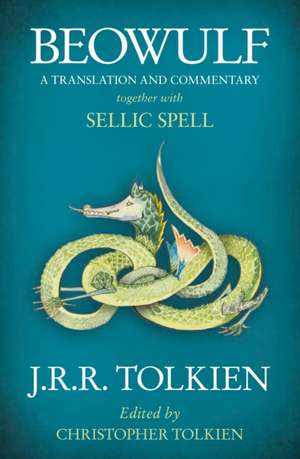
Beowulf
Autor J. R. R. Tolkien Editat de Christopher Tolkien Traducere de Sellic Spellen Limba Engleză Paperback – 28 ian 2016
Notăm cu un interes profund această apariție editorială, care reprezintă nu doar o traducere a unui text canonic, ci o incursiune în laboratorul creativ al părintelui literaturii fantasy moderne. Beowulf ocupă un loc central în formarea viziunii lui J. R. R. Tolkien, fiind fundamentul pe care acesta și-a construit ulterior propriul legendarium. Finalizată în 1926, dar rămasă în manuscris decenii la rând, această versiune în proză este însoțită de un aparat critic fascinant, extras din prelegerile autorului de la Oxford. Găsim în aceste pagini o reconstrucție meticuloasă a unei lumi eroice, unde fiecare detaliu — de la zăngănitul cămășilor de zale pe coasta Danemarcei până la mânia neputincioasă a dragonului — capătă o claritate aproape vizuală. Credem că elementul distinctiv al volumului este tocmai această perspectivă filologică dublată de imaginația unui creator de mituri. Tolkien refuză să vadă în dragon un simplu element de decor, transformând „comoara” într-un simbol tragic al unei epoci păgâne întunecate. Această abordare a mitului se regăsește și în The Lays of Beleriand, unde autorul explorează teme similare de eroism și destin. În comparație cu A Companion to Beowulf de Ruth A. Johnston, care oferă un ghid academic util pentru studenți, ediția de față este o experiență de imersiune totală, oferind și textul Sellic Spell — o demonstrație practică a modului în care Tolkien a distilat esența folclorului vechi englez pentru a crea o narațiune pură, lipsită de straturile istorice ulterioare. Este o piesă esențială pentru a înțelege cum rigoarea academică din The Battle of Maldon a alimentat magia din The Hobbit.
Preț: 80.32 lei
Carte disponibilă
Livrare economică 11-25 noiembrie
Livrare express 27-31 octombrie pentru 24.59 lei
Specificații
ISBN-10: 0007590091
Pagini: 448
Dimensiuni: 128 x 198 x 32 mm
Greutate: 0.31 kg
Editura: HarperCollins Publishers
Colecția Harper
V-ar putea interesa
-
 HamletCollins GcsePreț: 28.01 lei
 -
 The TempestWilliam ShakespearePreț: 29.03 lei
 -
 Romeo and JulietWilliam ShakespearePreț: 29.50 lei
 -
 Twelfth NightWilliam ShakespearePreț: 28.01 lei
 -
 CLASSICS AS YOU LIKE ITWilliam ShakespearePreț: 28.01 lei
 -
 The Merchant of VeniceWilliam ShakespearePreț: 28.95 lei
 -
 XSONNETS_CLASSICS PBWilliam ShakespearePreț: 29.15 lei
 -
 CCC THE MERCHANT OF VENICEWilliam ShakespearePreț: 28.01 lei
 -
 The TempestWilliam ShakespearePreț: 28.01 lei
 -
 Sir Gawain and the Green KnightAnonymous-28%Preț: 51.13 lei70.78 lei
 -
 Shakespeare's SonnetsWilliam Shakespeare-38%Preț: 39.06 lei62.57 lei
 -
 Titus AndronicusWilliam Shakespeare-18%Preț: 48.04 lei58.26 lei
 -
 The Hobbit or There and Back Again. 75th Anniversary EditionJ.R. R. TolkienPreț: 72.43 lei
 -
 The Merchant of VeniceWilliam Shakespeare-26%Preț: 21.66 lei29.27 lei
 -
 OthelloWilliam ShakespearePreț: 37.76 lei
 -
 Books Of Blood Omnibus 1: Volumes 1-3Clive BarkerPreț: 85.00 lei
 -
 Clive Barker's Books of Blood: Volumes 4-6Clive Barker-25%Preț: 70.60 lei94.44 lei
 -
 A Critical Companion to BeowulfAndy Orchard-23%Preț: 1076.34 lei1397.85 lei
 -
 -16%Preț: 61.12 lei72.54 lei
 -
 -21%Preț: 89.95 lei113.30 lei
 -
 The Tragedy of MacbethWilliam ShakespearePreț: 34.79 lei
 -
 The Canterbury TalesGeoffrey ChaucerPreț: 34.80 lei
 -
 Preț: 63.54 lei
 -
 Twelfth NightWilliam ShakespearePreț: 29.27 lei
 -
 Midsummer Night''s DreamWilliam ShakespearePreț: 35.95 lei
 -
 OthelloWilliam Shakespeare-41%Preț: 46.46 lei78.13 lei
 -
 Der BuickStephen KingPreț: 90.93 lei
 -
 Geschichten aus dem gefährlichen KönigreichJ.R.R. TolkienPreț: 169.31 lei
De ce să citești această carte
Pentru orice admirator al operei lui J. R. R. Tolkien, această carte este o fereastră unică spre originile inspirației sale. Cititorul câștigă acces la o traducere rară și, mai ales, la explicațiile intime ale autorului despre simbolismul monștrilor și al eroismului. Este recomandată celor care doresc să descopere cum textele vechi de peste un mileniu au pus bazele Pământului de Mijloc, oferind o experiență intelectuală densă și revelatoare.
Despre autor
J. R. R. Tolkien (1892–1973) a fost un strălucit filolog și profesor la Oxford, a cărui pasiune pentru limbile vechi și mitologie a redefinit literatura secolului XX. Deși este recunoscut la nivel mondial pentru The Lord of the Rings și The Hobbit, cariera sa academică a fost dedicată studiului limbii engleze vechi și medievale. Ca profesor de anglo-saxonă, el a fost unul dintre cei mai importanți interpreți ai poemului Beowulf, eseul său „The Monsters and the Critics” fiind considerat un punct de cotitură în studiile literare. După moartea sa, fiul său, Christopher Tolkien, a dedicat zeci de ani editării și publicării manuscriselor tatălui său, asigurând integritatea moștenirii acestuia.
Descriere
The translation of Beowulf by J.R.R. Tolkien was an early work, very distinctive in its mode, completed in 1926: he returned to it later to make hasty corrections, but seems never to have considered its publication.
This edition is twofold, for there exists an illuminating commentary on the text of the poem by the translator himself, in the written form of a series of lectures given at Oxford in the 1930s; and from these lectures a substantial selection has been made, to form also a commentary on the translation in this book.
From his creative attention to detail in these lectures there arises a sense of the immediacy and clarity of his vision. It is as if he entered into the imagined past: standing beside Beowulf and his men shaking out their mail-shirts as they beached their ship on the coast of Denmark, listening to the rising anger of Beowulf at the taunting of Unferth, or looking up in amazement at Grendel’s terrible hand set under the roof of Heorot.
But the commentary in this book includes also much from those lectures in which, while always anchored in the text, he expressed his wider perceptions. He looks closely at the dragon that would slay Beowulf ‘snuffling in baffled rage and injured greed when he discovers the theft of the cup’; but he rebuts the notion that this is ‘a mere treasure story’, ‘just another dragon tale’. He turns to the lines that tell of the burying of the golden things long ago, and observes that it is ‘the feeling for the treasure itself, this sad history’ that raises it to another level. ‘The whole thing is sombre, tragic, sinister, curiously real. The “treasure” is not just some lucky wealth that will enable the finder to have a good time, or marry the princess. It is laden with history, leading back into the dark heathen ages beyond the memory of song, but not beyond the reach of imagination.’
Sellic Spell, a ‘marvellous tale’, is a story written by Tolkien suggesting what might have been the form and style of an Old English folk-tale of Beowulf, in which there was no association with the ‘historical legends’ of the Northern kingdoms.