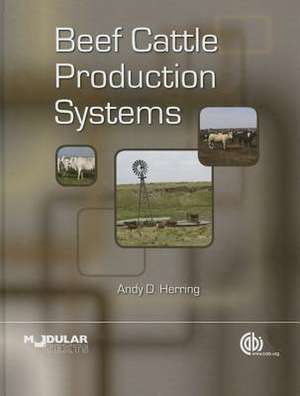
Beef Cattle Production Systems
Autor Andy Herringen Limba Engleză Hardback – 31 oct 2014
Ecosistemul metodologic propus în Beef Cattle Production Systems se bazează pe o abordare sistemică ce integrează genetica animală, protocoalele de management și strategiile de marketing sub cupola sustenabilității globale. Remarcăm faptul că autorul Andy Herring nu tratează producția de carne ca pe un proces liniar, ci ca pe un ansamblu de interrelații complexe între resursele naturale și inputurile artificiale. Credem că valoarea tehnică a volumului rezidă în capacitatea de a oferi soluții adaptabile, de la sistemele cu input minim până la exploatațiile comerciale de mare anvergură. Structura textului favorizează o logică aplicată: se pornește de la înțelegerea mediului de producție specific pentru a selecta genetica optimă, asigurând astfel o eficiență sporită. Cititorul care a aplicat ideile din Principles of Cattle Production de Clive Phillips va găsi aici o continuare necesară, care trece de la principiile introductive la o analiză aprofundată a variabilelor de sistem și a provocărilor regionale specifice. În timp ce alte lucrări se concentrează strict pe bunăstare sau fiziologie, această carte publicată de C.A.B. International pune accent pe optimizarea întregului lanț de producție. Reținem includerea unor studii de caz pentru situații extreme, precum cirezile de dimensiuni reduse sau sistemele de pășunat comunal, aspecte adesea ignorate în manualele tehnice standard. Stilul este unul riguros, specific literaturii academice de specialitate, fiind un instrument de lucru esențial pentru studenții din anii terminali ai facultăților de zootehnie și medicină veterinară, dar și pentru consultanții agricoli care urmăresc implementarea unor strategii de producție durabile.
Preț: 1054.28 lei
Preț vechi: 1285.70 lei
-18%
Carte disponibilă
Livrare economică 17 noiembrie-01 decembrie
Specificații
ISBN-10: 1780645074
Pagini: 332
Ilustrații: illustrations
Dimensiuni: 196 x 254 x 23 mm
Greutate: 1.13 kg
Editura: C.A.B. International
V-ar putea interesa
-
 Beef Production and Management DecisionsThomas Field-23%Preț: 1311.13 lei1702.77 lei
 -
 Nutrient Requirements of Beef CattleBoard on Agriculture and Natural Resources-14%Preț: 803.92 lei934.79 lei
 -
 Raising Beef Cattle For DummiesNikki RoyerPreț: 148.74 lei
 -
 Practical Cattle FarmingAlastair HaytonPreț: 154.61 lei
 -
 Suckler Herd Health and Productivity ManagementKeith CutlerPreț: 244.82 lei
 -
 Grass ProductivityAndre VoisinPreț: 339.09 lei
 -
 Salad Bar BeefJoel Salatin-18%Preț: 187.92 lei230.00 lei
 -
 Bovine ReproductionRichard M Hopper-5%Preț: 2176.93 lei2291.51 lei
 -
 Rainfed Farming SystemsPhilip Tow-18%Preț: 1290.25 lei1573.48 lei
 -
 Grass-Fed Cattle: How to Produce and Market Natural BeefJulius Ruechel-26%Preț: 146.54 lei198.12 lei
 -
 Keeping a Family CowJoann S. Grohman-19%Preț: 109.92 lei135.93 lei
 -
 Beef Cattle, 2nd EditionAnn Larkin HansenPreț: 88.15 lei
 -
![Primal Cuts: A Butcher's Guide to Selecting, Preparing, and Perfecting Beef [A Cookbook]](https://i4.books-express.ro/bt/9781628605990/primal-cuts.jpg) Preț: 218.29 lei
Preț: 218.29 lei -
 Grass-Fed Beef for a Post-Pandemic WorldRidge Shinn-19%Preț: 115.07 lei142.06 lei
 -
 Taking StockRoger Morgan-GrenvillePreț: 78.82 lei
 -
 Principles of Cattle ProductionClive Institute PhillipsPreț: 420.30 lei
 -
 The Veterinary Book for Beef FarmersLee-Anne Oliver-5%Preț: 192.83 lei202.97 lei
 -
 The Future of AgricultureSarah BearchellPreț: 71.26 lei
 -
 Free-Range and FlourishingAllison LeePreț: 155.12 lei
De ce să citești această carte
Recomandăm această lucrare oricărui specialist care dorește să treacă de la simpla creștere a animalelor la un management de sistem integrat. Cititorul câștigă o metodologie clară pentru a echilibra genetica animală cu resursele de mediu disponibile. Este un ghid practic esențial pentru optimizarea profitabilității în fermele de bovine, oferind soluții concrete pentru provocările pieței globale de carne, indiferent de mărimea exploatației.