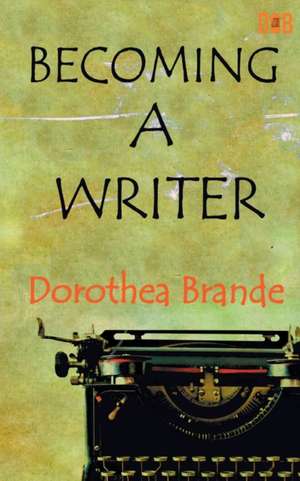
Becoming a Writer
Autor Dorothea Brandeen Limba Engleză Paperback – 12 dec 2019
There are countless books about writing. Very few have actually made writers. Becoming a Writer doesn't just teach you to write-it makes you do it.
First published in 1934, Becoming a Writer has quietly shaped generations of novelists journalists, and artists with one simple but radical premise: writing is not a matter of talent or inspiration; it's a matter of habit, psychology, and a willingness to show up.
Becoming a Writer goes straight to the root of the problem, and shows you how to start writing, even when you don't want to. Wake up and write before you're fully conscious. Stop waiting for permission. Learn to bypass the part of your mind that stalls, edits, and hesitates. Brande's methods are practical and bracing, as if she has reached across time to interrupt your excuses. Nearly a century later, her voice feels sharper than ever, cutting through distraction, doubt, and the mythology of the "blocked writer" with exacting clarity.
Within these pages, readers will find the encouragement, method, and momentum needed to become a writer.
Preț: 100.63 lei
Puncte Express: 151
Carte tipărită la comandă
Livrare economică 07-21 decembrie
Livrare prin curier în România Termenul estimat este afișat lângă disponibilitate.
Transport gratuit de la 400.00 lei Plată online sau ramburs, în funcție de opțiunile comenzii.
Retur gratuit în 14 zile Comandă securizată și suport în română.
Specificații
ISBN-13: 9788194397298
ISBN-10: 8194397294
Pagini: 114
Dimensiuni: 127 x 203 x 7 mm
Greutate: 0.13 kg
Editura: Delhi Open Books
ISBN-10: 8194397294
Pagini: 114
Dimensiuni: 127 x 203 x 7 mm
Greutate: 0.13 kg
Editura: Delhi Open Books
V-ar putea interesa
-
 Writing MagicGail Carson LevinePreț: 54.66 lei
 -
 The Elephants Teach: Creative Writing Since 1880David Gershom MyersPreț: 268.00 lei
 -
 How to Be a Writer: Splendiferous StoriesRoald DahlPreț: 74.30 lei
 -
 Write Away: One Novelist's Approach To Fiction and the Writing LifeElizabeth George-27%Preț: 68.04 lei92.94 lei
 -
 On Becoming a NovelistJohn GardnerPreț: 81.72 lei
 -
 Wild MindNatalie GoldbergPreț: 93.06 lei
 -
 The Art of FictionJohn GardnerPreț: 94.11 lei
 -
 Swallowed by a WhaleHuw Lewis-JonesPreț: 93.70 leiNou
 -
 How to Write Like TolstoyRichard CohenPreț: 106.49 lei
 -
 Preț: 91.30 lei
 -
 Critical Approaches to Creative WritingGraeme HarperPreț: 216.06 lei
 -
 Language in the Media: Representations, Identities, IdeologiesProfessor Sally Johnson-15%Preț: 194.47 lei229.81 lei
 -
 -44%Preț: 94.32 lei169.53 lei
 -
 -25%Preț: 69.61 lei93.12 lei
 -
 -17%Preț: 67.00 lei80.66 leiRecomandat
 -
 If You Want to WriteBrenda UelandPreț: 56.22 lei
 -
 The Right to WriteJulia Cameron-18%Preț: 89.47 lei108.94 lei
 -
 21 Days to Awaken the Writer WithinLisa Fugard-18%Preț: 64.26 lei78.67 lei
 -
 Dear WriterMaggie SmithPreț: 136.67 lei
 -
 Writing Creativity and SoulSue Monk KiddPreț: 122.27 lei
 -
 Beat the BotsJane K. Cleland-21%Preț: 126.25 lei159.44 lei
Cuprins
Foreword by John Gardner
In Introduction
1. The Four Difficulties
The Difficulty of Writing at All; The "One-Book Author"; The Occasional Writer; The Uneven Writer; The Difficulties Not in Technical Equipment.
2. What Writers are Like
Cultivating a Writer's Temperament; False and Real Artists; The Two Sides of a Writer; "Dissociation" Not Always Psychopathic; Everyday Examples of Dual Personality; The Slough of Despond
3. The Advantages of Duplicity
The Process of Story Formation; The "Born Writer"; Unconscious and Conscious; The Two Persons of the Writer; The Transparent Barrier; Keep Your Own Counsel; Your "Best Friend and Severest Critic"; The Right Recreation; Friends and Books; The Arrogant Intellect; The Two Selves Not at War; The First Exercise
4. Interlude: On Taking Advice
Save Your Energy; Imagination Versus Will in Changing Habits; Displacing Old Habits; A Demonstration; The Right Frame of Mind
5. Harnessing the Unconscious
Wordless Daydreams; Toward Effortless Writing; Double Your "Output"
6. Writing on Schedule
Engaging to Write; A Debt of Honor; Extending the Exercise; Succeed, or Stop Writing
7. The First Survey
Reading Your Work Critically; The Pitfalls of Imitation; Discovering Your Strength; A Footnote for Teachers
8. The Critic at Work on Himself
A Critical Dialogue
Be Specific in Suggestions
Correction After Criticism
The Conditions of Excellence
Dictating a Daily Regime
9. Readings as a Writer
Read Twice
Summary Judgment and Detailed Analysis
The Second Reading
Points of Importance
10. On Imitation
Imitating Technical Excellence
How to Spend Words
Counteracting Monotony
Pick Up Fresh Words
11. Learning to See Again
The Blinders of Habit
Causes of Repetitiousness
Recapturing Innocence of Eye
A Stranger in the Streets
The Rewards of Virtue
12. The Source of Originality
The Elusive Quality
Originality Not Imitation
The "Surprise Ending"
Honesty, the Source of Originality
Trust Yourself
"Your Anger and My Anger"
One Story, Many Versions
Your Inalienable Uniqueness
A Questionnaire
13. The Writer's Recreation
Busmen's Holidays
Wordless Recreation
Find Your Own Stimulus
A Variety of Time-Fillers
14. The Practice Story
A Recapitulation
The Contagiousness of Style
Find Your Own Style
The Story in Embryo
The Preparatory Period
Writing Confidently
A Finished Experiment
Time for Detachment
The Critical Reading
15. The Great Discovery
The Five-Finger Exercises of Writing
The Root of Genius
Unconscious, Not Subconscious
The Higher Imagination
Come to Terms with the Unconscious
The Artistic Coma and the Writer's Magic
16. The Third Person, Genius
The Writer Not Dual But Triple
The Mysterious Faculty
Releasing Genius
Rhythm, Monotony, Silence
A Floor to Scrub
17. The Writer's Magic
X Is to Mind as Mind to Body
Hold Your Mind Still
Practice in Control
The Story Idea as the Object
The Magic in Operation
Inducing the "Artistic Coma"
Valedictory
In Conclusion: Some Prosaic Pointers
Typewriting
Have Two Typewriters
Stationery
At the Typerwriter: WRITE!
For Coffee Addicts
Coffee Versus Maté
Reading
Book and Magazine Buying
Bibliography
Index
In Introduction
1. The Four Difficulties
The Difficulty of Writing at All; The "One-Book Author"; The Occasional Writer; The Uneven Writer; The Difficulties Not in Technical Equipment.
2. What Writers are Like
Cultivating a Writer's Temperament; False and Real Artists; The Two Sides of a Writer; "Dissociation" Not Always Psychopathic; Everyday Examples of Dual Personality; The Slough of Despond
3. The Advantages of Duplicity
The Process of Story Formation; The "Born Writer"; Unconscious and Conscious; The Two Persons of the Writer; The Transparent Barrier; Keep Your Own Counsel; Your "Best Friend and Severest Critic"; The Right Recreation; Friends and Books; The Arrogant Intellect; The Two Selves Not at War; The First Exercise
4. Interlude: On Taking Advice
Save Your Energy; Imagination Versus Will in Changing Habits; Displacing Old Habits; A Demonstration; The Right Frame of Mind
5. Harnessing the Unconscious
Wordless Daydreams; Toward Effortless Writing; Double Your "Output"
6. Writing on Schedule
Engaging to Write; A Debt of Honor; Extending the Exercise; Succeed, or Stop Writing
7. The First Survey
Reading Your Work Critically; The Pitfalls of Imitation; Discovering Your Strength; A Footnote for Teachers
8. The Critic at Work on Himself
A Critical Dialogue
Be Specific in Suggestions
Correction After Criticism
The Conditions of Excellence
Dictating a Daily Regime
9. Readings as a Writer
Read Twice
Summary Judgment and Detailed Analysis
The Second Reading
Points of Importance
10. On Imitation
Imitating Technical Excellence
How to Spend Words
Counteracting Monotony
Pick Up Fresh Words
11. Learning to See Again
The Blinders of Habit
Causes of Repetitiousness
Recapturing Innocence of Eye
A Stranger in the Streets
The Rewards of Virtue
12. The Source of Originality
The Elusive Quality
Originality Not Imitation
The "Surprise Ending"
Honesty, the Source of Originality
Trust Yourself
"Your Anger and My Anger"
One Story, Many Versions
Your Inalienable Uniqueness
A Questionnaire
13. The Writer's Recreation
Busmen's Holidays
Wordless Recreation
Find Your Own Stimulus
A Variety of Time-Fillers
14. The Practice Story
A Recapitulation
The Contagiousness of Style
Find Your Own Style
The Story in Embryo
The Preparatory Period
Writing Confidently
A Finished Experiment
Time for Detachment
The Critical Reading
15. The Great Discovery
The Five-Finger Exercises of Writing
The Root of Genius
Unconscious, Not Subconscious
The Higher Imagination
Come to Terms with the Unconscious
The Artistic Coma and the Writer's Magic
16. The Third Person, Genius
The Writer Not Dual But Triple
The Mysterious Faculty
Releasing Genius
Rhythm, Monotony, Silence
A Floor to Scrub
17. The Writer's Magic
X Is to Mind as Mind to Body
Hold Your Mind Still
Practice in Control
The Story Idea as the Object
The Magic in Operation
Inducing the "Artistic Coma"
Valedictory
In Conclusion: Some Prosaic Pointers
Typewriting
Have Two Typewriters
Stationery
At the Typerwriter: WRITE!
For Coffee Addicts
Coffee Versus Maté
Reading
Book and Magazine Buying
Bibliography
Index
Notă biografică
Born in Chicago, Dorothea Brande (1893–1948) was a widely respected journalist, fiction writer, and writing instructor. Brande is widely known for her enduring guide to the creative process, Becoming a Writer, originally published in 1934 and still popular today. In 1936, Brande published a masterwork of practical psychology, Wake Up and Live! The book entered more than 34 printings and sold more than 1 million copies. For many years, Wake Up and Live!, with its simple and sound advice for personal excellence, rivaled the popularity of contemporaneous works such as Think and Grow Rich and How to Win Friends and Influence People.