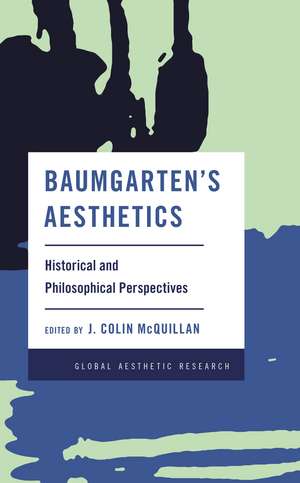
Baumgarten's Aesthetics: Historical and Philosophical Perspectives: Global Aesthetic Research
Editat de J. Colin McQuillanen Limba Engleză Hardback – 7 iul 2021






Preț: 719.64 lei
Preț vechi: 1150.44 lei
-37%
Puncte Express: 1079
Carte tipărită la comandă
Livrare economică 20 noiembrie-04 decembrie
Livrare prin curier în România Termenul estimat este afișat lângă disponibilitate.
Transport gratuit pentru acest produs Plată online sau ramburs, în funcție de opțiunile comenzii.
Retur gratuit în 14 zile Comandă securizată și suport în română.
Specificații
ISBN-13: 9781538146255
ISBN-10: 1538146258
Pagini: 416
Dimensiuni: 163 x 227 x 34 mm
Greutate: 0.72 kg
Editura: Bloomsbury Publishing
Colecția Rowman & Littlefield
Seria Global Aesthetic Research
Locul publicării:New York, United States
ISBN-10: 1538146258
Pagini: 416
Dimensiuni: 163 x 227 x 34 mm
Greutate: 0.72 kg
Editura: Bloomsbury Publishing
Colecția Rowman & Littlefield
Seria Global Aesthetic Research
Locul publicării:New York, United States
Cuprins
Introduction
J. Colin McQuillan
1.Baumgarten's Invention of Aesthetics
Ursula Franke
2. Baumgarten's Aesthetics: Topics and the Modern Ars inveniendi
Stefanie Buchenau
3. Beauty and Appearance in Baumgarten's Metaphysics and Aesthetics
Matthew McAndrew
4. Baumgarten's Conception of Aesthetic Truth in the Aesthetics
Angelica Nuzzo
5. Pietist Aisthesis and Moral Education in the Works of Alexander Gottlieb Baumgarten
Simon Grote
6. Wolffian Rationalism and Baumgarten's Aesthetics
J. Colin McQuillan
7. The Co-Founding of Aesthetics: Baumgarten and Meier
Alessandro Nannini
8. An Exercise in Humanity: Baumgarten and Mendelssohn on the Importance of Aesthetic Training
Anne Pollok
9. Herder's Engagement with Baumgarten
Hans Adler
10. The Majesty of Cognition: The Sublime in Baumgarten, Mendelssohn, and Kant
Robert R. Clewis
11. The Discipline of Aesthetics is the Aesthetics of Discipline: Baumgarten from Foucault's Perspective
Christoph Menke
12. The Happy Aesthetician and the Feminist Killjoy: Baumgarten and Ahmed
Amelia Hruby
J. Colin McQuillan
1.Baumgarten's Invention of Aesthetics
Ursula Franke
2. Baumgarten's Aesthetics: Topics and the Modern Ars inveniendi
Stefanie Buchenau
3. Beauty and Appearance in Baumgarten's Metaphysics and Aesthetics
Matthew McAndrew
4. Baumgarten's Conception of Aesthetic Truth in the Aesthetics
Angelica Nuzzo
5. Pietist Aisthesis and Moral Education in the Works of Alexander Gottlieb Baumgarten
Simon Grote
6. Wolffian Rationalism and Baumgarten's Aesthetics
J. Colin McQuillan
7. The Co-Founding of Aesthetics: Baumgarten and Meier
Alessandro Nannini
8. An Exercise in Humanity: Baumgarten and Mendelssohn on the Importance of Aesthetic Training
Anne Pollok
9. Herder's Engagement with Baumgarten
Hans Adler
10. The Majesty of Cognition: The Sublime in Baumgarten, Mendelssohn, and Kant
Robert R. Clewis
11. The Discipline of Aesthetics is the Aesthetics of Discipline: Baumgarten from Foucault's Perspective
Christoph Menke
12. The Happy Aesthetician and the Feminist Killjoy: Baumgarten and Ahmed
Amelia Hruby
Recenzii
This excellent volume on Baumgarten's aesthetics edited by J. Colin McQuillan provides a wide ranging set of essays that expand on Baumgarten's new science of sensible cognition as well as the aesthetic perfections of clarity and liveliness that characterize beauty. The essays collected in this volume also show how this new discipline relates to the modern search for the art of invention, the Pietist faith in communication through the affects, and Baumgarten's influence on later philosophers.
This volume of excellent studies helps the English readership better understand that the phenomenon of the aesthetic is a highly important modern development, and that, during its evolution in the eighteenth century, several ideas, insights and theoretical tracks were raised which later, especially after Immanuel Kant's contribution to the field, became underestimated, less discussed, if at all, or even misunderstood.
This is a vibrant collection of essays that decisively underlines A. G. Baumgarten's dynamism and independence as a thinker, carefully traces the breadth and depth of his historical influence, and makes a compelling and innovative case for his enduring contemporary relevance.
Baumgarten is an essential link in the tradition of modern German philosophy and his aesthetics is central to understanding the originality of his philosophical project. This volume unites the best, previous scholarship on Baumgarten's aesthetics with exciting new essays demonstrating the continued significance of his thought. It will be essential reading for all scholars of modern German philosophy and the history of aesthetics and, due to its thorough introduction and comprehensive scope, could also serve brilliantly as an introductory textbook.
This book should reignite interest in Baumgarten's aesthetics, appealing not only to historians of philosophy but also to philosophers of art and aesthetics.
This volume of excellent studies helps the English readership better understand that the phenomenon of the aesthetic is a highly important modern development, and that, during its evolution in the eighteenth century, several ideas, insights and theoretical tracks were raised which later, especially after Immanuel Kant's contribution to the field, became underestimated, less discussed, if at all, or even misunderstood.
This is a vibrant collection of essays that decisively underlines A. G. Baumgarten's dynamism and independence as a thinker, carefully traces the breadth and depth of his historical influence, and makes a compelling and innovative case for his enduring contemporary relevance.
Baumgarten is an essential link in the tradition of modern German philosophy and his aesthetics is central to understanding the originality of his philosophical project. This volume unites the best, previous scholarship on Baumgarten's aesthetics with exciting new essays demonstrating the continued significance of his thought. It will be essential reading for all scholars of modern German philosophy and the history of aesthetics and, due to its thorough introduction and comprehensive scope, could also serve brilliantly as an introductory textbook.
This book should reignite interest in Baumgarten's aesthetics, appealing not only to historians of philosophy but also to philosophers of art and aesthetics.