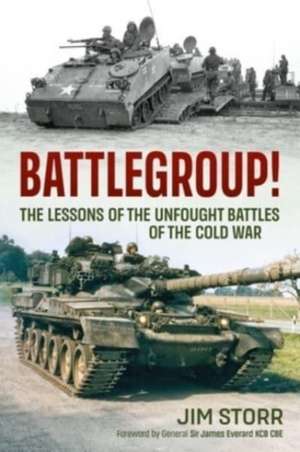
Battlegroup!
Autor Jim Storren Limba Engleză Paperback – 3 noi 2021
Battlegroup!: The Lessons of the Unfought Battles of the Cold War se încadrează în aria studiilor de istorie militară și tactică aplicată, fiind o resursă relevantă pentru înțelegerea dinamicii forțelor convenționale de pe Frontul Central European în deceniul final al Războiului Rece. Notăm cu interes focalizarea autorului, Jim Storr, pe nivelul tactic inferior — de la companie la brigadă și divizie — evitând generalizările strategice macro în favoarea unei analize riguroase a componentelor forțelor terestre. Considerăm că elementul distinctiv al lucrării este integrarea a două surse germane anterior neexploatate în literatura de limbă engleză, care oferă o perspectivă nouă asupra modului în care Bundeswehr plănuia să respingă un eventual atac al Pactului de la Varșovia. Textul este structurat metodic, începând cu cadrul strategic și continuând cu organizarea unităților, tactici de întârziere, apărare, contraatac și operațiuni în mediul urban sau pe timp de noapte. Acoperă aceeași arie tematică precum Secrets of the Cold War de Leland McCaslin, dar cu o abordare net mai tehnică și axată pe doctrină militară, în contrast cu perspectiva narativă a martorilor oculari. De asemenea, spre deosebire de The Cold War in Europe de Charles S. Maier, care analizează forțele politice și interpretările istoriografice, Battlegroup!: The Lessons of the Unfought Battles of the Cold War rămâne ancorat în realitatea materială a echipamentelor și a tacticilor de luptă. Această lucrare reflectă preocuparea constantă a lui Jim Storr pentru eficiența decizională și pregătirea umană, teme prezente și în lucrarea sa Something Rotten, unde acesta chestionează procesele organizaționale rigide. Volumul nu este o istorie contrafactuală, ci o investigație asupra lecțiilor ce pot fi extrase din bătăliile care, deși nu au avut loc, au modelat structura armatelor moderne.
Preț: 230.51 lei
Carte disponibilă
Livrare economică 11-25 noiembrie
Livrare express 27-31 octombrie pentru 41.75 lei
Specificații
ISBN-10: 1914059964
Pagini: 312
Dimensiuni: 153 x 234 x 15 mm
Greutate: 0.64 kg
Editura: HELION & COMPANY
V-ar putea interesa
-
 -15%Preț: 221.83 lei261.03 lei
 -
 -11%Preț: 412.96 lei464.00 lei
 -
 -33%Preț: 640.26 lei949.36 lei
 -
 French Arms Exports: The Business of SovereigntyLucie Béraud-SudreauPreț: 239.75 lei
 -
 The Soviet High Command, 1967-1989Dale Roy HerspringPreț: 475.83 lei
 -
 Preț: 175.04 lei
 -
 Shooting Down the Stealth FighterDjordje S AnicicPreț: 198.55 lei
De ce să citești această carte
Recomandăm această carte profesioniștilor din domeniul apărării, academicienilor și pasionaților de simulări tactice. Cititorul câștigă o înțelegere clară a modului în care organizarea, echipamentul și tacticile armatelor NATO și sovietice ar fi interacționat pe câmpul de luptă. Este o lectură esențială pentru a înțelege de ce Bundeswehr a adoptat un stil individual de luptă și cum ar fi influențat acesta rezultatul unui conflict convențional în Europa.
Despre autor
Profesorul Jim Storr este un fost militar de carieră transformat în analist și academic, fiind considerat unul dintre cei mai prolifici gânditori ai armatei britanice. După trecerea în rezervă, a dezvoltat o carieră de succes în consultanță, predare și cercetare. Opera sa este diversă, incluzând analize istorice precum The Anglo Saxon Conquest of England și critici ale structurilor organizaționale în Something Rotten. În Battlegroup!: The Lessons of the Unfought Battles of the Cold War, Storr utilizează experiența sa de teren pentru a decoda complexitatea tacticilor militare din anii '80, oferind o perspectivă tehnică și adesea provocatoare asupra istoriei recente.