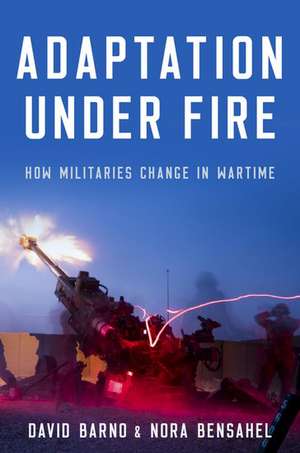
Adaptation under Fire: How Militaries Change in Wartime: Bridging the Gap
Autor David Barno, Nora Bensahelen Limba Engleză Hardback – 6 oct 2020
Din seria Bridging the Gap
-
 Preț: 168.08 lei
 - 14%
 Preț: 167.60 lei
 - 20%
 Preț: 148.73 lei
 - 24%
 Preț: 149.97 lei
 - 16%
 Preț: 160.02 lei
 - 20%
 Preț: 297.19 lei
 - 14%
 Preț: 150.23 lei
 - 12%
 Preț: 291.75 lei
 - 16%
 Preț: 162.03 lei
 - 16%
 Preț: 197.62 lei
 - 16%
 Preț: 198.62 lei
 - 15%
 Preț: 176.67 lei
 - 21%
 Preț: 145.97 lei
 - nou
 Preț: 154.86 lei
 - nou
 Preț: 172.51 lei
Preț: 229.56 lei
Preț vechi: 265.66 lei
-14%
Carte disponibilă
Livrare economică 19-24 noiembrie
Specificații
ISBN-10: 0190672056
Pagini: 440
Dimensiuni: 165 x 239 x 38 mm
Greutate: 0.73 kg
Editura: Oxford University Press
Colecția OUP USA
Seria Bridging the Gap
Locul publicării:New York, United States
V-ar putea interesa
-
 -11%Preț: 412.96 lei464.00 lei
 -
 -33%Preț: 640.26 lei949.36 lei
 -
 French Arms Exports: The Business of SovereigntyLucie Béraud-SudreauPreț: 239.75 lei
 -
 The Soviet High Command, 1967-1989Dale Roy HerspringPreț: 475.83 lei
 -
 Preț: 175.04 lei
 -
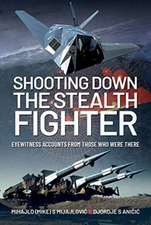 Shooting Down the Stealth FighterDjordje S AnicicPreț: 198.55 lei
 -
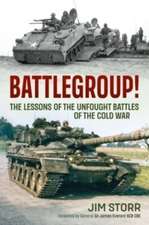 Battlegroup!Jim StorrPreț: 230.51 lei
Descriere
A critical look into how and why the U.S. military needs to become more adaptable.
Every military must prepare for future wars despite not really knowing the shape such wars will ultimately take. As former U.S. Secretary of Defense Robert Gates once noted: We have a perfect record in predicting the next war. We have never once gotten it right. In the face of such great uncertainty, militaries must be able to adapt rapidly in order to win. Adaptation under Fire identifies the characteristics that make militaries more adaptable, illustrated through historical examples and the recent wars in Iraq and Afghanistan.
Authors David Barno and Nora Bensahel argue that militaries facing unknown future conflicts must nevertheless make choices about the type of doctrine that their units will use, the weapons and equipment they will purchase, and the kind of leaders they will select and develop to guide the force to victory. Yet after a war begins, many of these choices will prove flawed in the unpredictable crucible of the battlefield. For a U.S. military facing diverse global threats, its ability to adapt quickly and effectively to those unforeseen circumstances may spell the difference between victory and defeat.
Barno and Bensahel start by providing a framework for understanding adaptation and include historical cases of success and failure. Next, they examine U.S. military adaptation during the nation's recent wars, and explain why certain forms of adaptation have proven problematic. In the final section, Barno and Bensahel conclude that the U.S. military must become much more adaptable in order to address the fast-changing security challenges of the future, and they offer recommendations on how to do so before it is too late.
Recenzii
...this book offers significant context and substance to our collective understanding of military change and how we conceptualise adaptability. Its clarity and purpose is refreshing in a field dominated by buzzwords and other language that routinely confuses activity and effects.
This is an important and timely book on the importance of adapting our military when confronted with a new enemy strategy. The authors draw on the wars in Afghanistan and Iraq for examples of when the commanders did not adapt their strategy to the challenge posed by unconventional warfare. And it describes how success was achieved when a new commander introduced a new strategy adapted to those challenges. A well-written and interesting analysis of a subject that has become critically important to the U.S. military.
Military leaders may fail to anticipate challenges or learn in advance from the experiences of other armed forces, but nothing is so fatally dangerous as failure to adapt in wartime. Barno and Bensahel are a unique soldier-scholar team who have written an important book on just that question. This is an outstanding and compelling work, grounded in recent history, that is of urgent practical as well as theoretical importance.
Historically, the American military learns expensively by failure. Our current and future enemies may deny us even the time to adapt. The sharp policy recommendations Dr. Bensahel and retired General Barno offer in this excellent book would improve our military's resilience in advance--something the American military urgently needs, and that will lower the cost in blood and treasure our country pays in future wars.
Notă biografică
Lt. General David Barno, USA (Ret.) is a Visiting Professor of Strategic Studies and Senior Fellow at the Philip Merrill Center at the Johns Hopkins School of Advanced International Studies. He is also a Contributing Editor and Columnist for War on the Rocks. General Barno completed a thirty-year active duty Army career where he commanded at every level. He served with Army Ranger battalions in combat during both the Panama and Grenadainvasions. General Barno was the overall commander of U.S. and coalition forces in Afghanistan from 2003 to 2005.Dr. Nora Bensahel is a Visiting Professor of Strategic Studies and Senior Fellow of the Merrill Center at the Johns Hopkins School of Advanced International Studies (SAIS). She is also a Contributing Editor and Columnist for War on the Rocks. She has held senior positions at the Center for a New American Security and the RAND Corporation, and previously taught at American University and Georgetown University. She holds a Ph.D. inpolitical science from Stanford University.