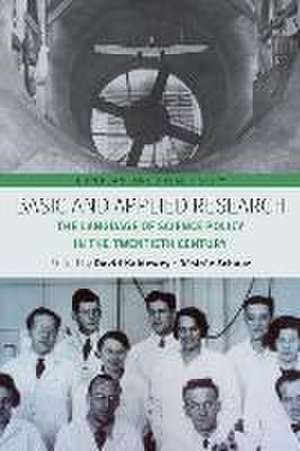
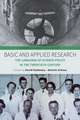
Basic and Applied Research: European Conceptual History, cartea 4
Editat de David Kaldewey, Désirée Schauzen Limba Engleză Paperback – 9 iun 2023




Preț: 136.67 lei
Puncte Express: 205
Carte indisponibilă temporar
Livrare prin curier în România Termenul estimat este afișat lângă disponibilitate.
Transport gratuit de la 400.00 lei Plată online sau ramburs, în funcție de opțiunile comenzii.
Retur gratuit în 14 zile Comandă securizată și suport în română.
Specificații
ISBN-13: 9781800739383
ISBN-10: 1800739389
Pagini: 314
Dimensiuni: 152 x 229 x 17 mm
Greutate: 0.46 kg
Editura: BERGHAHN BOOKS
Colecția European Conceptual History
Seria European Conceptual History
ISBN-10: 1800739389
Pagini: 314
Dimensiuni: 152 x 229 x 17 mm
Greutate: 0.46 kg
Editura: BERGHAHN BOOKS
Colecția European Conceptual History
Seria European Conceptual History
Notă biografică
Désirée Schauz is an associate researcher at the Leibniz Centre for Contemporary History Potsdam. She holds a PhD in modern history from the University of Cologne and earned her habilitation in the history of science and technology at the Technical University of Munich. She has published widely on the role of concepts in science and research policy. Her latest book deals with the history of the Göttingen Academy of Sciences and Humanities (1914-1965).
Cuprins
List of Figures
Preface
List of Abbreviations
Introduction: Why Do Concepts Matter in Science Policy?
Désirée Schauz and David Kaldewey
PART I: GENEALOGIES OF SCIENCE POLICY DISCOURSES
Chapter 1. Categorizing Science in Nineteenth and Early Twentieth-Century Britain
Robert Bud
Chapter 2. Professional Devotion, National Needs, Fascist Claims, and Democratic Virtues: The Language of Science Policy in Germany
Désirée Schauz and Gregor Lax
Chapter 3. Transforming Pure Science into Basic Research: The Language of Science Policy in the United States
David Kaldewey and Désirée Schauz
PART II: CONCEPTUAL SYNCHRONIZATION AND CULTURAL VARIATION
Chapter 4. Fundamental Research and New Scientific Arrangements for the Development of Britain's Colonies after 1940
Sabine Clarke
Chapter 5. Basic Research in the Max Planck Society: Science Policy in the Federal Republic of Germany, 1945-1970
Carola Sachse
Chapter 6. Beyond the Basic/Applied Distinction?: The Scientific-Technological Revolution in the German Democratic Republic, 1945-1989
Manuel Schramm
Chapter 7. Applied Science in Stalin's Time: Hungary, 1945-1953
György Péteri
Chapter 8. Theory Attached to Practice: Chinese Debates over Basic Research from Thought Remolding to the Bomb, 1949-1966
Zuoyue Wang
PART III: OUTLOOK
Chapter 9. The Language of Science Policy in the Twenty-First Century: What Comes after Basic and Applied Research?
Tim Flink and David Kaldewey
Indexes
Preface
List of Abbreviations
Introduction: Why Do Concepts Matter in Science Policy?
Désirée Schauz and David Kaldewey
PART I: GENEALOGIES OF SCIENCE POLICY DISCOURSES
Chapter 1. Categorizing Science in Nineteenth and Early Twentieth-Century Britain
Robert Bud
Chapter 2. Professional Devotion, National Needs, Fascist Claims, and Democratic Virtues: The Language of Science Policy in Germany
Désirée Schauz and Gregor Lax
Chapter 3. Transforming Pure Science into Basic Research: The Language of Science Policy in the United States
David Kaldewey and Désirée Schauz
PART II: CONCEPTUAL SYNCHRONIZATION AND CULTURAL VARIATION
Chapter 4. Fundamental Research and New Scientific Arrangements for the Development of Britain's Colonies after 1940
Sabine Clarke
Chapter 5. Basic Research in the Max Planck Society: Science Policy in the Federal Republic of Germany, 1945-1970
Carola Sachse
Chapter 6. Beyond the Basic/Applied Distinction?: The Scientific-Technological Revolution in the German Democratic Republic, 1945-1989
Manuel Schramm
Chapter 7. Applied Science in Stalin's Time: Hungary, 1945-1953
György Péteri
Chapter 8. Theory Attached to Practice: Chinese Debates over Basic Research from Thought Remolding to the Bomb, 1949-1966
Zuoyue Wang
PART III: OUTLOOK
Chapter 9. The Language of Science Policy in the Twenty-First Century: What Comes after Basic and Applied Research?
Tim Flink and David Kaldewey
Indexes
Descriere
Descriere de la o altă ediție sau format:
Basic and Applied Research traces the conceptual history of the distinction between basic and applied research to its origins in nineteenth-century Europe, explores its role in different ideological contexts after World War II, and ultimately provides valuable insights into present-day EU research policy.
Basic and Applied Research traces the conceptual history of the distinction between basic and applied research to its origins in nineteenth-century Europe, explores its role in different ideological contexts after World War II, and ultimately provides valuable insights into present-day EU research policy.