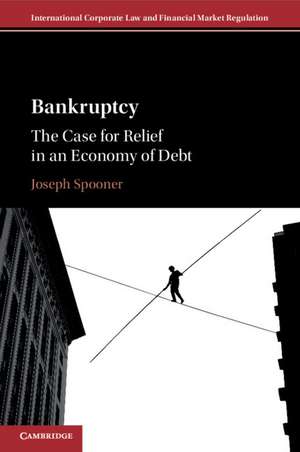
Bankruptcy
Autor Joseph Spooneren Limba Engleză Paperback – 19 mai 2022
Preț: 251.03 lei
Puncte Express: 377
Carte tipărită la comandă
Livrare economică 24 noiembrie-08 decembrie
Livrare prin curier în România Termenul estimat este afișat lângă disponibilitate.
Transport gratuit de la 400.00 lei Plată online sau ramburs, în funcție de opțiunile comenzii.
Retur gratuit în 14 zile Comandă securizată și suport în română.
Specificații
ISBN-13: 9781316617779
ISBN-10: 1316617777
Pagini: 308
Dimensiuni: 152 x 229 x 17 mm
Greutate: 0.41 kg
Ediția:Nouă
Editura: Cambridge University Press
Locul publicării:Cambridge, United Kingdom
ISBN-10: 1316617777
Pagini: 308
Dimensiuni: 152 x 229 x 17 mm
Greutate: 0.41 kg
Ediția:Nouă
Editura: Cambridge University Press
Locul publicării:Cambridge, United Kingdom
Cuprins
1. Introduction; 2. Financialised capitalism and the centrality of household debt; 3. Consumer bankruptcy theory and the case for debt relief; 4. A consumer bankruptcy marketplace; 5. The limits of contractual consumer bankruptcy; 6. The austere creditor: austerity, bankruptcy policy and government debt collection; 7. Moral hazard and bankruptcy abuse prevention; 8. Conclusion; Index.
Recenzii
'This reviewer highly recommends this book for people who want to learn more about the consumer debt-based economy and ways to make it fairer and more efficient.' R. H. Scott, Choice
'The book is essential reading for anyone who is interested in understanding the problem of consumer debt and how best to address it. It is an indispensable addition for all university libraries.' Eugenio Vaccari, Journal of International Banking Law and Regulation
'The book is essential reading for anyone who is interested in understanding the problem of consumer debt and how best to address it. It is an indispensable addition for all university libraries.' Eugenio Vaccari, Journal of International Banking Law and Regulation
Descriere
Excessive household debt has allowed for economic growth, but this model has become increasingly unstable. Spooner examines bankruptcy law as a potential solution.