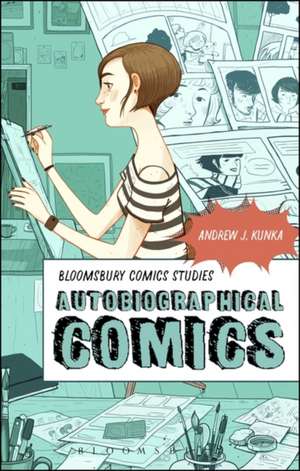
Autobiographical Comics: Bloomsbury Comics Studies
Autor Professor Andrew J. Kunkaen Limba Engleză Hardback – 2 noi 2017
Suntem de părere că volumul Autobiographical Comics reprezintă o resursă academică esențială pentru studenții din facultățile de litere și arte, cercetătorii în studii culturale și practicienii care doresc să înțeleagă mecanismele narative ale scrierii vieții în format grafic. Professor Andrew J. Kunka propune o cartografiere riguroasă a unui gen care a evoluat de la marginile culturii underground la recunoașterea critică internațională. Abordarea sa pornește de la definirea conceptului de autobiografie grafică și continuă cu o cronologie detaliată a evoluției acestuia, oferind un context solid pentru înțelegerea modului în care experiența personală este tradusă vizual.
Structura cărții este concepută pentru a facilita studiul individual și universitar, fiind organizată tematic și cronologic. După o introducere teoretică necesară, autorul analizează impactul social al genului prin prisma unor teme sensibile precum trauma, sexualitatea, etnia și „medicina grafică”. Secțiunea dedicată textelor-cheie oferă analize aplicate pe opere fundamentale, de la Maus de Art Spiegelman și Persepolis de Marjane Satrapi, până la Fun Home de Alison Bechdel. Această progresie de la teorie la analiză concretă ajută cititorul să identifice inovațiile formale aduse de fiecare autor în parte.
Considerăm că această lucrare acoperă o arie tematică similară cu Serial Selves de Frederik Byrn Køhlert, însă Autobiographical Comics adoptă o perspectivă mai generalistă și pedagogică. În timp ce volumul lui Køhlert se concentrează pe identitățile marginalizate, textul lui Kunka funcționează ca un ghid de referință complet, incluzând glosare, interviuri și resurse online, devenind astfel un instrument de lucru mult mai versatil pentru curriculumul universitar. Tonul este unul academic, dar accesibil, evitând jargonul excesiv în favoarea unei clarități care pune în valoare complexitatea mediului vizual.



Preț: 582.69 lei
Preț vechi: 823.91 lei
-29%
Carte tipărită la comandă
Livrare economică 27 noiembrie-11 decembrie
Specificații
ISBN-10: 1474227856
Pagini: 304
Ilustrații: 20 bw illus
Dimensiuni: 142 x 220 x 22 mm
Greutate: 0.49 kg
Ediția:HPOD
Editura: Bloomsbury Publishing
Colecția Bloomsbury Academic
Seria Bloomsbury Comics Studies
Locul publicării:London, United Kingdom
V-ar putea interesa
-
 The Secret Thoughts of MenSteven Appleby-16%Preț: 13.05 lei15.61 lei
 -
 -37%Preț: 176.39 lei279.17 lei
 -
 WebcomicsDr Sean Kleefeld-26%Preț: 193.03 lei260.13 lei
 -
 Comic Books and American Cultural History: An AnthologyMatthew Pustz-15%Preț: 258.53 lei305.31 lei
 -
 Superhero ComicsDr Chris Gavaler-24%Preț: 199.48 lei263.17 lei
 -
 -24%Preț: 280.92 lei371.07 lei
 -
 -22%Preț: 98.71 lei127.28 lei
 -
 Nick CardyNick Cardy-18%Preț: 118.12 lei143.22 lei
 -
 Quentin BlakeJoanna Carey-16%Preț: 92.43 lei110.45 lei
De ce să citești această carte
Recomandăm această carte oricărui cititor care dorește să depășească lectura de suprafață a romanelor grafice. Veți câștiga o înțelegere profundă a modului în care autorii folosesc limbajul vizual pentru a procesa trauma și memoria. Este un instrument indispensabil pentru studenți, oferind toate resursele necesare — de la terminologie critică la bibliografii adnotate — pentru a dezvolta analize originale asupra unor opere celebre precum Maus sau Persepolis.
Despre autor
Professor Andrew J. Kunka este profesor de limba engleză la Universitatea din South Carolina Sumter, SUA, unde s-a specializat în studiul literaturii moderne și al benzilor desenate. Cu o activitate academică bogată, acesta a contribuit semnificativ la legitimarea studiilor despre benzi desenate în mediul universitar. Expertiza sa în analiza formelor narative este dublată de o experiență editorială solidă, fiind și co-editor al volumului „May Sinclair: Moving Towards the Modern”. În Autobiographical Comics, Kunka își folosește experiența pedagogică pentru a sintetiza istorii complexe într-un format accesibil cercetării contemporane.
Descriere
· The history and rise of autobiographical comics
· Cultural contexts
· Key texts - including Maus, Robert Crumb, Persepolis, Fun Home, and American Splendor
· Important theoretical and critical approaches to autobiographical comics
Autobiographical Comics includes a glossary of crucial critical terms, annotated guides to further reading and online resources and discussion questions to help students and readers develop their understanding of the genre and pursue independent study.
Cuprins
Acknowledgements
1. Introduction: What Are Autobiographical Comics?
2. The History of Autobiographical Comics
3. Critical Questions
4. Social and Cultural Impact
Trauma
Adolescence
The Quotidian and the Confessional
Gender and Sexuality
Race and Ethnicity
Graphic Medicine
Censorship and Controversy
Self-Publishing and Web Comics
5. Key Texts
Justin Green, Binky Brown Meets the Holy Virgin Mary
Robert Crumb and Aline Kominsky-Crumb
Harvey Pekar, et al, American Splendor
Keiji Nakazawa, Barefoot Gen: A Cartoon Story of Hiroshima
Art Spiegelman, Maus and In the Shadow of No Towers
Phoebe Gloeckner, A Child's Life and The Diary of a Teenage Girl
Joe Matt, Chester Brown, and Seth
Lynda Barry, One Hundred Demons
Craig Thompson, Blankets
Marjane Satrapi, Persepolis
Alison Bechdel, Fun Home
6. Appendix
Appendix 1: Autobiographical Comics Panel
Appendix 2: Interview with Jennifer Hayden
Appendix 3: David Chelsea
Appendix 4: Ryan Claytor
7. Glossary
8. Resources
Primary Texts
Critical Bibliography
9. Index
Recenzii
Kunka offers a useful overview of the subject, with an inclusive approach that includes everything from "proto-autobiographical comics" (such as Winsor McCay's inclusion of a cartoonist character in his early strips) to the latest web comics, and scrupulously cites his sources, making it easy to locate relevant literature on any of the topics he discusses . [The book] offer[s] insightful and specific analysis that can be comprehended without requiring total immersion in the latest and trendiest academic jargon.
Autobiographical Comics is a well-informed, highly readable, and perceptive overview that will be extremely useful for students and teachers looking for introductory material and bibliographic references for further study . Kunka balances depth and brevity with skill . The endnotes, glossary, and extensive bibliography highlight the author's deep knowledge of the field and are indispensable tools for further scholarship. As a studying and teaching tool, Autobiographical Comics is a superb introduction to the field that achieves accessibility without diminishing scholarly rigor . Autobiographical Comics is the best study guide available, and Kunka's generosity of scholarship and tone provides a robust platform for teaching and researching graphic life narratives.
As an introduction to a genre, a reference guide, and a critical study, Andrew J. Kunka's Autobiographical Comics represents a necessary foray into the particulars of autobiographical graphic narratives. His book contributes to the Bloomsbury Comics Studies series, upholding its commitment to expansive and accessible introductions to comics and Comics Studies. Kunka deftly juggles concepts new and familiar to Comics Studies, as his thorough survey of this genre takes up questions of reliability, authenticity, and objectivity . A tremendous resource for anyone crafting a syllabus and hoping to include popular or lesser known works. Kunka's introduction guides and helps us interrogate the genre of autobiographical comics. His careful survey and his attention to texts and critical questions both popular and lesser known make this book a clear and compelling resource for readers of comics who might wonder about the narrative, stylistic, or thematic questions behind comics that represent, in so many different ways, autobiographical experiences.
Caracteristici
Notă biografică
Andrew J. Kunka is Professor of English at University of South Carolina Sumter, USA. He is co-editor of May Sinclair: Moving Towards the Modern (2006).