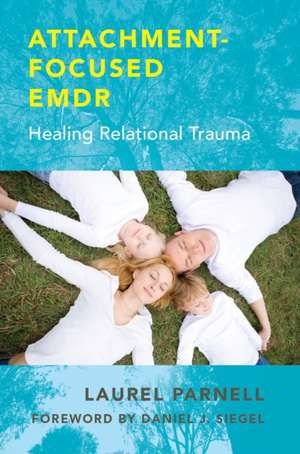
Attachment-Focused EMDR
Autor Laurel Parnellen Limba Engleză Hardback – 7 oct 2013
Prin volumul Attachment-Focused EMDR, Laurel Parnell oferă clinicienilor o metodologie riguroasă pentru a aborda rănile de atașament care, de cele mai multe ori, rămân rezistente la formele convenționale de terapie prin vorbire. Apreciem modul în care autoarea traduce neuroștiința atașamentului într-un set de instrumente practice, permițând terapeutului să catalizeze integrarea neuronală prin modificări specifice ale protocolului EMDR standard. Ne-a atras atenția în mod deosebit secțiunea dedicată resurselor de reparare a atașamentului, care poate fi utilizată imediat în cabinet, indiferent dacă clinicianul are sau nu o formare completă în EMDR. Textul este structurat progresiv: de la fundamentele teoretice ale celor „patru S ai atașamentului” (seen, safe, soothed, secure), până la tehnici avansate de desensibilizare și utilizarea creativă a interveavelor pentru a debloca procesarea proceselor traumatice. Această lucrare reprezintă o evoluție firească în opera autoarei, rafinând conceptele explorate anterior în EMDR in the Treatment of Adults Abused as Children, dar cu un accent mult mai pronunțat pe neurobiologia relațională. Comparativ cu Integrating Relational Psychoanalysis and EMDR de Hemda Arad, care propune o fuziune teoretică între psihanaliză și EMDR, volumul de față este mult mai orientat spre protocoale clinice și intervenții structurate. De asemenea, poate fi considerat o alternativă mai tehnică la Attachment in Psychotherapy de David J. Wallin pentru rezidenții și practicienii care doresc să combine teoria atașamentului cu o metodă de procesare accelerată a traumelor, oferind un cadru mai aplicat pentru cazurile de neglijare timpurie.
Preț: 331.95 lei
Preț vechi: 349.42 lei
-5%
Carte disponibilă
Livrare economică 09-23 noiembrie
Livrare express 23-29 octombrie pentru 49.12 lei
Specificații
ISBN-10: 0393707458
Pagini: 432
Dimensiuni: 161 x 244 x 35 mm
Greutate: 0.82 kg
Editura: W. W. Norton & Company
V-ar putea interesa
-
 Emdr in the Treatment of Adults Abused as ChildrenLaurel Parnell-5%Preț: 239.48 lei252.09 lei
 -
 Healing TraumaDaniel J Siegel-5%Preț: 334.34 lei351.94 lei
 -
 A Therapist's Guide to EMDRLaurel Parnell-5%Preț: 306.63 lei322.77 lei
 -
 The Science of the Art of PsychotherapyAllan Schore-5%Preț: 359.60 lei378.52 lei
 -
 The Neurobiology of Attachment-Focused TherapyDaniel A. Hughes-5%Preț: 223.20 lei234.94 lei
 -
 Preț: 292.65 lei
 -
 Preț: 257.81 lei
 -
 Healing Relational Trauma WorkbookDaniel A HughesPreț: 268.78 lei
 -
 Treating Attachment Disorders, Second Edition: From Theory to TherapyKarl Heinz Brisch-5%Preț: 361.52 lei380.54 lei
 -
 Attachment in PsychotherapyDavid J. Wallin-5%Preț: 333.68 lei351.24 lei
 -
 -5%Preț: 245.23 lei258.14 lei
 -
 -5%Preț: 505.98 lei532.61 lei
 -
 -5%Preț: 327.13 lei344.34 lei
 -
 Waking the Tiger: Healing TraumaPeter A. Levine-22%Preț: 112.47 lei144.39 lei
 -
 Healing Developmental TraumaAline Lapierre-18%Preț: 125.15 lei152.43 lei
 -
 -5%Preț: 300.73 lei316.56 lei
 -
 Nurturing ResilienceKathy L. Kain-5%Preț: 125.97 lei132.60 lei
 -
 When the Body Says NoGabor Mate-19%Preț: 75.30 lei93.07 lei
 -
 -33%Preț: 642.56 lei953.88 lei
De ce să citești această carte
Această carte este esențială pentru psihoterapeuții care lucrează cu adulți ce prezintă deficite de autoreglare și traume de dezvoltare. Cititorul câștigă o înțelegere profundă a modului în care relațiile timpurii modelează circuitele neurale și, mai important, învață cum să utilizeze protocolul EMDR adaptat pentru a repara aceste baze de siguranță deficitare. Este un ghid clinic care transformă teoria atașamentului într-o intervenție terapeutică măsurabilă.
Despre autor
Laurel Parnell, Ph.D., este psiholog clinician, consultant și formator internațional în metoda EMDR, fiind considerată una dintre figurile centrale în adaptarea acestei terapii pentru traumele complexe. Cu o experiență acumulată din 1991, a instruit mii de clinicieni și a publicat lucrări fundamentale care au definit tratamentul adulților abuzați în copilărie prin EMDR. Expertiza sa integrează cercetarea din neuroștiințe cu practica clinică, concentrându-se pe modul în care procesarea bilaterală poate accelera vindecarea traumelor relaționale profunde. În lucrările sale recente, precum Rewiring the Addicted Brain with Emdr-Based Treatment, autoarea explorează intersecția dintre atașament și mecanismele adicției.
Descriere scurtă
Readers will find science-based ideas about how our early relationships shape the way the mind and brain develop from our young years into our adult lives. Our connections with caregivers induce neural circuit firings that persist throughout our lives, shaping how we think, feel, remember, and behave. When we are lucky enough to have secure attachment experiences in which we feel seen, safe, soothed, and secure--the "four S's of attachment" that serve as the foundation for a healthy mind--these relational experiences stimulate the neuronal activation and growth of the integrative fibers of the brain.
EMDR is a powerful tool for catalyzing integration in an individual across several domains, including memory, narrative, state, and vertical and bilateral integration. In Laurel Parnell's attachment-based modifications of the EMDR approach, the structural foundations of this integrative framework are adapted to further catalyze integration for individuals who have experienced non-secure attachment and developmental trauma.
The book is divided into four parts. Part I lays the groundwork and outlines the five basic principles that guide and define the work. Part II provides information about attachment-repair resources available to clinicians. This section can be used by therapists who are not trained in EMDR. Part III teaches therapists how to use EMDR specifically with an attachment-repair orientation, including client preparation, target development, modifications of the standard EMDR protocol, desensitization, and using interweaves. Case material is used throughout. Part IV includes the presentation of three cases from different EMDR therapists who used attachment-focused EMDR with their clients. These cases illustrate what was discussed in the previous chapters and allow the reader to observe the theoretical concepts put into clinical practice--giving the history and background of the clients, actual EMDR sessions, attachment-repair interventions within these sessions and the rationale for them, and information about the effects of the interventions and the course of treatment.