
Artificial Intelligence for Energy Efficiency: Advances in Intelligent Energy Systems
Autor Dasheng Lee, Ming-Shan Jeng, I-Haur Tsaien Limba Engleză Paperback – 24 apr 2026
- Explores the integration of AI algorithms with the operational principles of electrical machinery and energy systems, offering an in-depth understanding of how AI can enhance energy efficiency
- Analyses real-world AI application case studies in factories, buildings, and cities, providing practical insights into the effectiveness of AI applications in improving energy efficiency
- Evaluates the energy consumption of AI computations, proposing solutions to perform more computations with relatively lower energy consumption
- Includes reference designs for AI-driven energy-efficient motors, HVAC systems, smart buildings, and sustainable cities







Preț: 999.51 lei
Preț vechi: 1427.15 lei
-30%
Carte tipărită la comandă
Livrare economică 30 noiembrie-14 decembrie
Specificații
ISBN-10: 0443367299
Pagini: 434
Dimensiuni: 152 x 229 mm
Editura: ELSEVIER SCIENCE
Colecția Advances in Intelligent Energy Systems
Seria Advances in Intelligent Energy Systems
V-ar putea interesa
-
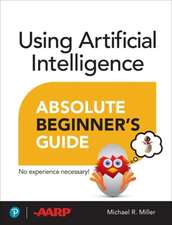 Using Artificial Intelligence Absolute Beginner's GuideMichael Miller-20%Preț: 201.72 lei252.15 lei
 -
 The Means of Prediction: How AI Really Works (and Who Benefits)Maximilian Kasy-20%Preț: 121.37 lei151.71 lei
 -
 -20%Preț: 1437.53 lei1796.91 lei
 -
 The Power of Design and Convergence of AITai Lee Siang-20%Preț: 419.95 lei524.93 lei
 -
 -20%Preț: 371.62 lei464.52 lei
 -
 -20%Preț: 1371.39 lei1714.24 lei
 -
 AI-Driven Sustainability: The Future of Human Resources ManagementJoanna Rosak-Szyrocka-20%Preț: 419.94 lei524.92 lei
 -
 Preț: 105.17 lei
 -
 The Essential Book of AIAnne Rooney-20%Preț: 76.61 lei95.77 lei
 -
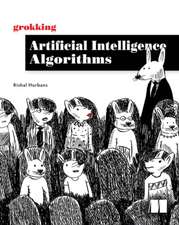 Grokking Artificial Intelligence AlgorithmsRishal Hurbans-20%Preț: 369.70 lei462.13 lei
 -
 Preț: 400.73 lei
 -
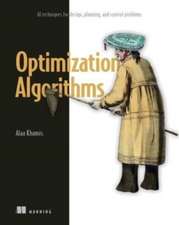 Optimization AlgorithmsAlaa Khamis-20%Preț: 405.89 lei507.37 lei
 -
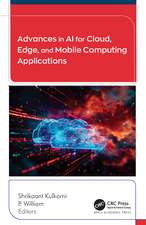 Advances in AI for Cloud, Edge, and Mobile Computing ApplicationsShrikaant Kulkarni-20%Preț: 1296.62 lei1620.78 lei
 -
 How to Make AI UsefulMagnus ReinerPreț: 94.13 lei
 -
 -24%Preț: 948.68 lei1248.27 lei
 -
 Application of Advance Techniques in Power and Energy SystemsPartha Sarathee Bhowmik-18%Preț: 1278.61 lei1559.28 lei
 -
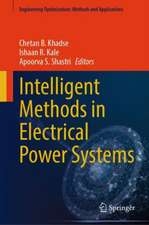 Intelligent Methods in Electrical Power SystemsChetan B. Khadse-20%Preț: 1201.58 lei1501.96 lei
 -
 Artificial Intelligence for Sustainable EnergyJimson Mathew-18%Preț: 1328.97 lei1620.70 lei
 -
 Artificial Intelligence for LibrariesBrady D. Lund-11%Preț: 341.76 lei385.57 lei
 -
 AI and MicroservicesDileep Kumar Pandiya-20%Preț: 263.90 lei329.88 lei
Cuprins
2. Introduction to AI Algorithms Applied in Enhancing Energy Efficiency
3. AI Applications in Enhancing Motor Efficiency
4. AI Applications in Building & Energy Saving for Building Equipment
5, AI Applications in Smart City Development and Achieving Urban Sustainability
6. AI Computing Power Saving
7. The Evolution of AI and the Limits of Energy Efficiency Improvement
8, Conclusions and Future Prospects on Applying AI for Energy Efficiency
Notă biografică
Prof. Lee has published 23 SCI papers in the past five years (2019-2023), all related to the application of Artificial Intelligence (AI) in enhancing energy efficiency. These papers have been extensively cited, with an average citation count of 36 for the nine papers where he was the first author. His Field-Weighted Citation Impact (FWCI) is 1.235, and he has achieved an h-index of 20. His latest publication in "Applied Thermal Engineering" focuses on "Artificial Intelligence Enabled Energy-Efficient Heating, Ventilation, and Air Conditioning System: Design, Analysis, and Necessary Hardware Upgrades." This paper details the design methods for improving the energy efficiency of HVAC systems using AI and has already garnered 3 citations within three months of publication. These achievements demonstrate Prof. Lee's unique academic insights in AI for Energy Efficiency.
Beyond academic accomplishments, in the past five years, Prof. Lee has undertaken 46 research projects commissioned by the government and enterprises, totaling 3.1 million USD. Most of these projects relate to the application of AI in energy conservation, including in air conditioning systems, buildings, factories, and even urban public facilities. His extensive experience in industry-academia collaboration enriches his book on AI for Energy Efficiency, providing many practical examples of improved energy efficiency, making the content more comprehensive.