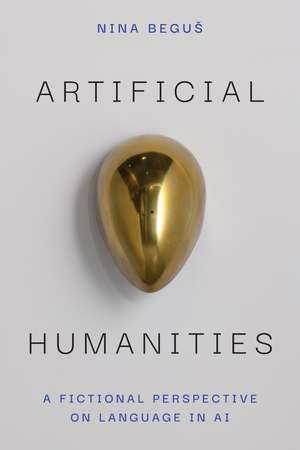
Artificial Humanities: A Fictional Perspective on Language in AI
Autor Nina Begušen Limba Engleză Hardback – 25 noi 2025
Highlighting the impact of human-like AI design, from gendered virtual assistants to romanticized social robots, the book shows how these technologies intersect with longstanding humanistic questions about the concepts of creativity and language as well as the relations between humans and machines. Additionally, the book explores AI’s applications in medical fields, particularly psychiatry and neurotechnology, including how AI interacts with the human body and mind to address conditions like paralysis. By emphasizing the philosophical and cultural implications of these technologies, Beguš highlights the need for responsible innovation that prioritizes human well-being as well as machine potential outside of human imitation. Accessible and thought-provoking, Artificial Humanities offers tools for analyzing and assessing technologies while they are being developed and invites readers to see how the humanities can guide us toward a more thoughtful future for AI.
Preț: 701.58 lei
Preț vechi: 911.13 lei
-23% Nou
Puncte Express: 1052
Preț estimativ în valută:
124.15€ • 145.58$ • 109.03£
124.15€ • 145.58$ • 109.03£
Carte indisponibilă temporar
Doresc să fiu notificat când acest titlu va fi disponibil:
Se trimite...
Preluare comenzi: 021 569.72.76
Specificații
ISBN-13: 9780472077731
ISBN-10: 0472077732
Pagini: 308
Ilustrații: 25 Illustrations
Dimensiuni: 152 x 229 mm
Greutate: 0.45 kg
Editura: UNIVERSITY OF MICHIGAN PRESS
Colecția University of Michigan Press
ISBN-10: 0472077732
Pagini: 308
Ilustrații: 25 Illustrations
Dimensiuni: 152 x 229 mm
Greutate: 0.45 kg
Editura: UNIVERSITY OF MICHIGAN PRESS
Colecția University of Michigan Press
Notă biografică
Nina Beguš is Researcher and Lecturer at the Center for Science, Technology, Medicine & Society at the University of California, Berkeley.
Cuprins
List of Illustrations
Introduction: The Pygmalion Myth in Technology
What Is Artificial Humanities?
When Machine Speaks
The History of the Pygmalion Myth
When Galatea Speaks
Overview of the Book
Chapter 1: Inventing New Elizas
1.1 Shaw’s Heritage
1.2 The Turing Test
1.3 The Eliza Effect
1.4 Relationality
1.5 Becoming Human
1.6 Language-Centeredness in AI
1.7 Machine Speech Training
1.8 Artificial Humanities: Language Enhancement
Chapter 2: Illusions of Social Robotics
2.1 Social Robots: Hanson’s Sophia
2.2 Pygmalion’s Perspective
2.2.1 Context: Makavejev
2.2.2 Periphery: Šeligo
2.3 Both Sides Now: Nešković
2.4 Galatea’s Perspective
2.4.1 Speak, Galatea: Feminist Authors
2.5 Nonhuman Perception: Lem
2.6 Artificial Humanities: In Search of the Nonhuman
2.6.1 Linguistic Execution: Jonze
2.6.2 Visual Execution: Garland
Chapter 3: Pygmalionism and Paralysis in Medical Ethics
3.1 Pygmalionism in the Medical and Legal Literature
3.1.1 Literary References
3.1.2 Sexology
3.1.3 Law
3.1.4 Psychology
3.2 Modern Pygmalions
3.2.1 Virtual Beings
3.2.2 Pygmalionesque Psychotherapy: Gillespie
3.3 Galatean Paralysis
3.3.1 Moore
3.3.2 Sheldon
3.4 Literature and Medical Ethics
3.4.1 Locked-in: Vigand and Bauby
3.4.2 Asimov and Technology Ethics
3.5 Artificial Humanities: Building Ethically
Chapter 4: Language in Humans, Hybrids, and Machines
4.1 Humans: A Conceptual History of Language
4.1.1 A Commentary on Human Exclusivity in Language
4.2 Hybrids: Shelley
4.3 Machines: Powers
4.4 Artificial Humanities: Changing Concepts
Chapter 5: Machine Writing
5.1 Large Language Models
5.1.1 Structure is All You Need
5.2 Literary Market: Dahl
5.3 Literary Criticism: Tomažin
5.4 Writing Literature: Kehlmann and Allado-McDowell
5.5 Artificial Humanities: Centering Fiction
Conclusion: A Program for Artificial Humanities
6.1 AI Tropes
6.2 What Artificial Humanities Offers to STEM
6.3 The Role of Literary Studies
Notes
Bibliography
Index
Introduction: The Pygmalion Myth in Technology
What Is Artificial Humanities?
When Machine Speaks
The History of the Pygmalion Myth
When Galatea Speaks
Overview of the Book
Chapter 1: Inventing New Elizas
1.1 Shaw’s Heritage
1.2 The Turing Test
1.3 The Eliza Effect
1.4 Relationality
1.5 Becoming Human
1.6 Language-Centeredness in AI
1.7 Machine Speech Training
1.8 Artificial Humanities: Language Enhancement
Chapter 2: Illusions of Social Robotics
2.1 Social Robots: Hanson’s Sophia
2.2 Pygmalion’s Perspective
2.2.1 Context: Makavejev
2.2.2 Periphery: Šeligo
2.3 Both Sides Now: Nešković
2.4 Galatea’s Perspective
2.4.1 Speak, Galatea: Feminist Authors
2.5 Nonhuman Perception: Lem
2.6 Artificial Humanities: In Search of the Nonhuman
2.6.1 Linguistic Execution: Jonze
2.6.2 Visual Execution: Garland
Chapter 3: Pygmalionism and Paralysis in Medical Ethics
3.1 Pygmalionism in the Medical and Legal Literature
3.1.1 Literary References
3.1.2 Sexology
3.1.3 Law
3.1.4 Psychology
3.2 Modern Pygmalions
3.2.1 Virtual Beings
3.2.2 Pygmalionesque Psychotherapy: Gillespie
3.3 Galatean Paralysis
3.3.1 Moore
3.3.2 Sheldon
3.4 Literature and Medical Ethics
3.4.1 Locked-in: Vigand and Bauby
3.4.2 Asimov and Technology Ethics
3.5 Artificial Humanities: Building Ethically
Chapter 4: Language in Humans, Hybrids, and Machines
4.1 Humans: A Conceptual History of Language
4.1.1 A Commentary on Human Exclusivity in Language
4.2 Hybrids: Shelley
4.3 Machines: Powers
4.4 Artificial Humanities: Changing Concepts
Chapter 5: Machine Writing
5.1 Large Language Models
5.1.1 Structure is All You Need
5.2 Literary Market: Dahl
5.3 Literary Criticism: Tomažin
5.4 Writing Literature: Kehlmann and Allado-McDowell
5.5 Artificial Humanities: Centering Fiction
Conclusion: A Program for Artificial Humanities
6.1 AI Tropes
6.2 What Artificial Humanities Offers to STEM
6.3 The Role of Literary Studies
Notes
Bibliography
Index
Descriere
Using the humanities to thoughtfully approach the development of AI