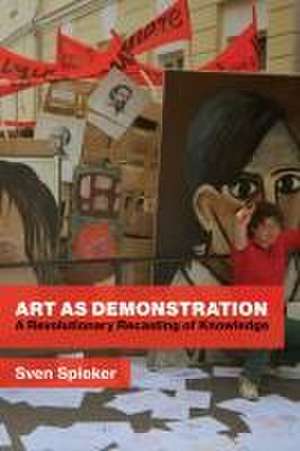
Art as Demonstration
Autor Sven Spiekeren Limba Engleză Hardback – 6 feb 2024
Descoperim în paginile acestui volum o perspectivă care lipsea din discursul estetic tradițional: actul de a arăta, de a indica și de a demonstra ca motor fundamental al schimbării politice prin artă. Art as Demonstration, semnat de Sven Spieker, ne propune o incursiune senzorială și intelectuală în modul în care artiștii au utilizat gestul demonstrației pentru a chestiona status quo-ul. Notăm cu interes felul în care autorul reușește să lege avangarda începutului de secol XX de mișcările de rezistență din timpul Războiului Rece, transformând experiența de lectură într-o lecție de istorie vizuală. Subliniem calitatea producției oferite de MIT Press Ltd, unde cele 91 de ilustrații alb-negru nu sunt simple decoruri, ci argumente vizuale esențiale. Acestea permit cititorului să urmărească evoluția formală a protestului, de la intervenții performative la instalații care forțează limitele spațiului public. Stilul lui Spieker este riguros, dar captivant, invitându-ne să privim arta nu ca pe un obiect finit, ci ca pe un proces educativ continuu. Colecționarii care au apreciat Politics as Public Art vor găsi aici aceeași calitate de reproducere și o profunzime similară în analizarea relației dintre estetică și activism. În timp ce Social Practice Art in Turbulent Times se concentrează pe proiecte contemporane de participare activă, lucrarea lui Spieker oferă ancora istorică necesară, explorând specificul Europei de Est și al Germaniei. Este o cercetare despre cum arta devine un instrument de pedagogie politică, redefinind rolul artistului în societate.
Preț: 267.02 lei
Preț vechi: 286.82 lei
-7%
Carte disponibilă
Livrare economică 23-30 iulie
Livrare express 08-14 iulie pentru 75.10 lei
Specificații
ISBN-10: 026204871X
Pagini: 392
Ilustrații: 91 b&w illustrations
Dimensiuni: 159 x 230 x 30 mm
Greutate: 0.81 kg
Editura: MIT Press Ltd
V-ar putea interesa
-
 Preț: 165.15 lei
 -
 Exercises for Rebel Artists: Radical Performance PedagogyGuillermo Gómez PeñaPreț: 309.61 lei
 -
 Performance ArtRoselee Goldberg-24%Preț: 147.53 lei193.07 lei
 -
 Protest!Liz McquistonPreț: 326.24 lei
 -
 Visual ImpactLiz McquistonPreț: 202.62 lei
 -
 ReckoningAaron BryantPreț: 338.58 lei
 -
 Acts of Resistance – The Power of Art to Create a Better WorldEleanor Amber Massie–bloomfiePreț: 91.90 lei
 -
 A Mouth Is Always MuzzledNatalie HopkinsonPreț: 148.01 lei
 -
 Art of ProtestDe Nichols-19%Preț: 76.17 lei93.78 lei
 -
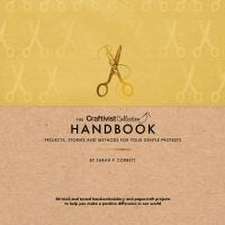 The Craftivist Collective HandbookSarah P. Corbett-17%Preț: 135.61 lei162.80 lei
 -
 The PerformerRichard SennettPreț: 91.21 lei
 -
 Subject–Object Art TheoryPyotr PavlenskyPreț: 170.64 lei
 -
 The War of ArtLauren O'Neill-ButlerPreț: 150.90 lei
 -
 Art and RevolutionJohn BergerPreț: 82.68 lei
 -
 What Is Art?Joseph BeuysPreț: 141.38 lei
 -
 Preț: 294.80 lei
 -
 What about Activism?Steven Henry MadoffPreț: 156.09 lei
 -
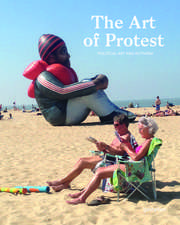 The Art of ProtestRobert KlantenPreț: 321.54 lei
De ce să citești această carte
Această carte este esențială pentru cei care doresc să înțeleagă cum arta poate deveni un instrument de rezistență fără a-și pierde valoarea estetică. Cititorul câștigă o viziune clară asupra istoriei artei postbelice, învățând să descifreze mesajele politice din spatele formelor vizuale. Este o recomandare excelentă pentru studenții la istoria artei și pentru activiștii care caută baze teoretice solide pentru intervențiile lor.