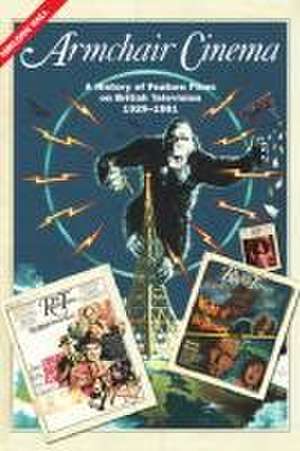
Armchair Cinema
Autor Sheldon Hallen Limba Engleză Hardback – 30 iun 2024
This book provides a comprehensive history and analysis of the ways in which cinema films have figured in TV programming in the UK and the role that British television has played in changing the consumption of film entertainment.
Preț: 737.85 lei
Preț vechi: 921.99 lei
-20%
Puncte Express: 1107
Carte indisponibilă temporar
Livrare prin curier în România Termenul estimat este afișat lângă disponibilitate.
Transport gratuit pentru acest produs Plată online sau ramburs, în funcție de opțiunile comenzii.
Retur gratuit în 14 zile Comandă securizată și suport în română.
Specificații
ISBN-13: 9781399520133
ISBN-10: 139952013X
Pagini: 536
Dimensiuni: 170 x 244 x 30 mm
Greutate: 1.05 kg
Editura: EDINBURGH UNIVERSITY PRESS
ISBN-10: 139952013X
Pagini: 536
Dimensiuni: 170 x 244 x 30 mm
Greutate: 1.05 kg
Editura: EDINBURGH UNIVERSITY PRESS
Notă biografică
Sheldon Hall is an Emeritus Fellow at Sheffield Hallam University, UK. A former film journalist, he has contributed to numerous books and journals on British and American cinema. He is the author of Armchair Cinema: A History of Feature Films on British Television, 1929-1981 (EUP, 2024) and Zulu: With Some Guts Behind It (2005/2014), co-author of Epics, Spectacles, and Blockbusters: A Hollywood History (2010), and co-editor of Widescreen Worldwide (2010).
Descriere
A history and analysis of how films have figured in TV programming in the UK and the role that British television services have played in changing the nature of film entertainment