
Aristotle: Politics
en Paperback
Veți descoperi în această lucrare fundamentală nu doar un tratat de științe politice, ci o explorare profundă a modului în care comunitățile umane se organizează pentru a atinge fericirea colectivă. Notăm cu interes felul în care Aristotle ancorează politica în etică, transformând guvernarea dintr-un simplu exercițiu de putere într-o extensie naturală a virtuții umane. Considerăm că forța acestui text rezidă în capacitatea sa de a clasifica regimurile politice pe baza unui criteriu moral: dacă acestea servesc binele comun sau doar interesele conducătorilor. Structura volumului reflectă o progresie logică riguroasă, pornind de la unitatea de bază a societății — gospodăria — și culminând cu analiza complexă a statului ca asociație naturală. Ca și Athenian Constitution. Eudemian Ethics. Virtues and Vices, această operă analizează structurile de guvernare, dar se diferențiază prin accentul pus pe fundamentul filosofic și teleologic al statului, nu doar pe cronica sa istorică. În contextul operei sale, Politics întregește viziunea expusă în Nicomachean Ethics, demonstrând că omul este, prin natura sa, un animal politic care își poate atinge potențialul maxim doar în cadrul unei cetăți bine rânduite. Ritmul lecturii este unul analitic, susținut de notele și introducerile semnate de T. A. Sinclair și T. J. Saunders, care clarifică terminologia tehnică și disputele editoriale privind ordinea originală a capitolelor. Este o lucrare esențială pentru a înțelege vocabularul intelectual al Occidentului, oferind perspective asupra sclaviei, economiei de familie și educației cetățenilor care rămân subiecte de dezbatere și în prezent.
Preț: 105.33 lei
Cartea nu mai face parte din oferta noastră
Specificații
V-ar putea interesa
-
 RepublicPlatoPreț: 30.33 lei
 -
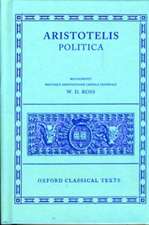 Aristotle PoliticaDavid Ross-22%Preț: 272.80 lei350.86 lei
 -
 Aristotle's "Politics": Second EditionAristotlePreț: 140.28 lei
 -
 PoeticsAristotle-20%Preț: 19.62 lei24.50 lei
 -
 The RepublicPlatoPreț: 46.98 lei
 -
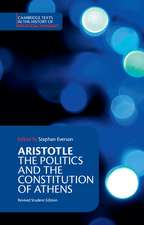 AristotleAristotlePreț: 193.55 lei
 -
 -14%Preț: 411.74 lei478.78 lei
 -
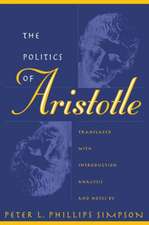 Politics of AristotlePeter L Phillips SimpsonPreț: 310.21 lei
 -
 Locke: Political WritingsJohn Locke-17%Preț: 141.78 lei171.31 lei
 -
 Commentary on Aristotle's PoliticsThomas Aquinas-18%Preț: 158.03 lei192.67 lei
 -
 The RepublicPlato Plato-28%Preț: 50.88 lei70.95 lei
 -
 MetaphysicsAristotlePreț: 64.88 lei
 -
 Nicomachean EthicsAristotlePreț: 44.60 lei
 -
 Aquinas: Basic WorksThomas Aquinas-21%Preț: 271.59 lei344.63 lei
 -
 Preț: 57.22 lei
 -
 Introducing Political PhilosophyDave RobinsonPreț: 63.57 lei
 -
 De AnimaAristotlePreț: 70.31 lei
 -
 The PoliticsAristotlePreț: 72.32 lei
 -
 The PrinceNiccolò MachiavelliPreț: 33.48 lei
 -
 UtopiaThomas MorePreț: 33.19 lei
De ce să citești această carte
Pentru cititorul pasionat de istoria ideilor și de bazele democrației, această carte oferă claritate asupra modului în care s-au născut conceptele de stat și cetățenie. Veți câștiga o înțelegere profundă a sistemelor de guvernare, învățând să distingeți între regimurile orientate spre binele public și cele deviante. Este o resursă indispensabilă pentru studenții la științe politice și pentru oricine dorește să analizeze societatea modernă prin prisma gândirii clasice.
Despre autor
Aristotle (384–322 î.Hr.) a fost un filosof grec și polimat, elev al lui Platon și preceptor al lui Alexandru cel Mare. Fondator al Liceului din Atena și al școlii peripatetice, contribuțiile sale acoperă aproape toate domeniile cunoașterii, de la biologie și fizică până la logică și poetică. Deși doar o treime din scrierile sale au supraviețuit, acestea au format lexicul intelectual al Occidentului. În Politics, el sintetizează observațiile empirice asupra constituțiilor vremii sale, stabilind bazele științei politice moderne și influențând decisiv modul în care înțelegem astăzi guvernarea și etica socială.