
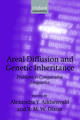
Areal Diffusion and Genetic Inheritance: Problems in Comparative Linguistics: Explorations in Linguistic Typology
Editat de Alexandra Y. Aikhenvald, R. M. W. Dixonen Limba Engleză Hardback – 22 noi 2001






Preț: 661.08 lei
Preț vechi: 959.96 lei
-31%
Puncte Express: 992
Carte tipărită la comandă
Livrare economică 04-15 decembrie
Livrare prin curier în România Termenul estimat este afișat lângă disponibilitate.
Transport gratuit pentru acest produs Plată online sau ramburs, în funcție de opțiunile comenzii.
Retur gratuit în 14 zile Comandă securizată și suport în română.
Specificații
ISBN-13: 9780198299813
ISBN-10: 0198299818
Pagini: 472
Ilustrații: numerous figures and maps
Dimensiuni: 163 x 243 x 29 mm
Greutate: 0.82 kg
Editura: OUP OXFORD
Colecția OUP Oxford
Seria Explorations in Linguistic Typology
Locul publicării:Oxford, United Kingdom
ISBN-10: 0198299818
Pagini: 472
Ilustrații: numerous figures and maps
Dimensiuni: 163 x 243 x 29 mm
Greutate: 0.82 kg
Editura: OUP OXFORD
Colecția OUP Oxford
Seria Explorations in Linguistic Typology
Locul publicării:Oxford, United Kingdom
V-ar putea interesa
-
 -10%Preț: 225.37 lei250.21 lei
 -
 Preț: 292.26 lei
 -
 Preț: 452.25 lei
 -
 -23%Preț: 381.72 lei494.07 lei
 -
 Preț: 448.71 lei
 -
 -30%Preț: 997.21 lei1427.02 lei
 -
 The Evolution of Functional Left Peripheries in Hungarian SyntaxKatalin É. Kiss-31%Preț: 931.49 lei1354.93 lei
 -
 A History of Psycholinguistics: The Pre-Chomskyan EraWillem Levelt-21%Preț: 450.23 lei569.16 lei
 -
 -31%Preț: 820.75 lei1192.72 lei
 -
 -31%Preț: 824.60 lei1195.11 lei
 -
 Genitives in Early English: Typology and EvidenceCynthia L. Allen-31%Preț: 1047.63 lei1519.58 lei
 -
 -30%Preț: 684.96 lei978.12 lei
 -
 Basic Linguistic Theory Volume 3: Further Grammatical TopicsR. M. W. Dixon-23%Preț: 1659.61 lei2160.91 lei
 -
 Basic Linguistic Theory Volume 3: Further Grammatical TopicsR. M. W. Dixon-19%Preț: 437.36 lei539.86 lei
 -
 The Jarawara Language of Southern AmazoniaR. M. W. Dixon-20%Preț: 517.96 lei650.30 lei
 -
 Gender from Latin to Romance: History, Geography, TypologyMichele Loporcaro-34%Preț: 886.66 lei1334.96 lei
 -
 Word Order in Old ItalianCecilia Poletto-31%Preț: 944.55 lei1375.61 lei
 -
 The Life of SlangJulie Coleman-17%Preț: 85.46 lei102.80 lei
 -
 The Oxford Handbook of Linguistic FieldworkNicholas Thieberger-21%Preț: 305.53 lei386.96 lei
 -
 -33%Preț: 1462.91 lei2173.11 lei
 -
 Relabeling in Language GenesisClaire Lefebvre-22%Preț: 360.32 lei464.29 lei
 -
 The Languages of AustraliaR. M. W. Dixon-19%Preț: 448.15 lei553.28 lei
 -
 Searching for Aboriginal LanguagesR. M. W. DixonPreț: 391.06 lei
 -
 -25%Preț: 54.71 lei72.67 lei
Recenzii
extremely rich, competent, and well-edited.
... invaluable volume ... the uniformly high quality of the contributions demonstrates that all contributors know whereof they speak ... The geographical range of the contributions is impressive ... The quality of the production is high.
... certainly a book worth acquiring and reading.
This book is a pleasure to sample, and will serve as a resource for years to come. The salutary lesson that emerges from every chapter is that diffusion studies are necessarily complementary to genetic studies, and that our methodology for studying various types of contact needs to be extended and refined.
This book is highly recommended for all those interested in historical linguistics, linguistic typology, language contact and language change ... this book represents a good opportunity to meditate, on the one side, on models of language evolution and, on the other side, on actual phenomena of language change.
... invaluable volume ... the uniformly high quality of the contributions demonstrates that all contributors know whereof they speak ... The geographical range of the contributions is impressive ... The quality of the production is high.
... certainly a book worth acquiring and reading.
This book is a pleasure to sample, and will serve as a resource for years to come. The salutary lesson that emerges from every chapter is that diffusion studies are necessarily complementary to genetic studies, and that our methodology for studying various types of contact needs to be extended and refined.
This book is highly recommended for all those interested in historical linguistics, linguistic typology, language contact and language change ... this book represents a good opportunity to meditate, on the one side, on models of language evolution and, on the other side, on actual phenomena of language change.
Notă biografică
Alexandra Y. Aikhenvald is Associate Director of the Research Centre for Linguistic Typology at La Trobe University in Melbourne. She has published on the Berber languages of North Africa, the Manambu language of New Guinea, and the Arawak languages of South America (grammars of Bare and Warekena have appeared and a comprehensive study of Tariana is almost complete). She is author of A Grammar of Modern Hebrew (1990), and her Grammar of Biblical Hebrew is in press. Her theoretical publications include work on evidentiality and Classifiers: A Typology of Noun Categorization Devices (OUP 2000). She is currently working on language contact and universals of borrowings.R. M. W. Dixon, who is Director of the Research Centre for Linguistic Typology, has written grammars of five Australian languages -- most notably Dyirbal (1972) and Yidiny (1977) -- and of Boumaa Fijian (1988), in addition to A New Approach to English Grammar, on Semantic Principles (OUP 1991). His theoretical contributions have included work on noun classes, adjective classes, the volume Ergativity (1994), and his acclaimed essay 'The Rise and Fall of Languages' (1997). He is currently completing a full-scale comparative study of the Australian lingusitic area, and a comprehensive study of the Jarawara language (Arawá family, Brazil).
Cuprins
- 1.: Alexandra Y. Aikhenvald and R. M. W. Dixon: Introduction
- 2.: Peter Bellwood: Archaeology and the Historical Determinants of Punctuation in Language-Family Origins
- 3.: Calvert Watkins: An Indo-European Linguistic Area and its Characteristics: Ancient Anatolia. Areal Diffusion as a Challenge to the Comparative Method?
- 4.: R. M. W. Dixon: The Australian Linguistic Area
- 5.: Alan Dench: Descent and Diffusion: The Complexity of the Pilbara Situation
- 6.: Malcolm Ross: Contact-Induced Change in Oceanic Languages in North-West Melanesia
- 7.: Alexandra Y. Aikhenvald: Areal Diffusion, Genetic Inheritance, and Problems of Subgrouping: A North Arawak Case Study
- 8.: Geoffrey Haig: Linguistic Diffusion in Present-Day East Anatolia: From Top to Bottom
- 9.: Randy J. LaPolla: The Role of Migration and Language Contact in the Development of the Sino-Tibetan Language Family
- 10.: N. J. Enfield: On Genetic and Areal Linguistics in Mainland South-East Asia: Parallel Polyfunctionality of 'Acquire'
- 11.: James A. Matisoff: Genetic Versus Contact Relationship: Prosodic Diffusibility in South-East Asian Languages
- 12.: Hilary Chappell: Language Contact and Areal Diffusion in Sinitic Languages
- 13.: Gerrit J. Dimmendaal: Areal Diffusion Versus Genetic Inheritance: An African Perspective
- 14.: Bernd Heine and Tania Kuteva: Convergence and Divergence in the Development of African Lanaguages
- 15.: Timothy Jowan Curnow: What Language Features can be 'Borrowed'?