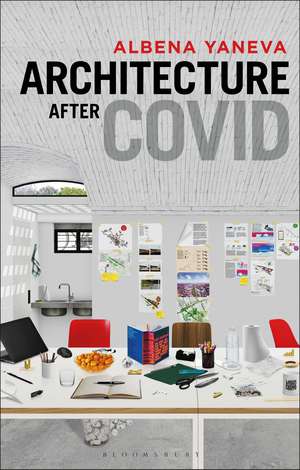
Architecture after Covid
Autor Prof Albena Yanevaen Limba Engleză Paperback – 26 ian 2023
În paginile volumului Architecture after Covid, textul și imaginea intră într-un dialog tensionat, documentând momentul în care arhitectura a încetat să fie doar un fundal al vieții sociale pentru a deveni un instrument activ de management al crizei. Subliniem modul în care Prof Albena Yaneva reinterpretează arta spațiului prin prisma „laboratorizării” orașului, unde fiecare trotuar și clădire de birouri a fost supusă unor noi rigori de distanțare și igienizare. Reținem o perspectivă senzorială asupra modului în care am locuit orașele pustii, transformând experiența traumatică a izolării într-o analiză teoretică despre viitorul profesiei.
Cartea este organizată meticulos, pornind de la impactul imediat al virusului asupra „metamorfozei urbane” și ajungând la schimbările subtile din atelierele de proiectare. Credem că secțiunile dedicate „noului modulor” și pictogramelor pandemice oferă o lectură fascinantă despre cum semnele vizuale au reordonat mișcările noastre cotidiene. Ca și COVID-19 (Forced) Innovations, acest volum pune în valoare adaptabilitatea tehnică a designului, dar cu un accent distinct pe dimensiunea sociologică și pe relația dintre știință și spațiul construit.
Această lucrare se poziționează ca o continuare firească a cercetărilor anterioare ale autoarei, precum Five Ways to Make Architecture Political. Dacă în lucrările trecute Yaneva explora agenția politică a arhitectului, aici ea demonstrează cum pandemia a forțat o reevaluare radicală a acestei agenții. Nu este doar o cronică a unei crize, ci un ghid teoretic care utilizează interviuri și studii de caz pentru a înțelege cum practica arhitecturală s-a întors la gesturi fundamentale — scrisul, schița și dialogul — pentru a reconstrui o lume post-pandemică.
Preț: 162.47 lei
Preț vechi: 202.23 lei
-20%
Carte disponibilă
Livrare economică 13-18 noiembrie
Livrare express 29 octombrie-04 noiembrie pentru 65.67 lei
Specificații
ISBN-10: 1350271063
Pagini: 192
Ilustrații: 37 bw illus
Dimensiuni: 138 x 214 x 12 mm
Greutate: 0.34 kg
Editura: Bloomsbury Publishing
Colecția Bloomsbury Visual Arts
Locul publicării:London, United Kingdom
V-ar putea interesa
-
 Preț: 385.00 lei
 -
 Spatial Agency: Other Ways of Doing ArchitectureNishat AwanPreț: 458.89 lei
 -
 The Architecture Concept BookJames Tait-15%Preț: 202.63 lei239.22 lei
 -
 Architectural Thinking in a Climate EmergencySofie PelsmakersPreț: 391.59 lei
 -
 A New Index for Public Space: After DistancingTali HatukaPreț: 387.01 lei
 -
 Preț: 203.67 lei
 -
 Preț: 391.82 lei
 -
 Athens: Notes on Urban ImmanenceStavros Kousoulas-15%Preț: 432.92 lei509.32 lei
 -
 Architecture After CovidAlbena Yaneva-11%Preț: 438.85 lei493.10 lei
 -
 -15%Preț: 220.83 lei258.82 lei
 -
 Architectural EpidemiologyAdele Houghton-23%Preț: 601.35 lei780.97 lei
 -
 The Future of Architecture in 100 BuildingsMarc KushnerPreț: 119.91 lei
 -
 The Pandemic EffectBlaine Brownell-23%Preț: 141.31 lei182.65 lei
 -
 Remote PracticesMatthew Mindrup-8%Preț: 572.87 lei622.69 lei
 -
 Urbanism Beyond 2020Vinayak BharnePreț: 105.84 lei
 -
 COVID-19 (Forced) InnovationsEdmond Manahasa-18%Preț: 928.66 lei1132.51 lei
 -
 We the BacteriaBeatriz ColominaPreț: 129.33 lei
De ce să citești această carte
Recomandăm Architecture after Covid studenților și profesioniștilor care doresc să înțeleagă cum criza sanitară a accelerat transformări latente în designul urban. Veți câștiga o perspectivă critică asupra modului în care spațiile publice și private au fost reconfigurate, oferindu-vă instrumente teoretice pentru a naviga în „noua normalitate”. Este o lectură esențială pentru a vedea cum arhitectura poate media relația dintre sănătatea publică și libertatea de mișcare.
Despre autor
Prof Albena Yaneva este profesor de teorie arhitecturală la Universitatea din Manchester, Marea Britanie, fiind una dintre cele mai influente voci contemporane în studiul practicilor de design. Opera sa se distinge prin aplicarea teoriilor sociologice (precum cele ale lui Bruno Latour) în analiza procesului creativ și politic al arhitecturii. Printre lucrările sale de referință se numără „The Making of a Building” și „Made by the OMA”, volume care explorează viața internă a birourilor de arhitectură. În contextul actual, Yaneva își folosește expertiza pentru a descifra impactul evenimentelor globale asupra formei urbane.
Descriere
In 2020, the COVID pandemic unfolded and transformed the lives of billions across the world. As the invisible killer marched across continents, causing unprecedented disruption worldwide, architects and designers began rethinking how to design cities and adapt their practice so that we might continue to live together in the future. Architecture after COVID is the first book to explore the pandemic's transformative impacts upon the architectural profession. It raises new questions about the intertwined natures of architectural production, science, society, and spatial practice - questions which had lain latent in the profession for years, but which the COVID pandemic brought to the fore. The book explores how the pandemic modified the spatial conventions of everyday life in the city, and looks in detail at how it has transformed building typologies. It also shows how the continuing risk of pandemics leads us to rethink the social dimension of architecture and urban design; and ultimately proposes a radical re-evaluation of the conditions of architectural practice - making a compelling argument about the changing agency of architectural design and the importance of designers in re-ordering the post-pandemic world. Packed with interviews and case-studies from a wide range of contemporary design practices, Architecture after COVID will inspire debates among architectural practitioners and theorists alike. The broad view of the approach and the depth of the professional issues at stake mean that this book will offer key insights for the discipline long beyond the scope of the COVID pandemic - as it explores the long-lasting bond between city, science and society as the 'new normal' begins to emerge.
Cuprins
List of FiguresAcknowledgementsIntroductionThe return of Dr RieuxResponses to the pandemic'Distant' as a new form of knowledgeArchitecture after CovidChapter 1: A 'parasite' in the cityOccupying spaceArchitecture and illnessVirus, lab, cityThe laboratorization of spaceChapter 2: The laboratorization of urban space Deserted cities, empty buildingsCounting bodies Spacing, distancingContactless livesSanitizing, face coveringThe new 'modulor'Pandemic pictogramsDe-centring the diseaseThe power of entrapmentUrban metamorphosis: the new technologies of containment and visibilityChapter 3: Pandemic variations of design practiceRoutines: the 'magic' of the office spaceSlowing down: the return to the verbal, the written and the sketchStepping aside and speeding up: technological developmentsNew compositions: re-connecting with the 'others'New variants of practiceConclusion: Architectural research extended to things Historicity and virusNew reflexivity, new methodsBibliographyIndex
Recenzii
With piercing attention to the swirling "now" of architects, the things they make, and how they make them, Albena Yaneva creatively takes the pandemic as a lens that reveals new dimensions of space, global cities, and architectural practices from around the world. Starting with the moment Covid-19 became part of daily life, the book is both a mirror into our recent transformations, and a cultural touchstone for future readers who wonder how we humans together with our virus redefine our shared lives.
A fascinating account of professional and collective life during the pandemic, reminding us of the extraordinary spatial and working conditions that we all experienced in those strange times. The book shows the lessons learnt by practitioners, and asks important questions as to how architectural practice can and should develop and adapt post-pandemic.
A fascinating account of professional and collective life during the pandemic, reminding us of the extraordinary spatial and working conditions that we all experienced in those strange times. The book shows the lessons learnt by practitioners, and asks important questions as to how architectural practice can and should develop and adapt post-pandemic.
Caracteristici
Notă biografică
Albena Yaneva is Professor of Architectural Theory at the University of Manchester, UK. She is the author of several books, including: The Making of a Building, Made by the OMA, Mapping Controversies in Architecture, Five Ways to Make Architecture Political, and Bruno Latour for Architects.