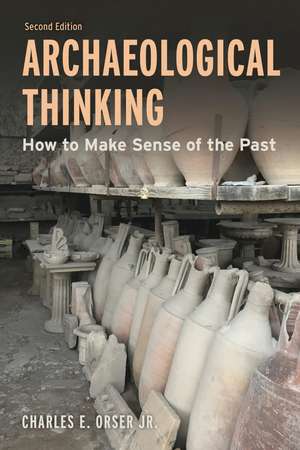
Archaeological Thinking: How to Make Sense of the Past
Autor Charles E. Orser, Jr.en Limba Engleză Hardback – 8 aug 2023
This book explores and explains such topics as the use of logic in framing arguments, the curious issue of fact selection, the use of analogies, the role of archaeology in contemporary society and among present-day communities, approaches to understanding the past, and the dangers of deceitful archaeological thinking.
Examples taken from the world of ancient aliens, mythical sunken cities, and mysterious creatures help readers learn how to separate reality from fiction regardless of their desire to become a professional archaeologist.
Preț: 465.08 lei
Preț vechi: 643.07 lei
-28%
Puncte Express: 698
Carte tipărită la comandă
Livrare economică 02-16 decembrie
Livrare prin curier în România Termenul estimat este afișat lângă disponibilitate.
Transport gratuit pentru acest produs Plată online sau ramburs, în funcție de opțiunile comenzii.
Retur gratuit în 14 zile Comandă securizată și suport în română.
Specificații
ISBN-13: 9781538177228
ISBN-10: 1538177226
Pagini: 196
Ilustrații: 25 b/w photos; 3 tables
Dimensiuni: 154 x 230 x 18 mm
Greutate: 0.46 kg
Ediția:Second Edition
Editura: Bloomsbury Publishing
Colecția Rowman & Littlefield
Locul publicării:New York, United States
ISBN-10: 1538177226
Pagini: 196
Ilustrații: 25 b/w photos; 3 tables
Dimensiuni: 154 x 230 x 18 mm
Greutate: 0.46 kg
Ediția:Second Edition
Editura: Bloomsbury Publishing
Colecția Rowman & Littlefield
Locul publicării:New York, United States
Cuprins
Preface
Chapter 1. Thinking in Archaeology
A Question of Belief?
Science and History
Thinking to Some Purpose
The Process of Clear Thinking
Sources for Continued Reading
Chapter 2. A Brief History of Archaeological Thinking
The Early Years
The Middle Years
The Recent Years
Seriation
The Conjunctive Approach
Postmodern Thinking
Archaeological Thinking in the New Millennium
Sources for Continued Reading
Chapter 3. Archaeology and the Evaluation of Claims
SEARCHing
Step 1: State the Claim
Step 2: Examine the Evidence
Step 3: Consider Alternative Claims
Step 4: Rate each Claim
Plausibility
The Exeter Mystery
The On-Going Battle Between Evidence and Perspective
Sources for Continued Reading
Chapter 4. Understanding and Selecting Facts
Fact Selection
Is Fact Selection Dishonest?
Clovis Points
Glass Trade Beads
Sources for Continued Reading
Chapter 5. Archaeological Thinking and Logic
The Importance of Logical Thinking
Deduction
Induction
Abduction
Sources for Continued Reading
Chapter 6. Analogy and Archaeological Thinking
Archaeologists and Analogy
Artifact Analogies
Ethnographic Analogies
The Direct Historical Approach
More Recent Comparative Ethnographic Analogy
Evaluating Analogy Strength
What Is the Purpose of Analogy in Archaeology?
Sources for Continued Reading
Chapter 7. Thinking with Things
A Cultural Systems Approach
A Behavioral Approach
A Commodities Approach
A Semiotics Approach
A Social Activism Approach
Sources for Continued Reading
Chapter 8. Deceitful Archaeological Thinking
Great Zimbabwe and Silencing the African Past
Pseudo-archaeology in Nazi Hands
The Dangers of Deceitful Archaeological Thinking
Sources for Continued Reading
Chapter 9. Archaeological Thinking in Public
Bones of Contention
The Cheyenne Outbreak of 1879
Timbuctoo, New Jersey
Sources for Continued Reading
Chapter 10. Archaeological Thinking for the Twenty-First Century
Sources for Continued Reading
Chapter 1. Thinking in Archaeology
A Question of Belief?
Science and History
Thinking to Some Purpose
The Process of Clear Thinking
Sources for Continued Reading
Chapter 2. A Brief History of Archaeological Thinking
The Early Years
The Middle Years
The Recent Years
Seriation
The Conjunctive Approach
Postmodern Thinking
Archaeological Thinking in the New Millennium
Sources for Continued Reading
Chapter 3. Archaeology and the Evaluation of Claims
SEARCHing
Step 1: State the Claim
Step 2: Examine the Evidence
Step 3: Consider Alternative Claims
Step 4: Rate each Claim
Plausibility
The Exeter Mystery
The On-Going Battle Between Evidence and Perspective
Sources for Continued Reading
Chapter 4. Understanding and Selecting Facts
Fact Selection
Is Fact Selection Dishonest?
Clovis Points
Glass Trade Beads
Sources for Continued Reading
Chapter 5. Archaeological Thinking and Logic
The Importance of Logical Thinking
Deduction
Induction
Abduction
Sources for Continued Reading
Chapter 6. Analogy and Archaeological Thinking
Archaeologists and Analogy
Artifact Analogies
Ethnographic Analogies
The Direct Historical Approach
More Recent Comparative Ethnographic Analogy
Evaluating Analogy Strength
What Is the Purpose of Analogy in Archaeology?
Sources for Continued Reading
Chapter 7. Thinking with Things
A Cultural Systems Approach
A Behavioral Approach
A Commodities Approach
A Semiotics Approach
A Social Activism Approach
Sources for Continued Reading
Chapter 8. Deceitful Archaeological Thinking
Great Zimbabwe and Silencing the African Past
Pseudo-archaeology in Nazi Hands
The Dangers of Deceitful Archaeological Thinking
Sources for Continued Reading
Chapter 9. Archaeological Thinking in Public
Bones of Contention
The Cheyenne Outbreak of 1879
Timbuctoo, New Jersey
Sources for Continued Reading
Chapter 10. Archaeological Thinking for the Twenty-First Century
Sources for Continued Reading
Recenzii
The second edition of Orser's Archaeological Thinking has been significantly updated and enhanced from the 2015 edition (CH, May'15, 52-4848). It retains the first edition's focus on using archaeological examples to promote critical thinking. Orser wisely continues to use examples from pseudo-historical or pseudoscientific theories and ideas that have become part of popular culture. In this second edition, he includes examples from the Ancient Aliens TV series, which prodigiously uses archaeological sites and discoveries to bolster its dubious contentions. The Netflix documentary Ancient Apocalypse (2022) gets a timely mention as one of the book's examples of dubious scholarship, although a detailed critique would have provided a fine demonstration of critical thinking. Another useful addition is the up-to-date and concise account of the Kennewick Man controversy which pitted Native American religious beliefs against anthropologists. The second edition contains 10 chapters, of which four are new. Two chapters from the first edition have been dropped. Orser also provides an excellent discussion of the various schools of archaeological thought in the new chapter 7. Any library looking to build up its resources on critical thinking and archaeology will want to add this new edition to its collections. Recommended. Undergraduates and graduate students
This engaging book is a valuable corrective to common ideas that archaeology is about digging up facts. Instead, Orser claims that the most important archaeological tool is the mind. He provides a clear and concise guide to how archaeologists use critical thinking skills to interpret the artifacts they find and create knowledge about the human past. Useful for all those curious about 'pseudo' interpretations of the past as well as parsing all kinds of scientific and historical interpretations from false or misleading claims.
Charles Orser's Archaeological Thinking is the accessible antidote to false information related to the past. Orser shows how archaeologists do their work, from excavation to analysis and to forming conclusions, guiding the reader through the entire process in an engaging style that helps the discipline come alive. Archaeological Thinking is not just a must-have for courses related to introductory archaeology but for anyone looking to learn more about how we figure out what our ancestors were doing.
This engaging book is a valuable corrective to common ideas that archaeology is about digging up facts. Instead, Orser claims that the most important archaeological tool is the mind. He provides a clear and concise guide to how archaeologists use critical thinking skills to interpret the artifacts they find and create knowledge about the human past. Useful for all those curious about 'pseudo' interpretations of the past as well as parsing all kinds of scientific and historical interpretations from false or misleading claims.
Charles Orser's Archaeological Thinking is the accessible antidote to false information related to the past. Orser shows how archaeologists do their work, from excavation to analysis and to forming conclusions, guiding the reader through the entire process in an engaging style that helps the discipline come alive. Archaeological Thinking is not just a must-have for courses related to introductory archaeology but for anyone looking to learn more about how we figure out what our ancestors were doing.