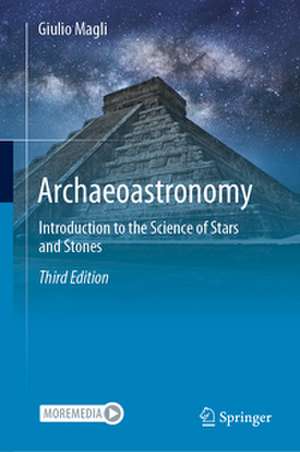
Archaeoastronomy
Autor Giulio Maglien Limba Engleză Hardback – 3 ian 2025
Ne-a atras atenția această a treia ediție a lucrării Archaeoastronomy, care se poziționează ca un manual de referință în cadrul programelor de studii culturale și arheologie peisagistică. Disciplina, aflată la intersecția dintre astrofizică și antropologie, primește aici o sistematizare riguroasă, adaptată nevoilor academice actuale. Giulio Magli propune o structură tripartită care ghidează cititorul de la fundamentele tehnice ale astronomiei cu ochiul liber către interpretarea simbolică a siturilor monumentale.
Descoperim în această ediție o componentă didactică inovatoare: integrarea realității augmentate prin legături directe către cursurile MOOC ale autorului, permițând o explorare virtuală a monumentelor descrise. Prima parte a volumului stabilește rigoarea metodologică, abordând coordonatele cerești și utilizarea instrumentelor digitale moderne. Partea a doua explorează dimensiunea ideologică — modul în care mișcarea astrelor a fost utilizată pentru a legitima puterea politică și religioasă. În final, sunt analizate studii de caz celebre, de la piramidele din Giza la templele din Angkor, oferind o perspectivă globală asupra disciplinei.
Acoperă aceeași arie ca Handbook of Archaeoastronomy and Ethnoastronomy de Clive Ruggles, dar cu o abordare mai orientată către arhitectură și inginerie civilă, reflectând expertiza autorului de la Politecnico di Milano. Față de lucrările sale anterioare, precum Sacred Landscapes of Imperial China sau Archaeoastronomy in the Roman World, care se concentrau pe regiuni specifice, acest volum sintetizează întreaga operă a lui Giulio Magli într-un format pedagogic complet, incluzând acum și un capitol inedit dedicat Asiei.
Preț: 419.39 lei
Carte disponibilă
Livrare economică 27 octombrie-10 noiembrie
Specificații
ISBN-10: 3031749596
Pagini: 332
Dimensiuni: 160 x 241 x 23 mm
Greutate: 0.72 kg
Ediția:Third Edition 2024
Editura: Springer
De ce să citești această carte
Această carte se adresează studenților și cercetătorilor care doresc să stăpânească metodele cantitative ale arheoastronomiei. Cititorul câștigă nu doar o înțelegere teoretică a modului în care anticii priveau cerul, ci și abilități practice de cercetare prin exercițiile cu Stellarium și Google Earth. Este resursa ideală pentru a transforma observația astronomică într-un instrument de analiză arheologică valid.
Despre autor
Giulio Magli este profesor titular la Facultatea de Arhitectură Civilă din cadrul Politecnico di Milano, fiind pionierul predării arheoastronomiei în sistemul universitar italian. Cu un doctorat în astrofizică, cercetările sale se concentrează pe intersecția dintre arhitectură, peisaj și astronomie în culturile antice, de la Egiptul antic la civilizația incașă. Este un colaborator recunoscut al UNESCO-IAU și autorul unor lucrări fundamentale care au pus bazele metodologice pentru studiul orientării astronomice a monumentelor istorice, contribuind activ la recunoașterea internațională a arheoastronomiei ca știință multidisciplinară.