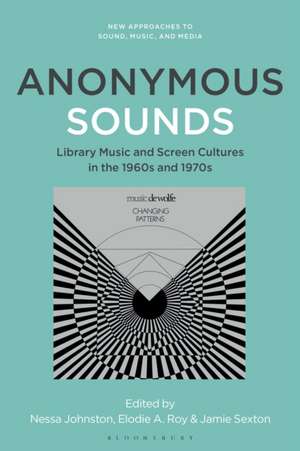
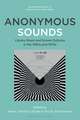
Anonymous Sounds: Library Music and Screen Cultures in the 1960s and 1970s: New Approaches to Sound, Music, and Media
Editat de Nessa Johnston, Jamie Sexton, Elodie A. Royen Limba Engleză Hardback – 6 feb 2025
Library music was inexpensive, off-the-shelf music available to license for a small fee. It was widely used in television and film as a cheaper alternative to commissioned soundtracks. The book pays attention to the different individuals, groups, organisations and institutions involved in making library music, as well as to its transnational sites of production (from continental recording studios to regional cutting rooms). It addresses questions of distributed creativity, collective authorship, and agency.
Combining empirical and theoretical research, the book unveils the modus operandi of a highly secretive yet enduringly significant cultural industry. By drawing attention to the cultural ubiquity and intersectionality of library music, the collection also shifts emphasis from individual film and TV composers to the invisible community of music publishers, writers, and session musicians. It argues that the latter were collectively responsible for fashioning much of the sonic identity of 1960s and 1970s film and television. As well as providing a nuanced understanding of historical library music cultures, the collection shows how they continue to inform contemporary audiovisual cultures.
Din seria New Approaches to Sound, Music, and Media
- 15%
 Preț: 160.25 lei
 - 22%
 Preț: 158.59 lei
 - 41%
 Preț: 157.33 lei
 - nou
 Preț: 581.93 lei
 - nou
 Preț: 596.75 lei
 - 17%
 Preț: 252.53 lei
 - 27%
 Preț: 235.86 lei
 - 20%
 Preț: 173.62 lei
 - 18%
 Preț: 199.78 lei
 - 26%
 Preț: 206.77 lei
 - 28%
 Preț: 209.30 lei
 - 49%
 Preț: 441.78 lei
 - 26%
 Preț: 206.34 lei
 - 26%
 Preț: 207.19 lei
 - 36%
 Preț: 583.59 lei
 - 25%
 Preț: 208.38 lei
 - 26%
 Preț: 206.52 lei
 - 25%
 Preț: 214.32 lei
 - 25%
 Preț: 212.59 lei
 - 25%
 Preț: 212.59 lei
 - 32%
 Preț: 629.40 lei
 - 32%
 Preț: 595.96 lei
 - 32%
 Preț: 595.30 lei
 - 32%
 Preț: 596.29 lei
Preț: 596.68 lei
Preț vechi: 879.02 lei
-32%
Puncte Express: 895
Carte disponibilă
Livrare economică 30 octombrie-13 noiembrie
Livrare prin curier în România Termenul estimat este afișat lângă disponibilitate.
Transport gratuit pentru acest produs Plată online sau ramburs, în funcție de opțiunile comenzii.
Retur gratuit în 14 zile Comandă securizată și suport în română.
Specificații
ISBN-13: 9798765109861
Pagini: 256
Dimensiuni: 152 x 232 x 20 mm
Greutate: 0.5 kg
Editura: Bloomsbury Publishing
Colecția Bloomsbury Academic
Seria New Approaches to Sound, Music, and Media
Locul publicării:New York, United States
Pagini: 256
Dimensiuni: 152 x 232 x 20 mm
Greutate: 0.5 kg
Editura: Bloomsbury Publishing
Colecția Bloomsbury Academic
Seria New Approaches to Sound, Music, and Media
Locul publicării:New York, United States
V-ar putea interesa
-
 Film Music: A Very Short IntroductionKathryn Kalinak-20%Preț: 57.01 lei71.13 lei
 -
 Pride and PrejudiceJane Austen-16%Preț: 37.01 lei44.28 lei
 -
 Major LabelsKelefa SannehPreț: 114.20 lei
 -
 ShadowplayersJames NicePreț: 126.03 lei
 -
 Music: The Business (9th Edition)Ann HarrisonPreț: 269.11 lei
 -
 -20%Preț: 97.00 lei121.08 lei
 -
 -19%Preț: 115.40 lei143.23 lei
 -
 The Music LibraryFuel-17%Preț: 235.80 lei284.94 lei
 -
 The Madman's OrchestraEdward Brooke-HitchingPreț: 194.34 leiRecomandat
 -
 Songs In The Key of MP3: The New Icons of the Internet AgeLiam Inscoe-Jones-26%Preț: 105.41 lei142.96 lei
 -
 Mark Kermode's Surround SoundMark Kermode-39%Preț: 83.67 lei137.93 lei
 -
 Audio Culture, Revised Edition: Readings in Modern MusicProfessor Christoph Cox-16%Preț: 289.89 lei344.13 lei
 -
 Sound TracksGraeme LawsonPreț: 94.08 lei
 -
 Brave New MusicGary WestPreț: 145.37 lei
 -
 Single and PsychoCaroline YoungPreț: 93.42 lei
 -
 Screaming and ConjuringClark CollisPreț: 186.05 lei
 -
 Vinyl NYCJames & Karla MurrayPreț: 278.32 lei
 -
 20th Century AmbientDusty Henry-32%Preț: 77.67 lei114.66 lei
 -
 PlunderphonicsMatthew Blackwell-32%Preț: 77.33 lei114.47 lei
 -
 Band Photographs, 1968-1969: Two-Volume SetElliott Landy-10%Preț: 586.64 lei655.17 lei
Cuprins
Introduction
1. Carlo Nardi and Elodie A. Roy. 'Industrial Panorama: Visualising Labour Practices in Library Music.'
2. Maurizio Corbella. 'Film Music Publishing and the Rise of Library Music Records in Italy: Between Authorship and Anonymity.'
3. Niccolò Galliano. 'These Titles Do Not Mean Anything: Meaning-Making as Industrial Practice in Italian Library Music Records from the 1970s.'
4. Kaarina Kilpiö. '"Towards this Western, American set-up": Library music in Finnish commercials of 1968.'
5. James Leggott. 'The Benny Hill Waltz and the Blackmail Theme: Library Music and Television Comedy in the 1970s.'
6. Hussein Boon. 'The Sweeney - Library Music Use, Re-use and Cultural Association in the British TV Police Procedural.'
7. Nessa Johnston. '"Funky Fanfare", a Cult Library Music Track.'
8. Alexis Bennett. 'Avant-Stock: Bernard Estardy, Tele Music, and Experimentation in French Library Music.'
9. Mark Goodall. 'Empty Horizons: Library Music and the Occult.'
10. Jamie Sexton. 'Sampling the Obscure: The Recontextualization and Increased Value of Library Music.'
11. Júlia Durand. 'Golden Age Genius and Nameless Hack: Contemporary Views on Past and Present Library Music.'
Endnotes
1. Carlo Nardi and Elodie A. Roy. 'Industrial Panorama: Visualising Labour Practices in Library Music.'
2. Maurizio Corbella. 'Film Music Publishing and the Rise of Library Music Records in Italy: Between Authorship and Anonymity.'
3. Niccolò Galliano. 'These Titles Do Not Mean Anything: Meaning-Making as Industrial Practice in Italian Library Music Records from the 1970s.'
4. Kaarina Kilpiö. '"Towards this Western, American set-up": Library music in Finnish commercials of 1968.'
5. James Leggott. 'The Benny Hill Waltz and the Blackmail Theme: Library Music and Television Comedy in the 1970s.'
6. Hussein Boon. 'The Sweeney - Library Music Use, Re-use and Cultural Association in the British TV Police Procedural.'
7. Nessa Johnston. '"Funky Fanfare", a Cult Library Music Track.'
8. Alexis Bennett. 'Avant-Stock: Bernard Estardy, Tele Music, and Experimentation in French Library Music.'
9. Mark Goodall. 'Empty Horizons: Library Music and the Occult.'
10. Jamie Sexton. 'Sampling the Obscure: The Recontextualization and Increased Value of Library Music.'
11. Júlia Durand. 'Golden Age Genius and Nameless Hack: Contemporary Views on Past and Present Library Music.'
Endnotes
Recenzii
I have dreamed of a book like Anonymous Sounds for years. This collection approaches the fascinating phenomena of "library music" with a powerful combination of rigorous research and theoretical insight. The international scope of the book is very welcome and each chapter is a gem of sharp analysis and fascinating detail.
Anonymous Sounds: Library Music and Screen Cultures in the 1960s and 1970s contains a treasure trove of information about the use of library music in film and television around the globe and provides essays on library music's use in a variety of genres and styles. It will doubtless be my go-to reference source on the topic.
This book is very welcome! As a significant addition to the small amount of critical writing about library music, Sexton, Roy and Johnston have assembled a rich and varied collection, addressing a form of music that everyone will have heard although very few will have registered its origin. For far too long, library music has been considered insignificant for those analyzing modern music and audiovisual culture, but this collection goes a long way toward remedying that, helping us to understand music as recording rather than idealized notes and highlighting the crucial importance of production modes and procedures, in almost invisible industries making low prestige music.
Anonymous Sounds offers an outstanding collection of essays on a vital yet unjustly overlooked-even maligned-musical oeuvre: library music. The editors have brought together an impressive roster of experts, who shed light on the composition, applications and cultural significance of this music in its connection to moving images. Through in-depth studies of companies, recordings, catalogs and composers, the volume uncovers how library music has invisibly supported screen narratives for over a century, with special attention to the "golden era" of the late 1960s and the 1970s. I highly recommend it to anyone who wants to understand the "anonymous" music that fills our screens on a daily basis.
Anonymous Sounds: Library Music and Screen Cultures in the 1960s and 1970s contains a treasure trove of information about the use of library music in film and television around the globe and provides essays on library music's use in a variety of genres and styles. It will doubtless be my go-to reference source on the topic.
This book is very welcome! As a significant addition to the small amount of critical writing about library music, Sexton, Roy and Johnston have assembled a rich and varied collection, addressing a form of music that everyone will have heard although very few will have registered its origin. For far too long, library music has been considered insignificant for those analyzing modern music and audiovisual culture, but this collection goes a long way toward remedying that, helping us to understand music as recording rather than idealized notes and highlighting the crucial importance of production modes and procedures, in almost invisible industries making low prestige music.
Anonymous Sounds offers an outstanding collection of essays on a vital yet unjustly overlooked-even maligned-musical oeuvre: library music. The editors have brought together an impressive roster of experts, who shed light on the composition, applications and cultural significance of this music in its connection to moving images. Through in-depth studies of companies, recordings, catalogs and composers, the volume uncovers how library music has invisibly supported screen narratives for over a century, with special attention to the "golden era" of the late 1960s and the 1970s. I highly recommend it to anyone who wants to understand the "anonymous" music that fills our screens on a daily basis.