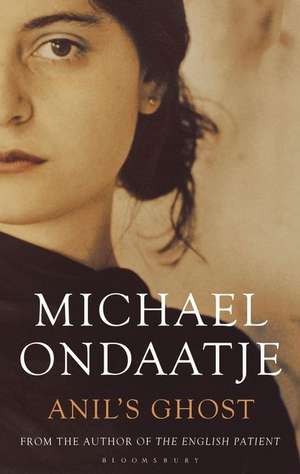
Anil's Ghost
Autor Michael Ondaatjeen Limba Engleză Hardback – 21 mar 2011
Cum poate un specialist în studiul morții să redea demnitatea celor uitați într-o țară sfâșiată de un conflict fratricid? În Anil's Ghost, Michael Ondaatje ne transportă în atmosfera densă și electrizantă a statului Sri Lanka de la sfârșitul secolului trecut, unde tradițiile milenare se ciocnesc brutal cu realitatea sângeroasă a războiului civil. Reținem figura centrală a lui Anil Tissera, o antropoloagă criminalistă care se întoarce în țara natală după ani de studii în Anglia și America, purtând cu ea instrumentele științei pentru a descifra mesajele ascunse în oasele victimelor anonime. Putem afirma că romanul nu este doar o investigație asupra unor crime organizate, ci o meditație profundă asupra modului în care istoria se scrie pe corpurile celor care nu mai pot vorbi.
Stilul lui Michael Ondaatje rămâne unul de o senzorialitate debordantă, unde precizia detaliului chirurgical se împletește cu lirismul descrierilor de peisaj. Ritmul narativ amintește de cel din The Seven Moons of Maali Almeida de Shehan Karunatilaka prin explorarea traumelor politice din Sri Lanka, dar structura lui Ondaatje este mult mai fragmentară și contemplativă, refuzând soluțiile ușoare în favoarea unei atmosfere de mister metafizic. Merită menționat că această operă continuă preocuparea autorului pentru identități hibride și personaje aflate la intersecția culturilor, teme explorate și în The English Patient sau The Cat's Table. Anil's Ghost reușește să transforme o anchetă criminalistică într-un poem despre supraviețuire și despre datoria morală de a scoate adevărul la lumină, chiar și atunci când acesta este îngropat sub straturi de tăcere și frică.
Preț: 57.22 lei
Preț vechi: 77.08 lei
-26%
Carte indisponibilă temporar
Specificații
ISBN-10: 1408819783
Pagini: 320
Dimensiuni: 129 x 198 x 24 mm
Greutate: 0.37 kg
Editura: Bloomsbury Publishing
Colecția Bloomsbury Publishing
Locul publicării:London, United Kingdom
V-ar putea interesa
-
 The Cat's TableMichael Ondaatje-18%Preț: 65.61 lei79.89 lei
 -
 ChinamanShehan Karunatilaka-24%Preț: 60.53 lei80.06 lei
 -
 Running in the FamilyMichael OndaatjePreț: 93.91 lei
 -
 DivisaderoMichael Ondaatje-27%Preț: 68.23 lei93.14 lei
 -
 This Divided IslandSamanth Subramanian-18%Preț: 77.22 lei94.19 lei
 -
 Return to Sri LankaRazeen Sally-14%Preț: 81.96 lei95.03 lei
 -
 Love Marriage: from the author of 2024 Women's Prize-winning BROTHERLESS NIGHTV.V. Ganeshananthan-26%Preț: 58.56 lei79.22 lei
 -
 The Memory of LoveAminatta Forna-25%Preț: 71.37 lei94.93 lei
 -
 Her Soul for a CrownAlysha RameeraPreț: 62.74 leiRecomandat
 -
 The English Patient: Winner of the Golden Man Booker PrizeMichael Ondaatje-32%Preț: 54.00 lei79.42 lei
 -
 AnamAndre Dao-35%Preț: 51.05 lei78.20 lei
 -
 A Passage NorthAnuk ArudpragasamPreț: 65.20 lei
 -
 WarlightMichael OndaatjePreț: 56.60 lei
 -
 A Year of Last ThingsMichael Ondaatje-19%Preț: 86.52 lei107.19 lei
 -
 Rakesfall: Winner of the 2025 Ursula K. Le Guin Prize for Fiction!Vajra Chandrasekera-19%Preț: 57.98 lei71.17 lei
 -
 When Memory DiesA. Sivanandan-24%Preț: 60.82 lei80.55 lei
 -
 TamarinPriya Hein-20%Preț: 73.93 lei92.24 lei
 -
 The Seven Moons of Maali Almeida: Winner of the Booker Prize 2022Shehan Karunatilaka-16%Preț: 61.49 lei73.14 lei
 -
 Alive in the Merciful CountryA. L. KennedyPreț: 136.40 lei
 -
 Dancing on KnivesJoanne Rush-18%Preț: 58.52 lei71.52 lei
De ce să citești această carte
Pentru cititorii pasionați de beletristică de înaltă ținută, care caută o explorare a condiției umane în situații limită. Veți descoperi o poveste despre memorie și identitate, scrisă cu o precizie poetică rară. Este o recomandare ideală pentru cei care au apreciat profunzimea istorică din The English Patient și doresc să înțeleagă mai bine complexitatea culturală a Asiei de Sud prin prisma unui maestru al limbajului.
Despre autor
Michael Ondaatje, născut în Sri Lanka și stabilit ulterior în Canada, este unul dintre cei mai apreciați scriitori contemporani, fiind laureat al premiului Booker pentru celebrul roman The English Patient. Cariera sa polivalentă cuprinde poezie, eseistică și film, elemente care își pun amprenta pe stilul său narativ vizual și fragmentat. Recunoscut ca Ofițer al Ordinului Canadei, Ondaatje explorează constant teme precum migrația, identitatea și intersecția dintre viața personală și marile evenimente istorice. Opera sa, care include titluri precum Warlight sau The Cat's Table, este definită de o sensibilitate aparte față de limbaj și de capacitatea de a transforma documentarea riguroasă în proză evocatoare.
Descriere
Notă biografică
Extras
She arrived in early March, the plane landing at Katunayake airport before the dawn. They had raced it ever since coming over the west coast of India, so that now passengers stepped onto the tarmac in the dark.
By the time she was out of the terminal the sun had risen. In the West she'd read, The dawn comes up like thunder, and she knew she was the only one in the classroom to recognize the phrase physically. Though it was never abrupt thunder to her. It was first of all the noise of chickens and carts and modest morning rain or a man squeakily cleaning the windows with newspaper in another part of the house.
As soon as her passport with the light-blue UN bar was processed, a young official approached and moved alongside her. She struggled with her suitcases but he offered no help.
'How long has it been? You were born here, no?'
'Fifteen years.'
'You still speak Sinhala?'
'A little. Look, do you mind if I don't talk in the car on the way into Colombo — I'm jet-lagged. I just want to look. Maybe drink some toddy before it gets too late. Is Gabriel's Saloon still there for head massages?'
'In Kollupitiya, yes. I knew his father.'
'My father knew his father too.'
Without touching a single suitcase he organized the loading of the bags into the car. 'Toddy!' He laughed, continuing his conversation. 'First thing after fifteen years. The return of the prodigal.'
'I'm not a prodigal.'
An hour later he shook hands energetically with her at the door of the small house they had rented for her.
'There's a meeting tomorrow with Mr. Diyasena.'
'Thank you.'
'You have friends here, no?'
'Not really.'
Anil was glad to be alone. There was a scattering of relatives in Colombo, but she had not contacted them to let them know she was returning. She unearthed a sleeping pill from her purse, turned on the fan, chose a sarong and climbed into bed. The thing she had missed most of all were the fans. After she had left Sri Lanka at eighteen, her only real connection was the new sarong her parents sent her every Christmas (which she dutifully wore), and news clippings of swim meets. Anil had been an exceptional swimmer as a teenager, and the family never got over it; the talent was locked to her for life. As far as Sri Lankan families were concerned, if you were a well-known cricketer you could breeze into a career in business on the strength of your spin bowling or one famous inning at the Royal-Thomian match. Anil at sixteen had won the two-mile swim race that was held by the Mount Lavinia Hotel.
Each year a hundred people ran into the sea, swam out to a buoy a mile away and swam back to the same beach, the fastest male and the fastest female fêted in the sports pages for a day or so. There was a photograph of her walking out of the surf that January morning — which The Observer had used with the headline 'Anil Wins It!' and which her father kept in his office. It had been studied by every distant member of the family (those in Australia, Malaysia and England, as well as those on the island), not so much because of her success but for her possible good looks now and in the future. Did she look too large in the hips?
The photographer had caught Anil's tired smile in the photograph, her right arm bent up to tear off her rubber swimming cap, some out-of-focus stragglers (she had once known who they were). The black-and-white picture had remained an icon in the family for too long.
She pushed the sheet down to the foot of the bed and lay there in the darkened room, facing the waves of air. The island no longer held her by the past. She'd spent the fifteen years since ignoring that early celebrity. Anil had read documents and news reports, full of tragedy, and she had now lived abroad long enough to interpret Sri Lanka with a long-distance gaze. But here it was a more complicated world morally. The streets were still streets, the citizens remained citizens. They shopped, changed jobs, laughed. Yet the darkest Greek tragedies were innocent compared with what was happening here. Heads on stakes. Skeletons dug out of a cocoa pit in Matale. At university Anil had translated lines from Archilochus — In the hospitality of war we left them their dead to remember us by. But here there was no such gesture to the families of the dead, not even the information of who the enemy was.
From the Hardcover edition.