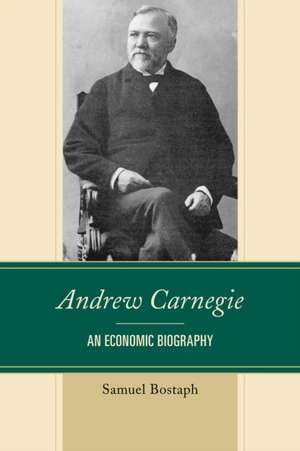
Andrew Carnegie: An Economic Biography: Capitalist Thought: Studies in Philosophy, Politics, and Economics
Autor Samuel Bostaphen Limba Engleză Hardback – 8 oct 2015
Din seria Capitalist Thought: Studies in Philosophy, Politics, and Economics
- 32%
 Preț: 365.37 lei
 - 14%
 Preț: 259.00 lei
 - 23%
 Preț: 320.73 lei
 - 33%
 Preț: 582.04 lei
 - 24%
 Preț: 311.88 lei
 - 24%
 Preț: 312.29 lei
 - 33%
 Preț: 615.41 lei
 - 38%
 Preț: 661.66 lei
 - 27%
 Preț: 267.95 lei
 - 27%
 Preț: 256.91 lei
 - 27%
 Preț: 272.12 lei
 - 26%
 Preț: 264.66 lei
 - 35%
 Preț: 808.10 lei
 - 14%
 Preț: 810.04 lei
 - 23%
 Preț: 321.15 lei
 - 31%
 Preț: 571.92 lei
Preț: 529.29 lei
Preț vechi: 817.60 lei
-35%
Puncte Express: 794
Carte tipărită la comandă
Livrare economică 07-21 decembrie
Livrare prin curier în România Termenul estimat este afișat lângă disponibilitate.
Transport gratuit pentru acest produs Plată online sau ramburs, în funcție de opțiunile comenzii.
Retur gratuit în 14 zile Comandă securizată și suport în română.
Specificații
ISBN-13: 9780739189832
ISBN-10: 0739189832
Pagini: 138
Dimensiuni: 158 x 236 x 15 mm
Greutate: 0.35 kg
Editura: Bloomsbury Publishing
Colecția Lexington Books
Seria Capitalist Thought: Studies in Philosophy, Politics, and Economics
Locul publicării:New York, United States
ISBN-10: 0739189832
Pagini: 138
Dimensiuni: 158 x 236 x 15 mm
Greutate: 0.35 kg
Editura: Bloomsbury Publishing
Colecția Lexington Books
Seria Capitalist Thought: Studies in Philosophy, Politics, and Economics
Locul publicării:New York, United States
V-ar putea interesa
-
 Writing Pauline: Wisdom From A Long LifeGail J. Stearns-27%Preț: 289.25 lei393.78 lei
 -
 Getting HosedDave NassaneyPreț: 64.35 lei
 -
 Reflections of a Successful DropoutVal BarryPreț: 145.92 lei
 -
 The Peace AngelNola HennessyPreț: 203.25 lei
 -
 NixlandTom NixPreț: 121.00 lei
 -
 Recipe for DisasterMelissa ColemanPreț: 62.70 lei
 -
 Windy City AdmanBill MaloneyPreț: 99.06 lei
 -
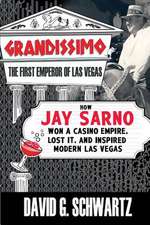 GrandissimoDavid G. SchwartzPreț: 127.17 lei
 -
 About GartnerCatherine FredmanPreț: 143.87 lei
 -
 The Accidental HeadhunterIan D. CordinerPreț: 101.01 lei
 -
 Preț: 103.61 lei
 -
 Preț: 153.55 lei
 -
 Clarinets, Pipelines and Unforeseen PlacesGrahame CampbellPreț: 155.48 lei
 -
 Preț: 60.40 lei
 -
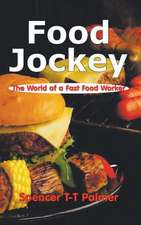 Food JockeySpencer T-T PalmerPreț: 113.35 lei
 -
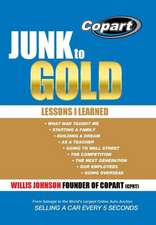 Junk to GoldMarla J PughPreț: 208.04 lei
 -
 Junk to Gold, de Chatarra a OroWillis JohnsonPreț: 121.48 lei
 -
 Junk to Gold, de Chatarra a OroWillis JohnsonPreț: 243.56 lei
 -
 Go Ahead Knock Me DownR P E BrownPreț: 119.17 lei
 -
 Clarence DillonRobert C PerezPreț: 258.56 lei
 -
 Nada es ImposibleJairo Alvarez BoteroPreț: 157.15 lei
Cuprins
Chapter One Entrepreneurial, Entrepreneurship, and Entrepreneurs
Chapter Two Early Life in Scotland
Chapter Three Youth in Western Pennsylvania
Chapter Four On the Road to Wealth
Chapter Five A Man of Steel
Chapter Six Labor Relations
Chapter Seven Empire Builder
Chapter Eight Philanthropist
Chapter Nine A Summing Up
Chapter Two Early Life in Scotland
Chapter Three Youth in Western Pennsylvania
Chapter Four On the Road to Wealth
Chapter Five A Man of Steel
Chapter Six Labor Relations
Chapter Seven Empire Builder
Chapter Eight Philanthropist
Chapter Nine A Summing Up
Recenzii
Bostaph succinctly and effectively distills the career and economic context of steel magnate Andrew Carnegie, packing the punch of a book twice its length . . . After a brief overview of how to conceptualize entrepreneurship, the volume methodically follows Carnegie from childhood in Scotland to successes in business and philanthropic endeavors. Bostaph shows that much of Carnegie's early success relied on questionable insider dealings with Pennsylvania Railroad colleagues but notes that his ability to adopt innovations, motivate subordinates, relentlessly cut costs, and efficiently coordinate markets was the ultimate cause of his phenomenal successes. The best chapter explains that condemnations of Carnegie's labor relations (especially during the Homestead Strike) are ill-founded, yet Bostaph is quick to criticize Carnegie's self-deluded misrepresentations and mistreatment of his key partner, Henry Clay Frick. Although the Kirznerian 'market process' approach adopted by Bostaph is useful, the dynamic Carnegie who emerges in this biography comes across as a truly 'unique being' along the lines described by Joseph Schumpeter. Summing Up: Highly recommended. All readership levels.
Given its brevity and its focus on the issues of government intervention, firm governance, and property rights, this is the biography that I would recommend to a generalist wanting to understand Carnegie.. By putting the firm's history into an alternative economic context, this book reveals much about Carnegie and the steel industry.. I hope to see similar works from him on other historical figures.
Carnegie has been the subject of several long biographies, but Samuel Bostaph, professor emeritus at the University of Dallas, has given us something different: a short economic biography that captures the high points in Carnegie's life and career. Bostaph's book is well written and balanced in its evaluation of the wily Scot.. [A]s Samuel Bostaph shows in his excellent biography, a great entrepreneur does more than any politician to improve the quality of life for ordinary people.
Andrew Carnegie: An Economic Biography is a major contribution to the economic history of the United States. Sam Bostaph analyzes the career of Andrew Carnegie, the most important entrepreneur in late-nineteenth century America, using the tools of economic theory. Economics, Bostaph says, is governed by laws, just as the physical world is; and he shows in masterful fashion how Carnegie was able to make use of these laws to his advantage. Carnegie's success stemmed in large part from his superior ability to supply what people wanted, though he was not above using underhanded methods against his rivals and seeking government privileges for his enterprises. Bostaph's insights about economic theory and history and his penetrating depiction of Carnegie's personality will establish this book as a definitive work on this key figure in American economic history.
In this interesting and eminently readable economic biography, Samuel Bostaph provides an insightful analysis of Andrew Carnegie as a dynamic and alert economic actor and pioneering tycoon in the 'Age of Steel.' This volume chronicles Carnegie's rise from poverty to become an international industrial leader, respected scholar, philanthropist, defender of free enterprise, and activist for world peace and democracy. Carnegie is shown to be the most important, and most symbolic, entrepreneur and catalyst in the late 19th century industrialization in America. Bostaph employs economic theory and tools to understand Carnegie's profit-seeking actions and both their positive and negative effects. Carnegie was an innovative and focused businessman with uncommon vision, an unrelenting work ethic, and a rare ability to deal with risk and uncertainty. As an inconsistent advocate of the free market, he is also revealed to be a sometimes 'crony capitalist' who went to the government for special privileges. In this outstanding book, Bostaph explains both Carnegie's usually rational and sometimes irrational decisions and actions and their consequences.
Dr. Sam Bostaph has created an entirely new category of economic research and writing: the economic biography. Most biographies of men like Andrew Carnegie are written by historians with little or no background in economics, which often leads to false or incomplete conclusions. Dr. Bostaph's economic biography of Andrew Carnegie is the one to read for students of one of America's most famous (and notorious) entrepreneurs.
Professor Bostaph is a real-world-oriented economist who has written a perceptive biography of Andrew Carnegie, the great American industrialist and philanthropist, and it delightfully does not shrink from analyzing Carnegie's minuses either.
Entrepreneurs are central players in the dynamic process of the market economy, but most economists don't know how to square entrepreneurial action with the static mathematical modeling of the market. Not so Professor Bostaph, a renowned historian of economic thought and an economist steeped in the market-process theory of the Austrian School. He offers fine scholarship and lucid prose to portray Andrew Carnegie, one of the greatest American entrepreneurs. We see a Carnegie, not as he should be according to some narrow theoretical conception, but a person of blood and flesh, with the good and bad that he did for himself, for his country, and for the world.
Given its brevity and its focus on the issues of government intervention, firm governance, and property rights, this is the biography that I would recommend to a generalist wanting to understand Carnegie.. By putting the firm's history into an alternative economic context, this book reveals much about Carnegie and the steel industry.. I hope to see similar works from him on other historical figures.
Carnegie has been the subject of several long biographies, but Samuel Bostaph, professor emeritus at the University of Dallas, has given us something different: a short economic biography that captures the high points in Carnegie's life and career. Bostaph's book is well written and balanced in its evaluation of the wily Scot.. [A]s Samuel Bostaph shows in his excellent biography, a great entrepreneur does more than any politician to improve the quality of life for ordinary people.
Andrew Carnegie: An Economic Biography is a major contribution to the economic history of the United States. Sam Bostaph analyzes the career of Andrew Carnegie, the most important entrepreneur in late-nineteenth century America, using the tools of economic theory. Economics, Bostaph says, is governed by laws, just as the physical world is; and he shows in masterful fashion how Carnegie was able to make use of these laws to his advantage. Carnegie's success stemmed in large part from his superior ability to supply what people wanted, though he was not above using underhanded methods against his rivals and seeking government privileges for his enterprises. Bostaph's insights about economic theory and history and his penetrating depiction of Carnegie's personality will establish this book as a definitive work on this key figure in American economic history.
In this interesting and eminently readable economic biography, Samuel Bostaph provides an insightful analysis of Andrew Carnegie as a dynamic and alert economic actor and pioneering tycoon in the 'Age of Steel.' This volume chronicles Carnegie's rise from poverty to become an international industrial leader, respected scholar, philanthropist, defender of free enterprise, and activist for world peace and democracy. Carnegie is shown to be the most important, and most symbolic, entrepreneur and catalyst in the late 19th century industrialization in America. Bostaph employs economic theory and tools to understand Carnegie's profit-seeking actions and both their positive and negative effects. Carnegie was an innovative and focused businessman with uncommon vision, an unrelenting work ethic, and a rare ability to deal with risk and uncertainty. As an inconsistent advocate of the free market, he is also revealed to be a sometimes 'crony capitalist' who went to the government for special privileges. In this outstanding book, Bostaph explains both Carnegie's usually rational and sometimes irrational decisions and actions and their consequences.
Dr. Sam Bostaph has created an entirely new category of economic research and writing: the economic biography. Most biographies of men like Andrew Carnegie are written by historians with little or no background in economics, which often leads to false or incomplete conclusions. Dr. Bostaph's economic biography of Andrew Carnegie is the one to read for students of one of America's most famous (and notorious) entrepreneurs.
Professor Bostaph is a real-world-oriented economist who has written a perceptive biography of Andrew Carnegie, the great American industrialist and philanthropist, and it delightfully does not shrink from analyzing Carnegie's minuses either.
Entrepreneurs are central players in the dynamic process of the market economy, but most economists don't know how to square entrepreneurial action with the static mathematical modeling of the market. Not so Professor Bostaph, a renowned historian of economic thought and an economist steeped in the market-process theory of the Austrian School. He offers fine scholarship and lucid prose to portray Andrew Carnegie, one of the greatest American entrepreneurs. We see a Carnegie, not as he should be according to some narrow theoretical conception, but a person of blood and flesh, with the good and bad that he did for himself, for his country, and for the world.