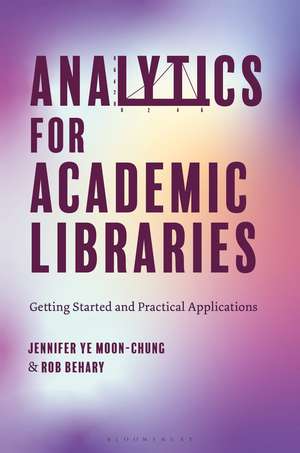
Analytics for Academic Libraries: Getting Started and Practical Applications
Autor Jennifer Ye Moon-Chung, Rob Beharyen Limba Engleză Paperback – iul 2027
Covering the expectations of the field and modern data-collecting tools and techniques, readers will learn how to leverage their findings to make data-informed decisions in their library planning. The book also highlights what is unique to librarianship in the discipline of analytics by focusing on the ethics of the library profession, including issues related to data privacy and service standards and issues related to collection management and outreach efforts.
This book is an indispensable guide to all areas of academic librarianship. Analytics provide a shared area where data points from other functional areas can be viewed and compared, driving creative collaboration, identification of library-wide trends, and development of future initiatives.
Preț: 377.24 lei
Preț vechi: 399.06 lei
-5% Precomandă
Puncte Express: 566
Carte nepublicată încă
Livrare prin curier în România Precomanda se expediază când titlul devine disponibil.
Transport gratuit de la 400.00 lei Plată online sau ramburs, în funcție de opțiunile comenzii.
Retur gratuit în 14 zile Comandă securizată și suport în română.
Doresc să fiu notificat când acest titlu va fi disponibil:
Se trimite...
Specificații
ISBN-13: 9798216185741
Pagini: 136
Dimensiuni: 156 x 235 mm
Editura: Bloomsbury Publishing
Colecția Bloomsbury Libraries Unlimited
Locul publicării:New York, United States
Pagini: 136
Dimensiuni: 156 x 235 mm
Editura: Bloomsbury Publishing
Colecția Bloomsbury Libraries Unlimited
Locul publicării:New York, United States
Cuprins
1. Introduction
a. Introduction
b. Scope
c. Definition of Terms (Library analytics, Dashboards)
2. Transformation of libraries and key metrics
a. Changes in Academic Libraries
b. Key Metrics
c. Case Studies
3. Building a Strong Foundation for Analytics
a. Building a Culture of Using Data to Make Decisions
b. Share Data across all Library Units
c. Select Storage
d. Case Studies
4. Planning your Analytics Project
a. Identifying Candidates
b. Data Collection Planning: Purpose, Utilization, Management, and Maintenance
c. Ethical and Legal Responsibilities
d. Case studies
5. Data Communication
a. Defining your Communication Goals
b. Internal Communication Goals
c. Mid-level Communication Goals
d. Promotional Communication Goals
e. Case studies
6. Choosing the Right Reporting Tools
a. Evaluating Reporting Software
b. Understand the Pros and Cons
c. Best Tools for Your Needs
d. Case Studies
7. Building Your Analytics Pipeline: From Data tools, and people
a. Gathering and Selecting Data
b. Cleaning and Preparing Data
c. Feeding Data into Your Pipeline
d. Designing and Building Dashboards
e. Maintaining and Improving Your Pipeline
f. Case Studies
8. Interpretation of Data
a. The Importance of Accurate Data Interpretation
b. Understanding Data Bias and Misuse (Tips to Avoid Data Bias and Misuse)
c. Behavioral Analytics
d. Predicative Analytics
e. Case Studies
9. Thinking about the future of library analytics and conclusion
a. Documentation
b. Data Quality and Integrity
c. Learning Community
d. Evaluation
e. Case Studies
10. Thinking about the future of Analytics
a. Data Collection
b. Machine Learning
c. Optimizing Data Models
d. Concluding Remarks
Appendix
a. Tools Used in Analytics by Academic Libraries
b. Resources for Benchmarking and Selecting Peer Libraries
Bibliography
a. Introduction
b. Scope
c. Definition of Terms (Library analytics, Dashboards)
2. Transformation of libraries and key metrics
a. Changes in Academic Libraries
b. Key Metrics
c. Case Studies
3. Building a Strong Foundation for Analytics
a. Building a Culture of Using Data to Make Decisions
b. Share Data across all Library Units
c. Select Storage
d. Case Studies
4. Planning your Analytics Project
a. Identifying Candidates
b. Data Collection Planning: Purpose, Utilization, Management, and Maintenance
c. Ethical and Legal Responsibilities
d. Case studies
5. Data Communication
a. Defining your Communication Goals
b. Internal Communication Goals
c. Mid-level Communication Goals
d. Promotional Communication Goals
e. Case studies
6. Choosing the Right Reporting Tools
a. Evaluating Reporting Software
b. Understand the Pros and Cons
c. Best Tools for Your Needs
d. Case Studies
7. Building Your Analytics Pipeline: From Data tools, and people
a. Gathering and Selecting Data
b. Cleaning and Preparing Data
c. Feeding Data into Your Pipeline
d. Designing and Building Dashboards
e. Maintaining and Improving Your Pipeline
f. Case Studies
8. Interpretation of Data
a. The Importance of Accurate Data Interpretation
b. Understanding Data Bias and Misuse (Tips to Avoid Data Bias and Misuse)
c. Behavioral Analytics
d. Predicative Analytics
e. Case Studies
9. Thinking about the future of library analytics and conclusion
a. Documentation
b. Data Quality and Integrity
c. Learning Community
d. Evaluation
e. Case Studies
10. Thinking about the future of Analytics
a. Data Collection
b. Machine Learning
c. Optimizing Data Models
d. Concluding Remarks
Appendix
a. Tools Used in Analytics by Academic Libraries
b. Resources for Benchmarking and Selecting Peer Libraries
Bibliography
Recenzii
Analytics for Academic Libraries: Getting Started and Practical Applications provides a much-needed and accessible introduction to library analytics, offering a realistic starting point for librarians new to the work while also presenting experienced practitioners with insightful perspectives and approaches. Through relevant case studies, examples drawn from multiple functional areas, and clear guidance on the types of data to consider and how to use them effectively, it stands out as an excellent resource for building a culture of assessment and advancing analytics in a collaborative and participatory way.
Are you new to library analytics? Start here. I especially appreciate how the authors demystify analytics for beginners and encourage us to move beyond our expertise silos, integrating data across library functions to better understand services and impact. The book's emphasis on cultivating a culture of data-informed practice should resonate with all library leaders, regardless of where they are in the organization. The authors' guidance on planning, communicating data, and understanding what they call the "grammar" of analytics - when and how to use tables, visualizations, and dashboards - is clear and immediately applicable. The authors' shared enthusiasm is infectious, and their approach is inclusive and welcoming - there is no gatekeeping here. We all can and should be more involved in the collection, organization, and communication of our libraries' analytics.
Analytics for Academic Libraries: Getting Started and Practical Applications is a thorough yet approachable text that provides an extensive exploration of library analytics, the purpose of analytics, and how they can be used to inform decision making in academic libraries. The content would be useful for any academic librarian, including new practitioners, established practitioners seeking to develop their skills further, and library science students. With a clear and pragmatic approach, authors Jennifer Ye Moon-Chung and Rob Behary walk readers through the process of implementing an analytics project, including what tools to use and how to interpret and communicate about data. The helpful case studies throughout the text and focus on real-world concerns and dynamics experienced in academic libraries provide immediate applicability. As an instructor in a Master of Library Science program, I am grateful to have a text that thoughtfully addresses an essential topic with which students may have little prior experience, and that does so in an engaging and down-to-earth manner.
Are you new to library analytics? Start here. I especially appreciate how the authors demystify analytics for beginners and encourage us to move beyond our expertise silos, integrating data across library functions to better understand services and impact. The book's emphasis on cultivating a culture of data-informed practice should resonate with all library leaders, regardless of where they are in the organization. The authors' guidance on planning, communicating data, and understanding what they call the "grammar" of analytics - when and how to use tables, visualizations, and dashboards - is clear and immediately applicable. The authors' shared enthusiasm is infectious, and their approach is inclusive and welcoming - there is no gatekeeping here. We all can and should be more involved in the collection, organization, and communication of our libraries' analytics.
Analytics for Academic Libraries: Getting Started and Practical Applications is a thorough yet approachable text that provides an extensive exploration of library analytics, the purpose of analytics, and how they can be used to inform decision making in academic libraries. The content would be useful for any academic librarian, including new practitioners, established practitioners seeking to develop their skills further, and library science students. With a clear and pragmatic approach, authors Jennifer Ye Moon-Chung and Rob Behary walk readers through the process of implementing an analytics project, including what tools to use and how to interpret and communicate about data. The helpful case studies throughout the text and focus on real-world concerns and dynamics experienced in academic libraries provide immediate applicability. As an instructor in a Master of Library Science program, I am grateful to have a text that thoughtfully addresses an essential topic with which students may have little prior experience, and that does so in an engaging and down-to-earth manner.