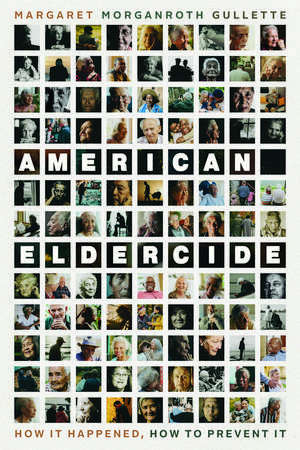
American Eldercide: How It Happened, How to Prevent It
Autor Margaret Morganroth Gulletteen Limba Engleză Hardback – 22 oct 2024
Twenty percent of the Americans who have died of COVID since 2020 have been older and disabled adults residing in nursing homes—even though they make up fewer than one percent of the US population. Something about this catastrophic loss of life in government-monitored facilities has never added up.
Until now. In American Eldercide, activist and scholar Margaret Morganroth Gullette investigates this tragic public health crisis with a passionate voice and razor-sharp attention to detail, showing us that nothing about it was inevitable. By unpacking the decisions that led to discrimination against nursing home residents, revealing how governments, doctors, and media reinforced ageist or ableist biases, and collecting the previously little-heard voices of the residents who survived, Gullette helps us understand the workings of what she persuasively calls an eldercide.
Gullette argues that it was our collective indifference, fueled by the heightened ageism of the COVID-19 era, that prematurely killed this vulnerable population. Compounding that deadly indifference is our own panic about aging and a social bias in favor of youth-based decisions about lifesaving care. The compassion this country failed to muster for the residents of our nursing facilities motivated Gullette to pen an act of remembrance, issuing a call for pro-aging changes in policy and culture that would improve long-term care for everyone.
Preț: 176.26 lei
Nou
Puncte Express: 264
Preț estimativ în valută:
31.19€ • 36.57$ • 27.39£
31.19€ • 36.57$ • 27.39£
Carte disponibilă
Livrare economică 19 ianuarie-02 februarie 26
Livrare express 02-08 ianuarie 26 pentru 83.06 lei
Preluare comenzi: 021 569.72.76
Specificații
ISBN-13: 9780226827766
ISBN-10: 0226827763
Pagini: 328
Ilustrații: 1 halftones
Dimensiuni: 152 x 229 x 30 mm
Greutate: 0.65 kg
Ediția:First Edition
Editura: University of Chicago Press
Colecția University of Chicago Press
ISBN-10: 0226827763
Pagini: 328
Ilustrații: 1 halftones
Dimensiuni: 152 x 229 x 30 mm
Greutate: 0.65 kg
Ediția:First Edition
Editura: University of Chicago Press
Colecția University of Chicago Press
Notă biografică
Margaret Morganroth Gullette is a cultural critic and anti-ageism pioneer whose prize-winning work is foundational in critical age studies. She is the author of several books, including Agewise, Aged by Culture, and Ending Ageism, or How Not to Shoot Old People. Her writing has appeared in publications such as the New York Times, Washington Post, Guardian, Atlantic, Nation, and theBoston Globe. She is a resident scholar at the Women’s Studies Research Center, Brandeis, and lives in Newton, Massachusetts.
Cuprins
Part 1: Inside
Dedication
Prologue: Those We Lost
1. “Sweeping Up the Heart, the Morning after Death”
Part 2: Instead
2. Instead . . . The First Months of 2020
3. How Americans Learned to Accept That “the Old” Would Die
4. A Chasm Opens: Vital Youth vs. Moribund Age
5. Consequences
6. On Futility and “Miracles”
7. The Before Time
Part 3: Ahead
8. The Guardians of Later Life
9. In Search of the Missing Voices
10. The COVID Monument We Need
Epilogue: Reckonings
Appendix: Undercounting the Deaths of Residents
Acknowledgments
Notes
Index
Dedication
Prologue: Those We Lost
1. “Sweeping Up the Heart, the Morning after Death”
Part 2: Instead
2. Instead . . . The First Months of 2020
3. How Americans Learned to Accept That “the Old” Would Die
4. A Chasm Opens: Vital Youth vs. Moribund Age
5. Consequences
6. On Futility and “Miracles”
7. The Before Time
Part 3: Ahead
8. The Guardians of Later Life
9. In Search of the Missing Voices
10. The COVID Monument We Need
Epilogue: Reckonings
Appendix: Undercounting the Deaths of Residents
Acknowledgments
Notes
Index
Recenzii
"In this latest of Gullette’s half-dozen books exploring aging and ageism, the Brandeis University scholar continues with her penchant for intriguing titles, such as 2017’s award-winning Ending Ageism: How Not to Shoot Old People, Rutgers University Press. But her satirical tongue isn’t even half way into her cheek with this deadly serious and meticulously researched new volume. In American Eldercide, Gullette documents tens-of-thousands unnecessary fatalities among older Americans during the COVID-19 pandemic. The book amounts to an indictment of greed in the U.S. health care system, and more fundamentally, the ageist attitudes permeating American culture."
“A masterpiece. Gullette writes with passion, a critical eye, and an often-sly sense of humor. She shows, in devastating detail, how we as a society failed our elderly population—and the lessons we must learn in order to avoid a similar catastrophe in the future.”
"We won’t have to wait two decades for the definitive book explaining the grim fate of the most vulnerable Americans, the elderly, during the first wave of Covid-19 in 2020 to be acclaimed. American Eldercide is that book. In a tour de force of statistics, history, personal moral outrage, naming names, pointing fingers, blasting government failures and moving case vignettes describing what happened to real people, Gullette provides the right book. I find little in current policy that captures the sharp insights and warnings in American Eldercide. Ageism has not abated; crude, fantastical egoist selfishness is not being exposed as both ungrounded by facts and flat out dangerous to any society.”
"Gullette calls into question the fundamental assumption that older people are closer to death and therefore more easily discarded. The book touches on everything from the shadow of eugenics to toxic masculinity to the selfish over-indulgence of youthful partygoers. . . . This [Eldercide] could have all been prevented, and still can be, she says, with more visibility, more funding, more staffing—in short, more attention to the people we can all hope to become: the elderly."
"Gullette’s healthcare analysis through an age-focused lens addresses a critical gap between age studies and health humanities. . . . [American Eldercide] will appeal to scholars in age studies, medical and health humanities, public health advocates, and anyone concerned with dignified aging, government accountability, and learning from the pandemic’s devastating lessons about care."
"An alarming exposé of the unnecessary, untimely, and largely undocumented deaths of residents in government-supervised nursing homes since the start of the COVID pandemic due to understaffing; deregulation; lack of testing, protective gear, and treatment; vaccination delays; abuse; and neglect. . . . Most moving are the personal stories shared throughout."
“With Gullette’s work leading the way toward combating ageism, a growing coalition of scholars, activists, and academics suggests that change is possible. . . . Gullette’s healthcare analysis through an age-focused lens addresses a critical gap between age studies and the medical humanities. . . [She] shows how COVID-19 both exposed the brutal harm of ageism and created opportunities to align anti-ageism efforts with broader social justice movements.”
“With unflinching detail, American Eldercide indicts government indifference and failed regulation during the COVID pandemic. Poignant portraits of real people bring us face to face with individuals who are all our responsibility. This powerful book should be read by anyone who cares about public health, dignified aging, and government accountability.”
“Unflinching and powerful. Through fierce and evocative prose, Gullette exposes the harsh realities many older adults faced during the COVID-19 pandemic and lays bare the systemic failures and personal tragedies that unfolded. American Eldercide underscores the urgent need to address ageism in our institutions—and ourselves.”
“A remarkable and vivid description of one of the worst chapters in the history of nursing homes—orchestrated by corporate greed and profiteering. It is a wake-up call for the need for total reform or elimination of the institutions where older people are sent to die without dignity or care.”
“In her incendiary new book, Gullette explains why the deaths of over 150,000 residents of nursing facilities were preventable, laying out the governmental failures and intersecting biases that legitimized their appalling abandonment. Ultimately, she places those lost residents where they rightly belong: at the center of a shared vision of a better future for us all.”
“American Eldercide should stand beside Betty Friedan’s Fountain of Age and Dr. Robert N. Butler’s Pulitzer Prize-winning Why Survive? Being Old in America as essential reading about aging and ageism in the U.S.. Incisively researched and compellingly written, Gullette's riveting volume underscores the vitality and resilience of so many older Americans, especially those too readily dismissed as expendable by our youth-obsessed medical-industrial complex.”
“The stories and interviews that Gullette presents in this book will grab your attention. Promoting dialogue about the deep ageism in society is vital to making meaningful improvements now, in policy and funding for long-term care settings such as nursing homes.”
“American Eldercide pulls no punches exposing the greed of uncaring nursing home operators and misfeasance of the bureaucrats failing to protect countless vulnerable residents. It’s a stark warning about the pitfalls of aging, and a wake-up call to work for transformational change to keep us all from sharing the stories of Vera and so many others. Gullette offers a common-sense prescription for what would lead to aging with dignity.”
"American Eldercide is a courageous and powerful act of research that demands that readers recognize and reckon with the tacit roots of why so many living in long-term care died of COVID during the pandemic. May it raise your hackles and fuel reform."
"In the first days of the COVID-19 pandemic, Margaret Morganroth Gullette immediately became concerned about older adults' access to ventilators since a patient's age was the only explicit reason someone could be barred access to those medical devices during a public health emergency. . . . Gullette started writing and researching as a 'passionate protest,' and what emerged was her recently published book American Eldercide. The book includes interviews with COVID survivors, family members who lost loved ones and health experts. It aims to put a name and face to those who were lost."
"Gullette’s work with the Dignity Alliance of Massachusetts also fuels her passion for the proper care of the elderly. . . . Through a creative nonfiction lens that presents data in a comprehensive way and shares stories of the marginalized community affected by this neglect, Gullette’s book is dynamic and shows the impact that is still lingering through the healthcare system in regard to the elderly."