
Albert Camus and the Critique of Violence
Autor Professor David Ohanaen Limba Engleză Paperback – 4 oct 2016
The temptation to resort to violence runs like a thread through Albert Camus' works, and can be viewed as an additional key to understanding his literary productions and philosophical writings. His short life and intellectual attitudes were almost all connected with brutality and cruel circumstance. At the age of one he lost his father, who was killed as a soldier of the French army at the outbreak of the First World War. He passed his childhood and youth in colonial Algeria, no doubt experiencing degrees of inhumanity during that difficult period. In his first years in conquered France, he was editor of an underground newspaper that opposed the Nazi occupation. In the years following the Liberation, he denounced the Bolshevist tyranny and was witness to the "dirty war" between the land of his birth and his country of living, France. Camus' preoccupation with violence was expressed in all facets of his work-as a philosopher, as a political thinker, as an author, as a man of the theatre, as a journalist, as an intellectual, and especially as a man doomed to live in an absurd world of hangmen and victims, binders and bound, sacrificers and sacrificed, and crucifiers and crucified. Three main metaphors of western culture can assist in understanding Camus' thinking about violence: the bound Prometheus, a hero of Greek mythology; the sacrifice of Isaac, one of the chief dramas of Jewish monotheism; and the crucifixion of Jesus, the founding event of Christianity. The bound, the sacrificed, and the crucified represent three perspectives through which David Ohana examines the place of ideological violence and its limits in the works of Albert Camus. *** "The author takes a refreshing approach-which is to say he does not rehash existentialist approaches to Camus's work. Ohana exhaustively traverses Camus's works, going far beyond his philosophical essay Myth of Sisyphus (1942). Students and scholars of philosophy, political science, and literary studies will benefit from this work." Recommended! --Choice, Vol. 55, No. 5, January 2018 [Subject: Philosophy, Albert Camus, Literary Criticism]
Preț: 320.31 lei
Nou
Puncte Express: 480
Preț estimativ în valută:
56.69€ • 66.09$ • 49.58£
56.69€ • 66.09$ • 49.58£
Carte tipărită la comandă
Livrare economică 21 ianuarie-04 februarie 26
Preluare comenzi: 021 569.72.76
Specificații
ISBN-13: 9781845198220
ISBN-10: 1845198220
Pagini: 200
Dimensiuni: 153 x 227 x 16 mm
Greutate: 0.3 kg
Editura: Liverpool University Press
ISBN-10: 1845198220
Pagini: 200
Dimensiuni: 153 x 227 x 16 mm
Greutate: 0.3 kg
Editura: Liverpool University Press
V-ar putea interesa
-
 Preț: 330.45 lei
 -
 Thomas E. Dewey, et alYoung, William F. F.Preț: 147.96 lei
 -
 To the Fire of Normandy and BeyondKozol, FrankPreț: 122.20 lei
 -
 Humanity RestoredPeou, Mr SarithPreț: 39.34 lei
 -
 "You're Not Gonna Believe This...."Kaczorowski, Charles E.Preț: 136.67 lei
 -
 Guerrilla and Counter-GuerrillaMorel, JehanPreț: 130.82 lei
 -
 The Things I SawNordahl, JeffPreț: 110.86 lei
 -
 The 3 RS of Lt. Col. George F. Heileman (USAF, Ret)Heileman, Sr. George F.Preț: 163.34 lei
 -
 When I Was YoungChorca Dhuibhne, Students in PobalscoilPreț: 78.21 lei
 -
 Soldier of OrangeErik HazelhoffPreț: 102.41 lei
 -
 The Lost ArtistHouston, Mr Eric J.Preț: 124.84 lei
 -
 Judge CookeDavid M. GoldPreț: 71.72 lei
 -
 All That I SawCsicsery, SigmundPreț: 92.36 lei
 -
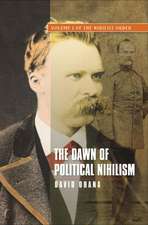 -23%Preț: 847.52 lei1100.68 lei
 -
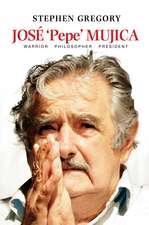 Jose 'Pepe' Mujica: Warrior Philosopher PresidentStephen GregoryPreț: 334.37 lei
 -
 Preț: 507.89 lei
Notă biografică
Professor David Ohana teaches European history at the Ben-Gurion University of the Negev, Israel. He was a visiting fellow at The Sorbonne, Harvard, and Berkeley as well as the first academic director of the Forum for Mediterranean Cultures at the Van Leer Jerusalem Institute. His many books include: The Origins of Israeli Mythology (Cambridge, 2014), Israel and Its Mediterranean Identity (Palgrave Macmillan, 2011), Modernism and Zionism (Palgrave Macmillan, 2012), Political Theologies in the Holy Land: Israeli Messianism and its Critics (Routledge, 2009), and most recently, The Nihilist Order: The Intellectual Roots of Totalitarianism (SAP 2016).