
Agrobacterium Protocols: Volume I: Methods in Molecular Biology, cartea 343
Editat de Kan Wangen Limba Engleză Hardback – iun 2006
Din seria Methods in Molecular Biology
- 5%
 Preț: 744.34 lei
 - 18%
 Preț: 1031.66 lei
 - 5%
 Preț: 734.45 lei
 - 15%
 Preț: 629.45 lei
 - 18%
 Preț: 961.87 lei
 - 15%
 Preț: 627.45 lei
 - 18%
 Preț: 972.05 lei
 - 18%
 Preț: 2039.44 lei
 - 5%
 Preț: 1304.89 lei
 - 18%
 Preț: 1336.11 lei
 - 18%
 Preț: 1341.26 lei
 - 18%
 Preț: 1085.72 lei
 - 18%
 Preț: 1353.39 lei
 - 18%
 Preț: 1143.31 lei
 - 18%
 Preț: 1186.33 lei
 - 5%
 Preț: 1320.61 lei
 - 5%
 Preț: 1065.47 lei
 - 5%
 Preț: 1576.70 lei
 - 5%
 Preț: 1073.37 lei
 - 5%
 Preț: 1361.54 lei
 - 18%
 Preț: 771.93 lei
 - 18%
 Preț: 749.09 lei
 - 18%
 Preț: 786.39 lei
 - 18%
 Preț: 1083.07 lei
 - 5%
 Preț: 1257.85 lei
 - 18%
 Preț: 1118.74 lei
 - 15%
 Preț: 669.59 lei
 - 18%
 Preț: 1076.62 lei
 - 18%
 Preț: 678.44 lei
 - 18%
 Preț: 678.44 lei
 - 18%
 Preț: 1398.24 lei
 - 5%
 Preț: 1618.97 lei
 - 5%
 Preț: 1554.98 lei
 - 5%
 Preț: 1087.81 lei
 - 5%
 Preț: 1445.71 lei
 - 5%
 Preț: 1431.83 lei
 - 18%
 Preț: 1155.95 lei
 - 18%
 Preț: 1247.00 lei
 - 18%
 Preț: 1130.09 lei
 - 18%
 Preț: 1150.84 lei
 - 5%
 Preț: 1181.33 lei
 - 18%
 Preț: 1155.21 lei
 - 18%
 Preț: 1124.01 lei
 - 5%
 Preț: 1081.30 lei
 - 18%
 Preț: 1277.74 lei
 - 18%
 Preț: 1154.41 lei
 - 18%
 Preț: 1169.78 lei
 - 18%
 Preț: 1239.96 lei
Preț: 1187.19 lei
Preț vechi: 1447.80 lei
-18%
Puncte Express: 1781
Carte tipărită la comandă
Livrare economică 18 noiembrie-02 decembrie
Livrare prin curier în România Termenul estimat este afișat lângă disponibilitate.
Transport gratuit pentru acest produs Plată online sau ramburs, în funcție de opțiunile comenzii.
Retur gratuit în 14 zile Comandă securizată și suport în română.
Specificații
ISBN-13: 9781588295361
ISBN-10: 1588295362
Pagini: 508
Ilustrații: XXII, 484 p. 89 illus., 6 illus. in color.
Dimensiuni: 155 x 235 x 36 mm
Greutate: 0.95 kg
Ediția:2nd ed. 2006
Editura: Humana Press Inc.
Colecția Humana
Seria Methods in Molecular Biology
Locul publicării:Totowa, NJ, United States
ISBN-10: 1588295362
Pagini: 508
Ilustrații: XXII, 484 p. 89 illus., 6 illus. in color.
Dimensiuni: 155 x 235 x 36 mm
Greutate: 0.95 kg
Ediția:2nd ed. 2006
Editura: Humana Press Inc.
Colecția Humana
Seria Methods in Molecular Biology
Locul publicării:Totowa, NJ, United States
V-ar putea interesa
-
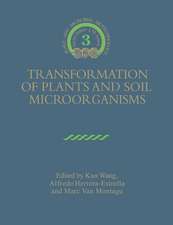 Transformation of Plants and Soil MicroorganismsAlfredo Herrera-EstrellaPreț: 416.41 lei
 -
 Preț: 328.82 lei
 -
 Protein Aggregation in BacteriaSilvia Maria Doglia-9%Preț: 836.75 lei919.50 lei
 -
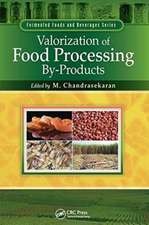 Valorization of Food Processing By-ProductsM. Chandrasekaran-18%Preț: 823.11 lei1003.80 lei
 -
 Nuclear ReprogrammingNathalie Beaujean-15%Preț: 704.49 lei828.81 lei
 -
 Synthetic DNA: Methods and ProtocolsRandall A. Hughes-18%Preț: 864.17 lei1053.87 lei
 -
 SYNTHETIC BIOLOGY - A PRIMERFreemont Paul SPreț: 267.73 lei
 -
 NEURAL CREST STEM CELLSSieber-Blum Maya-5%Preț: 515.14 lei542.26 lei
 -
 -18%Preț: 1183.73 lei1443.57 lei
 -
 Biodiversity, Natural Products and Cancer TreatmentDr. Victor Kuete-5%Preț: 972.73 lei1023.92 lei
Public țintă
ResearchCuprins
AGROBACTERIUM HANDLING.- Culture and Maintenance of Agrobacterium Strains.- Binary Vectors and Super-binary Vectors.- Three Methods for the Introduction of Foreign DNA into Agrobacterium.- Integration of Genes into the Chromosome of Agrobacterium tumefaciens C58.- Nucleic Acid Extraction from Agrobacterium Strains.- Agrobacterium Virulence Gene Induction.- Model Plants.- Arabidopsis thaliana Floral Dip Transformation Method.- Agrobacterium Transformation of Arabidopsis thaliana Roots.- Medicago truncatula Transformation Using Leaf Explants.- Medicago truncatula Transformation Using Cotyledon Explants.- Medicago truncatula Transformation Using Root Explants.- Nicotiana (Nicotiana tobaccum, Nicotiana benthamiana).- Generation of Composite Plants Using Agrobacterium rhizogenes.- Cereal Crops.- Barley (Hordeum vulgare L.).- Maize (Zea mays L.).- Indica Rice (Oryza sativa, BR29 and IR64).- Japonica Rice Varieties (Oryza sativa, Nipponbare, and Others).- Rye (Secale cereale L.).- Sorghum (Sorghum bicolor L.).- Wheat (Triticum aestivum L.).- Industrial Plants.- Canola (Brassica napus L.).- Cotton (Gossypium hirsutum L.).- Indian Mustard [Brassica juncea (L.) Czern.].- Sunflower (Helianthus annuus L.).- Legume Plants.- Alfalfa (Medicago sativa L.).- Chickpea (Cicer arietinum L.).- Clovers (Trifolium spp.).- Peas (Pisum sativum L.).- Peanut (Arachis hypogaea L.).- Pigeonpea (Cajanus cajn (L.) Millsp.).- Red Clover (Trifolium pratense).- Soybean (Glycine max) Transformation Using Mature Cotyledonary Node Explants.- Soybean (Glycine max) Transformation Using Immature Cotyledon Explants.- Tepary Bean (Phaseolus acutifolius).- Vegetable Plants.- Brassica oleracea.- Cucumber (Cucumis sativus L.).- Eggplant (Solanum melongena L.).- Lettuce (Lactuca sativa L.).- Tomato (Lycopersicum esculentum).
Recenzii
From the reviews of the second edition:
"This book is intended as a laboratory manual for researchers using Agrobacterium tumefaciens for plant transformation. It covers the basics of culturing and transforming Agrobacterium … . You don’t expect a lab manual to be ideal … reading, but I found this to be surprisingly readable. … The book would be especially useful for someone just starting plant transformation work or changing to new plant species and … it would also be useful reading for Masters students." (Heather Macdonald, Microbiology Today, November, 2006)
"Methods in Molecular Biology opens … a field concerning Agrobacterium-mediated transformation of plants. … Each chapter is written by the leader in the field … and offers a detailed manual of the transformation protocol. … All users of this book will certainly appreciate the notes sections that bring additional information on potential difficulties in the protocols and alternative materials or methods. The book is the fountainhead of recent practical knowledge concerning Agrobacterium-mediated transformation and … it will become the core manual … ." (J. BRlZA, Biologia Plantarum, Vol. 51 (2), 2007)
"The book’s chapters are organized in a highly detailed fashion, providing readers not only with step-by-step protocols … but also with a comprehensive list of equipment and materials. … With such a rich source of information, organized to be easy to read and very simple to implement, the book should be considered a must for every plant biology laboratory. … It will also be an excellent tool for training students, doctorates, technicians, and other laboratory personnel in the art of plant genetic transformation." (Tzvi Tzfira, Quarterly Review of Biology, Vol. 82, March, 2007)
"This book is intended as a laboratory manual for researchers using Agrobacterium tumefaciens for plant transformation. It covers the basics of culturing and transforming Agrobacterium … . You don’t expect a lab manual to be ideal … reading, but I found this to be surprisingly readable. … The book would be especially useful for someone just starting plant transformation work or changing to new plant species and … it would also be useful reading for Masters students." (Heather Macdonald, Microbiology Today, November, 2006)
"Methods in Molecular Biology opens … a field concerning Agrobacterium-mediated transformation of plants. … Each chapter is written by the leader in the field … and offers a detailed manual of the transformation protocol. … All users of this book will certainly appreciate the notes sections that bring additional information on potential difficulties in the protocols and alternative materials or methods. The book is the fountainhead of recent practical knowledge concerning Agrobacterium-mediated transformation and … it will become the core manual … ." (J. BRlZA, Biologia Plantarum, Vol. 51 (2), 2007)
"The book’s chapters are organized in a highly detailed fashion, providing readers not only with step-by-step protocols … but also with a comprehensive list of equipment and materials. … With such a rich source of information, organized to be easy to read and very simple to implement, the book should be considered a must for every plant biology laboratory. … It will also be an excellent tool for training students, doctorates, technicians, and other laboratory personnel in the art of plant genetic transformation." (Tzvi Tzfira, Quarterly Review of Biology, Vol. 82, March, 2007)
Textul de pe ultima copertă
Rapid changes and significant progress have been made in the use of Agrobacterium to genetically transform plants for both basic research purposes and agricultural development. In Agrobacterium Protocols, Second Edition, Volumes 1 and 2, a team of leading experts and veteran researchers describe in detail their best techniques for delivering DNA to plant cells and permanently altering their genomes. Volume 1 details the most updated techniques available for twenty-six plant species drawn from cereal crops, industrial plants, legume plants, and vegetable plants, and presents various methods for introducing DNA into three major model plant species, Arabidopsis thaliana, Medicago truncatula, and Nicotiana. The authors also outline the basic methods in Agrobacterium manipulation and strategies for vector construction, major components of plant transformation that are often neglected by many plant biologists. Volume 2 contains another thirty-three proven techniques for root plants, turf grasses, woody species, tropic plants, nuts and fruits, ornamental plants, and medicinal plants. Additional chapters provide methods for introducing DNA into non-plant species, such as bacteria, fungi, algae, and mammalian cells. The protocols follow the successful Methods in Molecular Biology™ series format, each offering step-by-step laboratory instructions, an introduction outlining the principles behind the technique, lists of the necessary equipment and reagents, and tips on troubleshooting and avoiding known pitfalls.
Comprehensive and highly practical, Agrobacterium Protocols, Second Edition, Volumes 1 and 2 offers plant biotechnologists a gold standard collection of Agrobacterium-mediated transformation techniques for state-of-the-art plant genetic engineering, functional genomic analysis, and crop improvement, and for inspiration in developing new methods for other related and non-related plants.
Comprehensive and highly practical, Agrobacterium Protocols, Second Edition, Volumes 1 and 2 offers plant biotechnologists a gold standard collection of Agrobacterium-mediated transformation techniques for state-of-the-art plant genetic engineering, functional genomic analysis, and crop improvement, and for inspiration in developing new methods for other related and non-related plants.