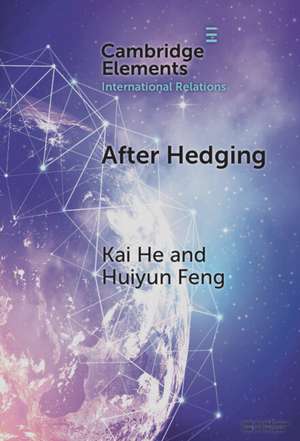
After Hedging: Elements in International Relations
Autor Huiyun Feng, Kai Heen Limba Engleză Paperback – 5 oct 2023

Preț: 133.76 lei
Puncte Express: 201
Carte disponibilă
Livrare economică 06-20 august
Livrare express 22-28 iulie pentru 15.90 lei
Livrare prin curier în România Termenul estimat este afișat lângă disponibilitate.
Transport gratuit de la 400.00 lei Plată online sau ramburs, în funcție de opțiunile comenzii.
Retur gratuit în 14 zile Comandă securizată și suport în română.
Specificații
ISBN-13: 9781009420587
ISBN-10: 1009420585
Pagini: 74
Dimensiuni: 229 x 152 x 7 mm
Greutate: 0.13 kg
Editura: Cambridge University Press
Colecția Elements in International Relations
Seria Elements in International Relations
Locul publicării:Cambridge, United Kingdom
ISBN-10: 1009420585
Pagini: 74
Dimensiuni: 229 x 152 x 7 mm
Greutate: 0.13 kg
Editura: Cambridge University Press
Colecția Elements in International Relations
Seria Elements in International Relations
Locul publicării:Cambridge, United Kingdom
Cuprins
Introduction; 1. International order transition and state policy choice; 2. Preference-for-change model: a neoclassical realist framework; 3. Singapore: hedging to cope with uncertainties; 4. Australia: balancing to resist change; 5. Thailand: bandwagoning to seek profit; 6. New Zealand: buck-passing to avoid risks; Conclusion; References.
Descriere
This Element examines how secondary states will choose between the US and China beyond 'hedging' in the Indo Pacific.