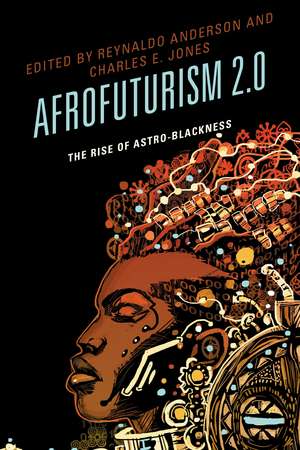
Afrofuturism 2.0: The Rise of Astro-Blackness
Editat de Reynaldo Anderson, Charles E. Jones Contribuţii de Tiffany E. Barber, Nettrice Gaskins, Ricardo Guthrie, Grace Gipson, Ken McLeod, tobias c. van Veen, Andrew Rollins, Lonny Avi Brooks, David DeIuliis, Jeff Lohr, Esther Jones, Qiana Whitteden Limba Engleză Paperback – 14 iul 2017
Preț: 330.01 lei
Preț vechi: 407.53 lei
-19%
Puncte Express: 495
Carte tipărită la comandă
Livrare economică 07-21 decembrie
Livrare prin curier în România Termenul estimat este afișat lângă disponibilitate.
Transport gratuit de la 400.00 lei Plată online sau ramburs, în funcție de opțiunile comenzii.
Retur gratuit în 14 zile Comandă securizată și suport în română.
Specificații
ISBN-13: 9781498510523
ISBN-10: 1498510523
Pagini: 240
Ilustrații: 1 b/w photo
Dimensiuni: 148 x 226 x 14 mm
Greutate: 0.39 kg
Editura: Bloomsbury Publishing
Colecția Lexington Books
Locul publicării:New York, United States
ISBN-10: 1498510523
Pagini: 240
Ilustrații: 1 b/w photo
Dimensiuni: 148 x 226 x 14 mm
Greutate: 0.39 kg
Editura: Bloomsbury Publishing
Colecția Lexington Books
Locul publicării:New York, United States
Cuprins
Introduction to Afrofuturism 2.0
Reynaldo Anderson and Charles E. Jones
Part I: Quantum Visions of Futuristic Blackness
Chapter One: Reading Wangechi Mutu's Non je ne regrette rien through Kindred
Tiffany Barber
Chapter Two: Afrofuturism on Web 3.0: Vernacular Cartography and Augmented Space
Nettrice Gaskins
Chapter Three: The Real Ghost in the Machine: Afrofuturism and the haunting of racial space in I Robot and DETROPIA
Ricardo Guthrie
Part II: Planetary Vibes, Digital Ciphers, and Hip Hop Sonic Remix
Chapter Four: The Armageddon Effect - and Other Afrofuturist Chronopolitics of Alien Nation
tobias C. van Veen
Chapter Five: Afrofuturism's Musical Princess Janelle Monáe: Psychadelic Soul Message Music Infused with a Sci-Fi Twist
Grace D. Gipson
Chapter Six: Hip Hop Holograms: Tupac Shakur, Technological Immortality and Time Travel
Ken McCleod
Part III: Forecasting Dark Bodies, Africology, and the Narrative Imagination
Chapter Seven: Afrofuturism and Religion: Our Old Ship of Zion
Andrew Rollins
Chapter Eight: Playing a Minority Forecaster in Search of Afrofuturism: Where Am I in this Future, Stewart Brand?
Lonny Avi Brooks
Chapter Nine: Rewriting the Narrative: Communicology and the Speculative Discourse of Afrofuturism
David DeIuliis and Jeff Lohr
Chapter Ten: Africana Women's Science Fiction and Narrative Medicine: Difference, Ethics and Empathy
Esther Jones
Chapter Eleven: "To be African is to Merge Technology and Magic": An Interview with Nnedi Okorafor
Quianna Whitted
About the Contributors
Reynaldo Anderson and Charles E. Jones
Part I: Quantum Visions of Futuristic Blackness
Chapter One: Reading Wangechi Mutu's Non je ne regrette rien through Kindred
Tiffany Barber
Chapter Two: Afrofuturism on Web 3.0: Vernacular Cartography and Augmented Space
Nettrice Gaskins
Chapter Three: The Real Ghost in the Machine: Afrofuturism and the haunting of racial space in I Robot and DETROPIA
Ricardo Guthrie
Part II: Planetary Vibes, Digital Ciphers, and Hip Hop Sonic Remix
Chapter Four: The Armageddon Effect - and Other Afrofuturist Chronopolitics of Alien Nation
tobias C. van Veen
Chapter Five: Afrofuturism's Musical Princess Janelle Monáe: Psychadelic Soul Message Music Infused with a Sci-Fi Twist
Grace D. Gipson
Chapter Six: Hip Hop Holograms: Tupac Shakur, Technological Immortality and Time Travel
Ken McCleod
Part III: Forecasting Dark Bodies, Africology, and the Narrative Imagination
Chapter Seven: Afrofuturism and Religion: Our Old Ship of Zion
Andrew Rollins
Chapter Eight: Playing a Minority Forecaster in Search of Afrofuturism: Where Am I in this Future, Stewart Brand?
Lonny Avi Brooks
Chapter Nine: Rewriting the Narrative: Communicology and the Speculative Discourse of Afrofuturism
David DeIuliis and Jeff Lohr
Chapter Ten: Africana Women's Science Fiction and Narrative Medicine: Difference, Ethics and Empathy
Esther Jones
Chapter Eleven: "To be African is to Merge Technology and Magic": An Interview with Nnedi Okorafor
Quianna Whitted
About the Contributors
Recenzii
Afrofuturism 2.0 proves to be not only an educational experience, but a necessary provocation of questions on Pan-Arab culture, which may be read through various Palestinian states of being - whether present, absent, or imagined.... Taken from a wider perspective, Afrofuturism, as the book seeks to assert, can be moulded into a vibrant, analytical framework for exploring notions and practices of temporality in African cultural production. Indeed, the numerous studies and examples that unfold across the different parts of the book point to the rising instrumentalization of futurist and sci-fi aesthetics as important politically charged practices within contemporary Afrodiasporic culture.
Do your interest lie in the connections between music, art, science and futurity as performed and lived through Black people of the African diaspora? Or, through your engagement with popular culture, have you heard the terms AstroBlackness, Black Speculative Fiction, Afrofuturism, or Black Futurism and have wondered what they mean or what they are? If you have asked yourself these questions and want a deeper understanding than what a good Google search can provide, Reynaldo Anderson and Charles E. Jones edited volume Afrofuturism 2.0: The Rise of Astro-Blackness is the intellectually and culturally grounded place to begin your study.... Afrofuturism 2.0 should be looked upon as central read for anyone interested in the discourses of Africana diaspora and the future. For communication scholars focused on digital media, fandom, Black Geek/Nerd discourse, speculative fiction, science fiction or other discourses grounded in the Black imaginative- essays in this volume are foundational locations for depth in analysis. It is hard to imagine discussion on the rhetoric of Black Panther, Luke Cage or DC Legends without a functional reading of Afrofuturism 2.0.
Reynaldo Anderson and Charles E. Jones assemble a remarkable collection in Afrofuturism 2.0....Anderson and Jones have taken Afrofuturism in fascinating directions, encouraging scholars to consider how the concept is expressed across media. I strongly recommend this volume to scholars and research libraries, as well as for the college classroom.
It's a rare event when an anthology captures the essence of a movement, so timely, yet still in its infancy. Imagining alternative realities for people of the African diaspora is the genesis for social change. This collection is leading the charge by questioning historical perceptions and redefining identity.
Do your interest lie in the connections between music, art, science and futurity as performed and lived through Black people of the African diaspora? Or, through your engagement with popular culture, have you heard the terms AstroBlackness, Black Speculative Fiction, Afrofuturism, or Black Futurism and have wondered what they mean or what they are? If you have asked yourself these questions and want a deeper understanding than what a good Google search can provide, Reynaldo Anderson and Charles E. Jones edited volume Afrofuturism 2.0: The Rise of Astro-Blackness is the intellectually and culturally grounded place to begin your study.... Afrofuturism 2.0 should be looked upon as central read for anyone interested in the discourses of Africana diaspora and the future. For communication scholars focused on digital media, fandom, Black Geek/Nerd discourse, speculative fiction, science fiction or other discourses grounded in the Black imaginative- essays in this volume are foundational locations for depth in analysis. It is hard to imagine discussion on the rhetoric of Black Panther, Luke Cage or DC Legends without a functional reading of Afrofuturism 2.0.
Reynaldo Anderson and Charles E. Jones assemble a remarkable collection in Afrofuturism 2.0....Anderson and Jones have taken Afrofuturism in fascinating directions, encouraging scholars to consider how the concept is expressed across media. I strongly recommend this volume to scholars and research libraries, as well as for the college classroom.
It's a rare event when an anthology captures the essence of a movement, so timely, yet still in its infancy. Imagining alternative realities for people of the African diaspora is the genesis for social change. This collection is leading the charge by questioning historical perceptions and redefining identity.