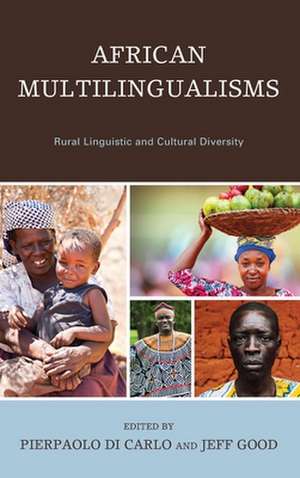
African Multilingualisms: Rural Linguistic and Cultural Diversity
Editat de Pierpaolo Di Carlo, Jeff Good Contribuţii de Pius W. Akumbu, Célestine G. Assomo, Gratien G. Atindogbé, Margaret Chenemo, Esther P. Chie, Alexander Yao Cobbinah, Endurence M. K. Dissake, Angiachi D. Esene Agwara, Amina N. Goron, Marguérite G. Makon, Gabriel Mba, Gratiana Ndamsah, Ayu’nwi N. Neba, Emmanuel Ngué Um, Angela Nsen Tem, Rachel A. Ojong Diba, Ndiémé Sow, Tabe Florence A. E.en Limba Engleză Hardback – 17 ian 2020
| Toate formatele și edițiile | Preț | Express |
|---|---|---|
| Paperback (1) | 246.90 lei 6-8 săpt. | |
| Bloomsbury Publishing – 10 mai 2022 | 246.90 lei 6-8 săpt. | |
| Hardback (1) | 665.42 lei 6-8 săpt. | |
| Bloomsbury Publishing – 17 ian 2020 | 665.42 lei 6-8 săpt. |
Preț: 665.42 lei
Preț vechi: 811.49 lei
-18%
Puncte Express: 998
Preț estimativ în valută:
117.78€ • 137.61$ • 102.22£
117.78€ • 137.61$ • 102.22£
Carte tipărită la comandă
Livrare economică 25 februarie-11 martie
Preluare comenzi: 021 569.72.76
Specificații
ISBN-13: 9781498588959
ISBN-10: 1498588956
Pagini: 318
Ilustrații: 4 b/w illustrations; 11 maps; 27 tables; 12 graphs;
Dimensiuni: 161 x 228 x 25 mm
Greutate: 0.68 kg
Editura: Bloomsbury Publishing
Colecția Lexington Books
Locul publicării:New York, United States
ISBN-10: 1498588956
Pagini: 318
Ilustrații: 4 b/w illustrations; 11 maps; 27 tables; 12 graphs;
Dimensiuni: 161 x 228 x 25 mm
Greutate: 0.68 kg
Editura: Bloomsbury Publishing
Colecția Lexington Books
Locul publicării:New York, United States
Cuprins
Contents
Preface (Gabriel Mba)
Editors' Preface (Jeff Good and Pierpaolo Di Carlo)
Biographical Notes
Introduction
African Multilingualisms: Understanding the Diversity of Multilingualisms in Sub-Saharan Africa
Pierpaolo Di Carlo and Jeff Good
The Diversity of Multilingualisms in Rural Spaces
1. Multilingualism among the Mbororo of the North-West Region of Cameroon: An Overview
Pius W. Akumbu and Esther P. Chie
2. Nuances in Language Use in Multilingual Settings: Code-Switching or Code Regimentationin Lower Fungom?'
Rachel A. Ojong Diba
3. The So-Called Royal Register of Bafut within the Bafut Language Ecology: Language Ideologies and Multilingualism in the Cameroonian Grassfields
Pierpaolo Di Carlo and Ayu'nwi N. Neba
4. Multilingualism as It Unfolds: Language Vitality in Naturally Occurring Speech in Kelleng, a Rural Setting in Cameroon
Emmanuel Ngué Um, Marguérite G. Makon, and Célestine G. Assomo
5. An Ecological Approach to Ethnic Identity and Language Dynamics in a Multilingual Area (Lower Casamance, Senegal)
Alexander Yao Cobbinah
6. Multilingualism and the Paradox of Language Creation: The Case of Lítâ (Research Note)
Gratiana Ndamsah
Multilingualisms in Contact
7. Multilingualism in Rural Africa: A Case Study of Ossing Village in Cameroon
Tabe Florence A. E.
8. Spaces and Interactions in Multilingual Repertoire Construction: A Case Study in an Urban Area of Casamance (Senegal)
Ndiémé Sow
9. Analyzing Court Discourse in a Multilingual Setting: The Case of the Buea Court of First Instance
Endurence M. K. Dissake and Gratien G. Atindogbé
10. Multilingualism and Language Ideologies in the Context of War: The Case of Refugees from Boko Haram in the Minawao Camp in the Far North Region of Cameroon (Research Note)
Amina N. Goron
Methodologies for the Study of Rural Multilingualisms
11. What an Ethnographically Informed Questionnaire Can Contribute to the Understanding of Traditional Multilingualism Research: Lessons from Lower Fungom
Angiachi D. Esene Agwara
12. Ways to Assess Multilingual Competence in Small, Unwritten Languages: The Case of Lower Fungom
Gabriel Mba and Angela Nsen Tem
13. Essentialism and Indexicality in a Multilingual Rural Community: The Case of Lower Bafut in North-West Cameroon
Margaret Chenemo and Ayu'nwi N. Neba
About the Contributors
Preface (Gabriel Mba)
Editors' Preface (Jeff Good and Pierpaolo Di Carlo)
Biographical Notes
Introduction
African Multilingualisms: Understanding the Diversity of Multilingualisms in Sub-Saharan Africa
Pierpaolo Di Carlo and Jeff Good
The Diversity of Multilingualisms in Rural Spaces
1. Multilingualism among the Mbororo of the North-West Region of Cameroon: An Overview
Pius W. Akumbu and Esther P. Chie
2. Nuances in Language Use in Multilingual Settings: Code-Switching or Code Regimentationin Lower Fungom?'
Rachel A. Ojong Diba
3. The So-Called Royal Register of Bafut within the Bafut Language Ecology: Language Ideologies and Multilingualism in the Cameroonian Grassfields
Pierpaolo Di Carlo and Ayu'nwi N. Neba
4. Multilingualism as It Unfolds: Language Vitality in Naturally Occurring Speech in Kelleng, a Rural Setting in Cameroon
Emmanuel Ngué Um, Marguérite G. Makon, and Célestine G. Assomo
5. An Ecological Approach to Ethnic Identity and Language Dynamics in a Multilingual Area (Lower Casamance, Senegal)
Alexander Yao Cobbinah
6. Multilingualism and the Paradox of Language Creation: The Case of Lítâ (Research Note)
Gratiana Ndamsah
Multilingualisms in Contact
7. Multilingualism in Rural Africa: A Case Study of Ossing Village in Cameroon
Tabe Florence A. E.
8. Spaces and Interactions in Multilingual Repertoire Construction: A Case Study in an Urban Area of Casamance (Senegal)
Ndiémé Sow
9. Analyzing Court Discourse in a Multilingual Setting: The Case of the Buea Court of First Instance
Endurence M. K. Dissake and Gratien G. Atindogbé
10. Multilingualism and Language Ideologies in the Context of War: The Case of Refugees from Boko Haram in the Minawao Camp in the Far North Region of Cameroon (Research Note)
Amina N. Goron
Methodologies for the Study of Rural Multilingualisms
11. What an Ethnographically Informed Questionnaire Can Contribute to the Understanding of Traditional Multilingualism Research: Lessons from Lower Fungom
Angiachi D. Esene Agwara
12. Ways to Assess Multilingual Competence in Small, Unwritten Languages: The Case of Lower Fungom
Gabriel Mba and Angela Nsen Tem
13. Essentialism and Indexicality in a Multilingual Rural Community: The Case of Lower Bafut in North-West Cameroon
Margaret Chenemo and Ayu'nwi N. Neba
About the Contributors
Recenzii
This is an authoritative volume on facets of multilingualism in rural Africa written generally by Native linguists. It debunks two myths in particular: that multilingualism is a peculiarity of urban ecology and it necessarily disadvantages minority languages. Congratulations to the editors for helping enrich and decolonize knowledge of my home continent.
"Di Carlo and Good have broken new ground by showing that multilingualism flourishes well beyond the African city. In addition to inspiring a new generation of linguists and Africanists, this volume will be of great interest to students and scholars of African multilingualism and of multilingualism everywhere."
"Whether you still think multilingualism is a recent and urban phenomenon or you are already familiar with rural multilingualism in the Global South, you need to read this book. This volume presents dazzlingly diverse multilingual settings in Senegal and Cameroon, and, importantly, combines the perspectives of Northern and Southern researchers in their description."
"Di Carlo and Good have assembled a set of detailed studies contradicting the general belief that multilingualism is an urban rather than a rural phenomenon. Complex communities of practice govern linguistic behavior in the country as well as in the city, yet previous studies have neglected the former. This book, rich in ethnographic detail, presents a challenge to prevailing orthodoxies."
"This book is an important step toward decolonizing linguistics in Africa. This superb collection of informative chapters shed light on rural multilingualism, individual and societal language repertoires, linguistic ideologies, and language vitality in Sub-Saharan Africa. The contributions show that if linguistics had been born in Africa, the discipline's theorizing on multilingualism could have been radically different."
"Di Carlo and Good have broken new ground by showing that multilingualism flourishes well beyond the African city. In addition to inspiring a new generation of linguists and Africanists, this volume will be of great interest to students and scholars of African multilingualism and of multilingualism everywhere."
"Whether you still think multilingualism is a recent and urban phenomenon or you are already familiar with rural multilingualism in the Global South, you need to read this book. This volume presents dazzlingly diverse multilingual settings in Senegal and Cameroon, and, importantly, combines the perspectives of Northern and Southern researchers in their description."
"Di Carlo and Good have assembled a set of detailed studies contradicting the general belief that multilingualism is an urban rather than a rural phenomenon. Complex communities of practice govern linguistic behavior in the country as well as in the city, yet previous studies have neglected the former. This book, rich in ethnographic detail, presents a challenge to prevailing orthodoxies."
"This book is an important step toward decolonizing linguistics in Africa. This superb collection of informative chapters shed light on rural multilingualism, individual and societal language repertoires, linguistic ideologies, and language vitality in Sub-Saharan Africa. The contributions show that if linguistics had been born in Africa, the discipline's theorizing on multilingualism could have been radically different."