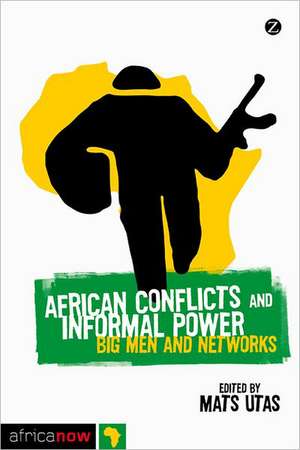
African Conflicts and Informal Power: Big Men and Networks: Africa Now
Editat de Mats Utas Contribuţii de Maya Mynster Christensen, Koen Vlassenroot, Gerhard Anders, Anders Themnér, Henrik Vigh, Mariam Persson, Ruben de Koning, Sandrine Perrot, Ilmari Käihkö, Karel Arnaut, Morten Bøåsen Limba Engleză Hardback – 8 mar 2012
Through a variety of in-depth case studies, including the DRC, Sierra Leone and Liberia, this comprehensive volume shows how important informal political and economic networks are in many of the continent's conflict areas. Moreover, it demonstrates that without a proper understanding of the impact of these networks, attempts to formalize African states, particularly those emerging from wars, will be in vain.
| Toate formatele și edițiile | Preț | Express |
|---|---|---|
| Paperback (1) | 185.31 lei 6-8 săpt. | |
| Bloomsbury Publishing – 8 mar 2012 | 185.31 lei 6-8 săpt. | |
| Hardback (1) | 470.82 lei 44-56 zile | |
| Bloomsbury Publishing – 8 mar 2012 | 470.82 lei 44-56 zile |
Din seria Africa Now
- 26%
 Preț: 186.51 lei
 - 26%
 Preț: 164.45 lei
 - 21%
 Preț: 189.44 lei
 - 26%
 Preț: 170.17 lei
 - 18%
 Preț: 204.27 lei
 - 19%
 Preț: 201.72 lei
 - 18%
 Preț: 204.82 lei
 - 18%
 Preț: 185.61 lei
 - 22%
 Preț: 180.06 lei
 - 18%
 Preț: 184.62 lei
 - 18%
 Preț: 182.60 lei
 - 18%
 Preț: 181.85 lei
 -
 Preț: 184.89 lei
 - 18%
 Preț: 183.69 lei
 - 21%
 Preț: 189.44 lei
 - 21%
 Preț: 190.65 lei
 - 21%
 Preț: 191.05 lei
 - 18%
 Preț: 205.55 lei
 - 18%
 Preț: 185.31 lei
 - 18%
 Preț: 204.35 lei
 - 25%
 Preț: 527.24 lei
 - 26%
 Preț: 186.11 lei
 - 21%
 Preț: 171.79 lei
 - 23%
 Preț: 449.98 lei
 - 33%
 Preț: 419.58 lei
 - 28%
 Preț: 450.77 lei
 - 31%
 Preț: 419.97 lei
 - 21%
 Preț: 188.64 lei
Preț: 470.82 lei
Preț vechi: 581.26 lei
-19%
Puncte Express: 706
Preț estimativ în valută:
83.23€ • 98.71$ • 72.20£
83.23€ • 98.71$ • 72.20£
Carte tipărită la comandă
Livrare economică 13-25 martie
Specificații
ISBN-13: 9781848138834
ISBN-10: 1848138830
Pagini: 264
Dimensiuni: 156 x 234 x 20 mm
Greutate: 0.52 kg
Editura: Bloomsbury Publishing
Colecția Zed Books
Seria Africa Now
Locul publicării:London, United Kingdom
ISBN-10: 1848138830
Pagini: 264
Dimensiuni: 156 x 234 x 20 mm
Greutate: 0.52 kg
Editura: Bloomsbury Publishing
Colecția Zed Books
Seria Africa Now
Locul publicării:London, United Kingdom
Cuprins
Introduction: Bigmanity and network governance in African conflicts - By Mats Utas
Part 1: Country case studies
1. Informal political structures, resources and the Ugandan army; military entrepreneurialism in the Ugandan-Congolese borderland - Koen Vlassenroot and Sandrine Perot
2. Big Man Business in the Borderland of Sierra Leone - Maya Mynster Christensen
3. The politics of impersonation: Corps habillés, Nouchis, and subaltern Bigmanity in Côte d'Ivoire - Karel Arnaut
4. Demobilized or remobilized? Liberia's remaining rebel structures in post-war security settings - Mariam Persson
5. 'Castles in the sand': Informal networks and power brokers in the Northern Mali periphery - Morten Böås
Part 2: Thematic case studies
6. Critical states and cocaine connections - By Henrik Vigh
7. African Big Men and international criminal justice: the case of Sierra Leone - By Gerhard Anders
8. Big Man bargaining in African conflicts - By Ilmari Käihkö
9. Intermediaries of peace or agents of war: the role of ex-midlevel commanders in Big Man networks - By Anders Themnér
10. The Big Men commanding conflict resources in Africa: the DRC case - By Ruben de Koning
Part 1: Country case studies
1. Informal political structures, resources and the Ugandan army; military entrepreneurialism in the Ugandan-Congolese borderland - Koen Vlassenroot and Sandrine Perot
2. Big Man Business in the Borderland of Sierra Leone - Maya Mynster Christensen
3. The politics of impersonation: Corps habillés, Nouchis, and subaltern Bigmanity in Côte d'Ivoire - Karel Arnaut
4. Demobilized or remobilized? Liberia's remaining rebel structures in post-war security settings - Mariam Persson
5. 'Castles in the sand': Informal networks and power brokers in the Northern Mali periphery - Morten Böås
Part 2: Thematic case studies
6. Critical states and cocaine connections - By Henrik Vigh
7. African Big Men and international criminal justice: the case of Sierra Leone - By Gerhard Anders
8. Big Man bargaining in African conflicts - By Ilmari Käihkö
9. Intermediaries of peace or agents of war: the role of ex-midlevel commanders in Big Man networks - By Anders Themnér
10. The Big Men commanding conflict resources in Africa: the DRC case - By Ruben de Koning
Recenzii
This important collection of great articles on 'Bigmanity' will certainly become a central reference for different disciplines. Informal networks with 'big men' as their nodes, are certainly not the only game in town' in African polities and societies, but they clearly merit stronger attention. This book offers a multitude of entry points to this important topic.
This fascinating and important set of studies emphasises the critical role of Big Men, and the networks that they operate, in the struggles for control of Africa's resources that increasingly define the contours of conflict on the continent - and provides essential insights for anyone who seeks to establish fairer and more peaceful structures for resource management.
This is an important book for anyone who cares about the mechanics of African conflicts and the possibilities for post-conflict stability. Through rich case studies and comparisons these chapters help us understand some of the most troubling issues on the continent today. Tracing the informal networks that allow Big Men to achieve, exercise and sometimes lose power demonstrates just how shallow our thinking about Africa is when we refuse to move beyond the language of failed states and criminal enterprises. This volume is exactly the kind of interdisciplinary scholarship that helps us think more critically and creatively about who benefits from African crises - and why outside interventions so often fail.
This is an excellent collection of essays on a vitally important yet oft-neglected aspect of armed conflict in Africa: the role of informal networks and power structures as keys to a deeper understanding both of the dynamics of violence and the prospects for peace. Carefully researched case studies provide the reader with a unique, and uniquely valuable, insight into the nature of contemporary armed conflict on the continent.
This fascinating and important set of studies emphasises the critical role of Big Men, and the networks that they operate, in the struggles for control of Africa's resources that increasingly define the contours of conflict on the continent - and provides essential insights for anyone who seeks to establish fairer and more peaceful structures for resource management.
This is an important book for anyone who cares about the mechanics of African conflicts and the possibilities for post-conflict stability. Through rich case studies and comparisons these chapters help us understand some of the most troubling issues on the continent today. Tracing the informal networks that allow Big Men to achieve, exercise and sometimes lose power demonstrates just how shallow our thinking about Africa is when we refuse to move beyond the language of failed states and criminal enterprises. This volume is exactly the kind of interdisciplinary scholarship that helps us think more critically and creatively about who benefits from African crises - and why outside interventions so often fail.
This is an excellent collection of essays on a vitally important yet oft-neglected aspect of armed conflict in Africa: the role of informal networks and power structures as keys to a deeper understanding both of the dynamics of violence and the prospects for peace. Carefully researched case studies provide the reader with a unique, and uniquely valuable, insight into the nature of contemporary armed conflict on the continent.