
Advances in DNA Sequence-Specific Agents
Editat de B J Chapmanen Limba Engleză Hardback – 17 sep 2002
Volume 4 describes work on the modification of DNA by AT specific anticancer drugs, DNA alkylation events which involve metabolite generation, DNA sequence recognition by two selective binders, bulged DNA microenvironments as molecular targets, DNA sequence specific binding by short peptides and the analysis of DNA-protein interactions using DNase I footprinting methodology.
Features include:
• Expert contributors from the Biomedical world
• Emerging areas of drug design and therapeutic applications
• Nucleic acid-protein interactions
• Color graphics of molecular modeling analyses
• New and emerging methodologies
Preț: 737.17 lei
Preț vechi: 857.18 lei
-14%
Puncte Express: 1106
Carte disponibilă
Livrare economică 09-23 noiembrie
Livrare prin curier în România Termenul estimat este afișat lângă disponibilitate.
Transport gratuit pentru acest produs Plată online sau ramburs, în funcție de opțiunile comenzii.
Retur gratuit în 14 zile Comandă securizată și suport în română.
Specificații
ISBN-13: 9780444510969
ISBN-10: 0444510966
Pagini: 162
Dimensiuni: 158 x 239 x 15 mm
Greutate: 0.43 kg
Editura: ELSEVIER SCIENCE
ISBN-10: 0444510966
Pagini: 162
Dimensiuni: 158 x 239 x 15 mm
Greutate: 0.43 kg
Editura: ELSEVIER SCIENCE
V-ar putea interesa
-
 A Life DecodedJ. Craig VenterPreț: 110.28 lei
 -
 -16%Preț: 210.33 lei251.63 lei
 -
 -31%Preț: 713.11 lei1032.43 lei
 -
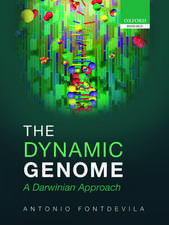 The Dynamic Genome: A Darwinian ApproachAntonio Fontdevila-31%Preț: 823.46 lei1194.44 lei
 -
 Exploring Personal GenomicsJoel T. Dudley-21%Preț: 466.36 lei592.54 lei
 -
 Wildlife DNA AnalysisAdrian M T Linacre-8%Preț: 548.20 lei595.86 lei
 -
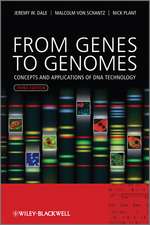 Preț: 427.66 lei
 -
 The Violinist's ThumbSam KeanPreț: 135.19 lei
 -
 The Double HelixDr James Watson-27%Preț: 57.66 lei78.70 lei
 -
 Genomics and BioinformaticsTore Samuelsson-19%Preț: 457.32 lei564.59 lei
 -
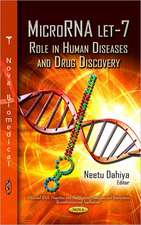 -23%Preț: 762.14 lei991.91 lei
 -
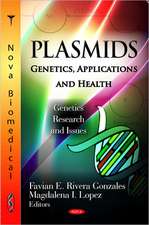 Plasmids: Genetics, Applications & HealthFavian E Rivera Gonzales-27%Preț: 1244.00 lei1698.92 lei
 -
 New Developments in Chromatin ResearchNeil M Simpson-23%Preț: 1303.48 lei1701.94 lei
 -
 The Epigenetics RevolutionNessa Carey-18%Preț: 70.83 lei86.66 lei
 -
 Frank, L: My Beautiful GenomeLone FrankPreț: 90.93 lei
Cuprins
1. Preferential damage to defined regions of genomic DNA by AT-specific anticancer drugs (J.M. Woynarowski).
2. DNA-alkylating events associated nitrogen mustard based anticancer drugs and the metabolic byproduct acrolein (M.E. Colvin, J.N. Quong).
3. Molecular basis for recognition and binding of specific DNA sequences by calicheamicin and duocarmycin (G. Bifulco, et al.).
4. Enediyne antibiotic neocarzinostatin as a radical-bsed probe of bulged structures in nucleic acids (Zhen Xi, I.H. Goldberg).
5. Sequence-specific DNA binding by short peptides (T. Morii, K. Makino).
6. Equilibrium and kinetic quantitative DNAse I footprinting (G.M. Dhavan, A.K.M.M. Mollah, M. Brenowitz).
2. DNA-alkylating events associated nitrogen mustard based anticancer drugs and the metabolic byproduct acrolein (M.E. Colvin, J.N. Quong).
3. Molecular basis for recognition and binding of specific DNA sequences by calicheamicin and duocarmycin (G. Bifulco, et al.).
4. Enediyne antibiotic neocarzinostatin as a radical-bsed probe of bulged structures in nucleic acids (Zhen Xi, I.H. Goldberg).
5. Sequence-specific DNA binding by short peptides (T. Morii, K. Makino).
6. Equilibrium and kinetic quantitative DNAse I footprinting (G.M. Dhavan, A.K.M.M. Mollah, M. Brenowitz).