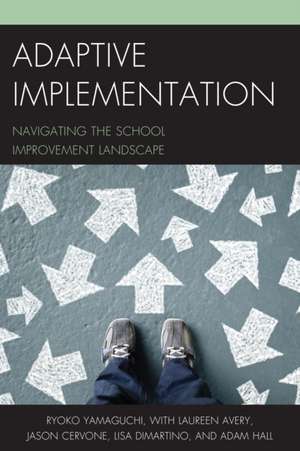
Adaptive Implementation: Navigating the School Improvement Landscape
Autor Ryoko Yamaguchi Cu Laureen Avery, Jason Cervone, Lisa DiMartino, Adam Hallen Limba Engleză Paperback – 21 iul 2017
Preț: 175.92 lei
Preț vechi: 236.86 lei
-26%
Puncte Express: 264
Carte tipărită la comandă
Livrare economică 30 noiembrie-14 decembrie
Livrare prin curier în România Termenul estimat este afișat lângă disponibilitate.
Transport gratuit de la 400.00 lei Plată online sau ramburs, în funcție de opțiunile comenzii.
Retur gratuit în 14 zile Comandă securizată și suport în română.
Specificații
ISBN-13: 9781475833492
ISBN-10: 1475833490
Pagini: 120
Dimensiuni: 148 x 226 x 10 mm
Greutate: 0.18 kg
Editura: Bloomsbury Publishing
Colecția Rowman & Littlefield
Locul publicării:New York, United States
ISBN-10: 1475833490
Pagini: 120
Dimensiuni: 148 x 226 x 10 mm
Greutate: 0.18 kg
Editura: Bloomsbury Publishing
Colecția Rowman & Littlefield
Locul publicării:New York, United States
V-ar putea interesa
-
 Labeling: Pedagogy and PoliticsGlenn HudakPreț: 349.38 lei
 -
 -18%Preț: 1119.00 lei1364.63 lei
 -
 Researching School Experience: Explorations of Teaching and LearningMartyn HammersleyPreț: 483.27 lei
 -
 Lives in Context: The Art of Life History ResearchArdra L. Cole-20%Preț: 320.62 lei399.68 lei
 -
 -32%Preț: 461.99 lei675.60 lei
 -
 Socrates, Sport, and Students: A Philosophical Inquiry into Physical Education and SportSheryle Bergmann Drewe Dixon-32%Preț: 523.81 lei768.52 lei
 -
 ADHD: Helping Parents Help Their ChildrenEdward H. Jacobs-32%Preț: 565.67 lei825.86 lei
 -
 Preț: 251.74 lei
 -
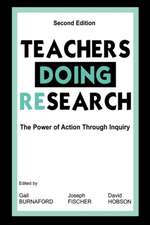 Teachers Doing Research: The Power of Action Through InquiryGail E. Burnaford-15%Preț: 483.89 lei569.29 lei
 -
 Preț: 479.01 lei
 -
 Scrooge Meets Dick and JaneRoger C. SchankPreț: 380.43 lei
 -
 Leading and Learning in Schools: Brain-Based PracticesHenry G. Cram-28%Preț: 364.04 lei505.69 lei
 -
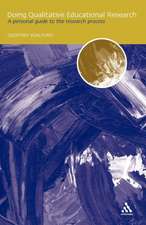 Doing Qualitative Educational ResearchGeoffrey Walford-12%Preț: 327.05 lei370.51 lei
 -
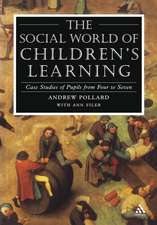 The Social World of Children's LearningProfessor Andrew Pollard-24%Preț: 646.99 lei856.34 lei
 -
 Voice of Liberal LearningMichael OakeshottPreț: 95.94 lei
 -
 Durkheim and FoucaultMark S.Preț: 217.13 lei
 -
 Exploring Careers in MusicThe National Association for Music Education, MENC:-25%Preț: 217.77 lei291.24 lei
 -
 Preț: 128.66 lei
Cuprins
Preface
Introduction
Schools: A combination of technical and adaptive systems
What are your core goals?
Are you Scaling Up? Or Scaling Down?
Adaptive Implementation (AI) Team
Adaptive Implementation (AI) Cycle
Step 1: What do we need to see?
Step 2: What resources do we have?
Step 3: What will we do?
Step 4: What did we do?
Step 5: What did we learn?
CASE STUDY: PROJECT EXCEL
The ExcEL model
STEP 1: WHAT DO WE NEED TO SEE?
How Ambitious Should We Be?
Identify Waypoints
Create your roadmap
Five Characteristics of Strong Waypoints
Project ExcEL Example
STEP 2: WHAT RESOURCES DO WE HAVE?
Assess what you have
Assess what you don't have
Assess what you could have
Project ExcEL Example
STEP 3: WHAT ARE WE GOING TO DO?
Conduct Pro and Con Assessment (PCA)
Create a Design and Action Plan (DAP)
The problem with logic models
Process for developing the DAP
Identify the group of activities using the PCA
Determine the relationships and synergies of activities
Map out the activities
Conduct a series of face validity meetings with stakeholders
Revise, revise, and revise again
Project ExcEL Example
STEP 4: WHAT DID WE DO?
Annotate your roadmap
What to annotate and document?
Annotating is not evaluating
Project ExcEL Example
STEP 5: WHAT DID WE LEARN?
Will we do it again?
When we do it again .
Scaling Up
Scaling down
Learning through reflection
Project ExcEL Example
CONCLUSION AND DISCUSSION
To use or not to use?
Who's at the table?
A note to evaluators - and funders
Making the time
The final word - momentum
Appendix
Adaptive Implementation (AI) Tools:
Templates for the AI Process
Adaptive Implementation (AI) Process Template
Step 1: What do we want to see? Five Characteristics of Strong Waypoints Checklist
Step 2: What resources do we have? AI Resource Management Tool
Step 3: What will we do? Pro/ Con Assessment (PCA) Template
Step 3: What will we do? Design and Action Plan (DAP) Template
Step 4: What did we do? Data Review Sheet
Step 5: What Did We Learn? Discussion Protocol Tool
REFERENCES
Introduction
Schools: A combination of technical and adaptive systems
What are your core goals?
Are you Scaling Up? Or Scaling Down?
Adaptive Implementation (AI) Team
Adaptive Implementation (AI) Cycle
Step 1: What do we need to see?
Step 2: What resources do we have?
Step 3: What will we do?
Step 4: What did we do?
Step 5: What did we learn?
CASE STUDY: PROJECT EXCEL
The ExcEL model
STEP 1: WHAT DO WE NEED TO SEE?
How Ambitious Should We Be?
Identify Waypoints
Create your roadmap
Five Characteristics of Strong Waypoints
Project ExcEL Example
STEP 2: WHAT RESOURCES DO WE HAVE?
Assess what you have
Assess what you don't have
Assess what you could have
Project ExcEL Example
STEP 3: WHAT ARE WE GOING TO DO?
Conduct Pro and Con Assessment (PCA)
Create a Design and Action Plan (DAP)
The problem with logic models
Process for developing the DAP
Identify the group of activities using the PCA
Determine the relationships and synergies of activities
Map out the activities
Conduct a series of face validity meetings with stakeholders
Revise, revise, and revise again
Project ExcEL Example
STEP 4: WHAT DID WE DO?
Annotate your roadmap
What to annotate and document?
Annotating is not evaluating
Project ExcEL Example
STEP 5: WHAT DID WE LEARN?
Will we do it again?
When we do it again .
Scaling Up
Scaling down
Learning through reflection
Project ExcEL Example
CONCLUSION AND DISCUSSION
To use or not to use?
Who's at the table?
A note to evaluators - and funders
Making the time
The final word - momentum
Appendix
Adaptive Implementation (AI) Tools:
Templates for the AI Process
Adaptive Implementation (AI) Process Template
Step 1: What do we want to see? Five Characteristics of Strong Waypoints Checklist
Step 2: What resources do we have? AI Resource Management Tool
Step 3: What will we do? Pro/ Con Assessment (PCA) Template
Step 3: What will we do? Design and Action Plan (DAP) Template
Step 4: What did we do? Data Review Sheet
Step 5: What Did We Learn? Discussion Protocol Tool
REFERENCES
Recenzii
For those of us who seek to advance an improvement science in education, this book promises an important contribution. It is conceptually rigorous, practically feasible, and methodologically transparent. It addresses one of the most widespread and common of improvement challenges -- how to get good ideas to work in practice, even across diverse contexts. It is a science. But don't be afraid of it, it is the answer to the problem of how practitioners can get good answers to their problems.
Early-stage innovation requires a thoughtful approach to real-world experimentation and continuous improvement. Adaptive innovation builds on what is already known, but with the flexibility needed to succeed.
Adaptive Implementation is an insightful framing of how the real work of school improvement can take root It sets the tone for melding the respective agendas of researchers and practitioners in a meaningful way.
The Adaptive Implementation Process is informing our way of work in the School District of Palm Beach County. There is an ever-increasing need for researchers and practitioners to deliver rapid solutions, while informing the work through a collaborative cycle. The AIP offers a practical solution for field-based implementation, particularly in large-sized districts.
Early-stage innovation requires a thoughtful approach to real-world experimentation and continuous improvement. Adaptive innovation builds on what is already known, but with the flexibility needed to succeed.
Adaptive Implementation is an insightful framing of how the real work of school improvement can take root It sets the tone for melding the respective agendas of researchers and practitioners in a meaningful way.
The Adaptive Implementation Process is informing our way of work in the School District of Palm Beach County. There is an ever-increasing need for researchers and practitioners to deliver rapid solutions, while informing the work through a collaborative cycle. The AIP offers a practical solution for field-based implementation, particularly in large-sized districts.