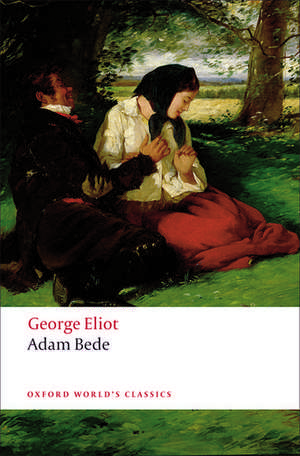
Adam Bede
Autor George Eliot Editat de Carol A. Martinen Limba Engleză Paperback – 8 mai 2008
La o primă vedere, Adam Bede pare a fi doar o idilă pastorală ce evocă farmecul discret al satului englezesc de la sfârșitul secolului al XVIII-lea, însă cititorul descoperă rapid o analiză psihologică necruțătoare a consecințelor morale. Descoperim aici că peisajul din Hayslope nu este un simplu decor, ci o prezență vitală, aproape organică, ce pulsează în ritmul muncii de tâmplărie a lui Adam și al predicilor metodiste ale Dinei Morris. Reținem finețea cu care Eliot transformă o poveste aparent simplă de seducție și trădare într-o tragedie de proporții epice, unde fiecare alegere individuală reverberează în întreaga comunitate.
Ca și The Mill on the Floss, acest debut explorează tensiunea dintre dorințele personale și rigorile sociale ale vieții provinciale, dar dintr-o perspectivă mai ancorată în realismul meșteșugăresc și în demnitatea muncii manuale. Dacă în Silas Marner autoarea va rafina ulterior tema izolării și a mântuirii, în Adam Bede ea pune bazele acelei „interconectări a sinelui cu societatea” care va atinge apogeul în Middlemarch. Structura romanului este una progresivă, începând cu atmosfera tactilă a atelierului de tâmplărie — unde mirosul de pin și așchiile de stejar devin aproape palpabile pentru cititor — și evoluând spre dileme etice complexe. Prezența anexelor despre realism și a scrisorilor autoarei în această ediție oferă un context critic esențial, transformând lectura într-o incursiune în laboratorul de creație al uneia dintre cele mai profunde minți ale epocii victoriene. Stilul este sobru, dar marcat de o empatie profundă față de fragilitatea umană.
Preț: 57.63 lei
Preț vechi: 67.67 lei
-15%
Carte disponibilă
Livrare economică 06-11 noiembrie
Livrare express 22-28 octombrie pentru 39.13 lei
Specificații
ISBN-10: 0199203474
Pagini: 592
Dimensiuni: 129 x 196 x 26 mm
Greutate: 0.41 kg
Ediția:Revised Edition.
Editura: Oxford University Press
Colecția OUP Oxford
Locul publicării:Oxford, United Kingdom
V-ar putea interesa
-
 Brave New WorldAldous HuxleyPreț: 63.49 lei
 -
 ElephantRaymond Carver-36%Preț: 44.40 lei69.41 lei
 -
 Lazarillo de Tormes and the SwindlerAnonymous-32%Preț: 62.14 lei91.06 lei
 -
 Animal FarmGeorge Orwell-29%Preț: 49.05 lei69.28 lei
 -
 The Grapes of WrathJohn Steinbeck-23%Preț: 62.58 lei81.29 lei
 -
 The Complete PersepolisMarjane SatrapiPreț: 146.34 lei
 -
 RomolaGeorge EliotPreț: 156.49 lei
 -
 George Eliot: The Critical HeritageDavid Carroll-18%Preț: 2324.91 lei2835.25 lei
 -
 -23%Preț: 167.44 lei217.20 lei
 -
 The Remains of the DayKazuo IshiguroPreț: 64.40 lei
 -
 Preț: 147.69 lei
 -
 4 3 2 1 (4321)Paul AusterPreț: 76.89 lei
 -
 The Theatre of Tennessee Williams, Volume ITennessee WilliamsPreț: 125.73 lei
 -
 The Collected Poems of William Carlos WilliamsWilliam Carlos WilliamsPreț: 164.26 lei
 -
 The Collected Poems of Dylan ThomasDylan ThomasPreț: 95.37 lei
 -
 Essays of George EliotIan Adam-18%Preț: 1434.33 lei1749.18 lei
 -
 Vanity FairWilliam Makepeace Thackeray-36%Preț: 60.66 lei95.33 lei
 -
 If We Were VillainsM. L. Rio-16%Preț: 61.79 lei73.86 lei
 -
 The Middlemarch TrilogyGeorge EliotPreț: 111.37 lei
 -
 All of UsRaymond Carver-18%Preț: 112.63 lei137.56 lei
De ce să citești această carte
Recomandăm acest roman celor care doresc să descopere originile realismului psihologic modern. Cititorul va câștiga nu doar o poveste captivantă despre dragoste și onoare, ci și o înțelegere profundă a modului în care micile decizii etice modelează destinul unei întregi comunități. Este o lectură esențială pentru a înțelege tranziția literaturii engleze spre maturitatea victoriană, oferind un echilibru rar între observația socială și emoția pură.
Despre autor
George Eliot, pe numele său real Mary Ann Evans (1819–1880), a fost una dintre figurile centrale ale literaturii victoriene. Deși era un erudit respectat, a ales pseudonimul masculin pentru a se asigura că ficțiunea sa este judecată dincolo de stereotipurile vremii despre „literatura feminină” ușoară. Opera sa, care include capodopere precum Middlemarch și The Mill on the Floss, este definită de un realism riguros și o capacitate extraordinară de a pătrunde în psihologia personajelor din Anglia provincială. A fost o vizionară care a integrat în romanele sale idei din filozofie și științele naturii, fiind considerată de Virginia Woolf drept unul dintre puținii autori care au scris romane cu adevărat mature.
Descriere
Recenzii
Notă biografică
Cuprins
Introduction
George Eliot: A Brief Chronology
A Note on the Text
Adam Bede
Appendix A: Realism, Morality, and Fiction
- George Eliot’s Early Attitudes to Fiction
- Letter to Maria Lewis, 16 March 1839
- Letter to Sarah Hennell, 9 February 1849
- George Eliot and George Henry Lewes on the Nature and Function of the Novel
- From Lewes’s “Recent Novels: French and English,” Fraser’s Magazine (December 1847)
- From Lewes’s Review of Elizabeth Gaskell’s Ruth and Charlotte Brontë’s Villette, Westminster Review (April 1853)
- From Eliot’s Reviews of Charles Kingsley’s Westward Ho!, Geraldine Jewsbury’s Constance Herbert, and Goethe’s Wilhelm Meister’s Apprenticeship, Westminster Review (July 1855), and Leader (July 1855)
- Realism
- From John Ruskin’s Modern Painters (1856)
- Eliot’s Response to Ruskin, Westminster Review (April 1856)
- From George Eliot’s Review of Wilhelm HeinrichRiehl’s Die Naturgeschichte des deutschen Volkes als Grundlage einer deutschen Social Politik, Westminster Review (July 1856)
Appendix C: The Trial and Execution of Mary Voce, 1802
- An Account of the Experience and Happy Death of Mary Voce
- The Life, Character, Behaviour at the Place of Execution and Dying Speech of Mary Voce
- A full and particular Account of the Life,Trial, and Behaviour of Mary Voce
- From a Letter from Jane Welsh Carlyle, 20 February 1859
- From a Letter from Charles Dickens, 10 July 1859
- The Times (12 April 1859)
- Bentley’s Quarterly Review (July 1859)
- The Saturday Review (26 February 1859)
- The London Quarterly Review (July 1861)
- Henry James, The Atlantic Monthly (October 1866)
- Methodism: From the Journals of John Wesley
- Women Preachers
- Saint Paul
- From John Wesley’s Letters (1761, 1769)
- From the Journal of Ann Gilbert, 1771
- Sarah’s Crosby’s Experience, 1768
- Elizabeth Evans and Mary Voce, 1802
- Marriage for Women Preachers
- Contemporary Religious Thought
- From David Friederich Strauss, The Life of Jesus, Critically Examined (1835-36)
- From Ludwig Feuerbach, The Essence of Christianity (1841)
- From Charles Hennell, An Inquiry into the Origin of Christianity (1838)
- From Herbert Spencer, First Principles (1862)
- Eliot’s Religious Beliefs
- From a Letter to Maria Lewis, 18 August 1838
- From a Letter to Her Father, 28 February 1842
- From Eliot’s Review of Works by John Cumming, Westminster Review (October 1855)
- From a Letter to François d’Albert-Durade, 6 December 1859
- From a Letter to Mme Eugène Bodichon (Barbara Leigh Smith), 26 December 1860