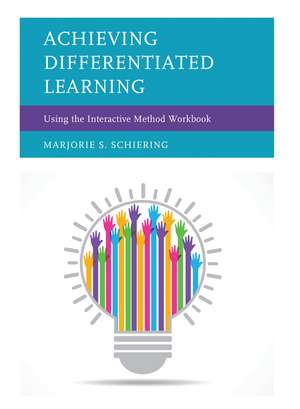
Achieving Differentiated Learning: Using the Interactive Method Workbook
Autor Marjorie S. Schieringen Limba Engleză Paperback – 26 iul 2019
Preț: 220.06 lei
Preț vechi: 292.64 lei
-25%
Puncte Express: 330
Carte tipărită la comandă
Livrare economică 23 noiembrie-07 decembrie
Livrare prin curier în România Termenul estimat este afișat lângă disponibilitate.
Transport gratuit de la 400.00 lei Plată online sau ramburs, în funcție de opțiunile comenzii.
Retur gratuit în 14 zile Comandă securizată și suport în română.
Specificații
ISBN-13: 9781475831740
ISBN-10: 1475831749
Pagini: 120
Ilustrații: 3 BW Illustrations, 74 BW Photos, 4 Tables
Dimensiuni: 212 x 276 x 10 mm
Greutate: 0.3 kg
Editura: Bloomsbury Publishing
Colecția Rowman & Littlefield
Locul publicării:New York, United States
ISBN-10: 1475831749
Pagini: 120
Ilustrații: 3 BW Illustrations, 74 BW Photos, 4 Tables
Dimensiuni: 212 x 276 x 10 mm
Greutate: 0.3 kg
Editura: Bloomsbury Publishing
Colecția Rowman & Littlefield
Locul publicării:New York, United States
Cuprins
Prelude
Foreword
Preface
Acknowledgments
Introduction
Part One: Explaining the interactive method (IM) regarding thinking skills, memory, and classroom implementation
Chapter One: Explaining The Interactive Method (IM): Experience-based Teaching and Learning
Chapter Two: Reciprocal Thinking, Cognitive Collective and Memories The Teaching of Thinking
Chapter Three: Addressing "Different Ways" through Assignments, Requirements, and Purposes
Part two: different learners = different ways: the "how to" of the "IM"
Chapter Four: Six Specific Types of Differention: Explanation and Example
Chapter Five: Different Ways with 25- Examples
Chapter Six: Different Ways with 28-Examples
Chapter Seven: Different Ways with 13- Examples, Including Technology
Chapter Eight: Activity-based Learning Centers/ABLC: 6-Tri-fold Boards
Chapter Nine: Graphic Organizers/Text Structures and Four Interactive Instructional Resources: Directions and Application
Part three: personal commentaries on special needs and different abilities + author's closing thoughts
Chapter Ten: Personal Perspectives Regarding Parenting and/or Teaching Different Abilities and Special Needs Students
Perspectives on a Learner's Dyslexia: Patricia Eckardt
From the Heart: Having Different Abilities Children: Their Dad's Narrative:
Timothy Ryley
Teaching Special Education Technology: Clare King
Chapter Eleven: author's closing thoughts
References
About the author
Foreword
Preface
Acknowledgments
Introduction
Part One: Explaining the interactive method (IM) regarding thinking skills, memory, and classroom implementation
Chapter One: Explaining The Interactive Method (IM): Experience-based Teaching and Learning
Chapter Two: Reciprocal Thinking, Cognitive Collective and Memories The Teaching of Thinking
Chapter Three: Addressing "Different Ways" through Assignments, Requirements, and Purposes
Part two: different learners = different ways: the "how to" of the "IM"
Chapter Four: Six Specific Types of Differention: Explanation and Example
Chapter Five: Different Ways with 25- Examples
Chapter Six: Different Ways with 28-Examples
Chapter Seven: Different Ways with 13- Examples, Including Technology
Chapter Eight: Activity-based Learning Centers/ABLC: 6-Tri-fold Boards
Chapter Nine: Graphic Organizers/Text Structures and Four Interactive Instructional Resources: Directions and Application
Part three: personal commentaries on special needs and different abilities + author's closing thoughts
Chapter Ten: Personal Perspectives Regarding Parenting and/or Teaching Different Abilities and Special Needs Students
Perspectives on a Learner's Dyslexia: Patricia Eckardt
From the Heart: Having Different Abilities Children: Their Dad's Narrative:
Timothy Ryley
Teaching Special Education Technology: Clare King
Chapter Eleven: author's closing thoughts
References
About the author
Recenzii
This activity-based workbook is an asset to everyone that reads it, as it states, "We are all teachers of something." It is invaluable, in that it includes activities that can be used in multiple ways, whether that is to interactively teach, learn, or provide general information. Readers of this work will benefit, as they observe how students can be engaged in activity-based learning, and come to be aware of what thinking skills apply to each activity. Also, at the end of the workbook, there are personal stories from former special needs students, teachers or their parents. Most important about this writing is that of celebrating student differences. If one life lesson can be taken from this book, it is to realize that we are all enough, just as we are, and that we are capable of anything to which we set our minds. Teaching those ideas are two of the strengths of this book on differentiation of instruction.
This workbook is an excellent resource for seasoned teachers as well as new educators! This is because of the "interactive" society we experience today. In recent years it seems the increase in students with special needs and different abilities has all concerned persons looking for ways to differentiate their instruction to reach learners. This workbook is an asset, due to the multitude of information about individual educational programs and intervention techniques. There are also ways to teach thinking, strategies for using an interactive method, activities provided to support the first two sections information, and then, sharing by teachers and/or parents about their own learning different ways or experiences with a diverse population of learners. This workbook is intuitive and inspiring for educators to assist them in their students reaching their full potential. Overall, this workbook is an invaluable interactive reference guide for educators everywhere!
Marjorie Schiering has written a must-read educational manual/workbook for being a most effective educator. She has provided real world examples and guides for implementation of differentiated instruction. This workbook is an excellent resource! As a professor of graduate students who teach in special education and Ell classes from preschool to high school, I have presented the ideas in this book. As a result, the teachers in my classes have created lessons that use interactive instructional resources for multi-sensory and high levels of student engagement. This book also provides a good deal of information about goal-setting to meet the needs of all students and assist them is developing their thinking skills.
Dr. Schiering has written and compiled a workbook that enhances the curricula, has strategies for teaching thinking interactively, and assist educators in developing and using new activities for teaching all students. This is a hands-on workbook which educators will find invaluable in their daily lessons. The activities can and should be used to teach all children: those with special needs, and different abilities through use of different ways.
This workbook demonstrates how and why alternative thinking is necessary when experiencing different abilities of students. It viably addresses a wide variety of circumstances encountered in teaching students with different abilities. It reminds us of how traditional methodologies often times do not apply in special needs situations. Subsequently, applying differentiated instruction to meet the multi-variate needs of students must be explored until one is found. That is the essence of this author's messages for teaching thinking and addressing students' aptitudes.
As both an educator and parent of special needs children, I am well aware of how the world of special education can seem overwhelming. Achieving Differentiated Learning: Using the Interactive Method Workbook and its companion book Special Needs, Different Abilities: The Interactive method for Teaching and Learning, are vital tools for both educators and parents at all levels. They provide practical researched information, as well as that of veteran teachers. There are time-tested strategies and useful anecdotes to help teachers and parents navigate the often-confounding waters of special education, as well as different abilities students. For teachers, these offer first-rate techniques for making their classrooms most inclusive and welcoming for students of varied abilities. For parents, the anecdotes validate the struggles they go through to do what is best for their children and leaves them with this reminder: You are not alone. Truly, these books are an invaluable addition to any teacher or parent's library.
This workbook is an excellent resource for seasoned teachers as well as new educators! This is because of the "interactive" society we experience today. In recent years it seems the increase in students with special needs and different abilities has all concerned persons looking for ways to differentiate their instruction to reach learners. This workbook is an asset, due to the multitude of information about individual educational programs and intervention techniques. There are also ways to teach thinking, strategies for using an interactive method, activities provided to support the first two sections information, and then, sharing by teachers and/or parents about their own learning different ways or experiences with a diverse population of learners. This workbook is intuitive and inspiring for educators to assist them in their students reaching their full potential. Overall, this workbook is an invaluable interactive reference guide for educators everywhere!
Marjorie Schiering has written a must-read educational manual/workbook for being a most effective educator. She has provided real world examples and guides for implementation of differentiated instruction. This workbook is an excellent resource! As a professor of graduate students who teach in special education and Ell classes from preschool to high school, I have presented the ideas in this book. As a result, the teachers in my classes have created lessons that use interactive instructional resources for multi-sensory and high levels of student engagement. This book also provides a good deal of information about goal-setting to meet the needs of all students and assist them is developing their thinking skills.
Dr. Schiering has written and compiled a workbook that enhances the curricula, has strategies for teaching thinking interactively, and assist educators in developing and using new activities for teaching all students. This is a hands-on workbook which educators will find invaluable in their daily lessons. The activities can and should be used to teach all children: those with special needs, and different abilities through use of different ways.
This workbook demonstrates how and why alternative thinking is necessary when experiencing different abilities of students. It viably addresses a wide variety of circumstances encountered in teaching students with different abilities. It reminds us of how traditional methodologies often times do not apply in special needs situations. Subsequently, applying differentiated instruction to meet the multi-variate needs of students must be explored until one is found. That is the essence of this author's messages for teaching thinking and addressing students' aptitudes.
As both an educator and parent of special needs children, I am well aware of how the world of special education can seem overwhelming. Achieving Differentiated Learning: Using the Interactive Method Workbook and its companion book Special Needs, Different Abilities: The Interactive method for Teaching and Learning, are vital tools for both educators and parents at all levels. They provide practical researched information, as well as that of veteran teachers. There are time-tested strategies and useful anecdotes to help teachers and parents navigate the often-confounding waters of special education, as well as different abilities students. For teachers, these offer first-rate techniques for making their classrooms most inclusive and welcoming for students of varied abilities. For parents, the anecdotes validate the struggles they go through to do what is best for their children and leaves them with this reminder: You are not alone. Truly, these books are an invaluable addition to any teacher or parent's library.