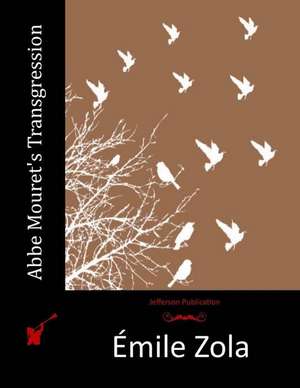
ABBE Mouret's Transgression
Autor Emile Zolaen Limba Engleză Paperback
Preț: 54.78 lei
Puncte Express: 82
Carte disponibilă
Livrare economică 11-25 noiembrie
Livrare prin curier în România Termenul estimat este afișat lângă disponibilitate.
Transport gratuit de la 400.00 lei Plată online sau ramburs, în funcție de opțiunile comenzii.
Retur gratuit în 14 zile Comandă securizată și suport în română.
Specificații
ISBN-13: 9781515062806
ISBN-10: 1515062805
Pagini: 112
Dimensiuni: 216 x 279 x 6 mm
Greutate: 0.28 kg
Editura: CREATESPACE
ISBN-10: 1515062805
Pagini: 112
Dimensiuni: 216 x 279 x 6 mm
Greutate: 0.28 kg
Editura: CREATESPACE
Textul de pe ultima copertă
The church at Les Artaud stood on a hillock above the isolated village, looking out onto desolate landscape all around. It was to this harsh and near pagan place that the Abbe Serge Mouret had come as parish priest, hoping to realize his craving for solitude and his dream of an existence of Godlike purity. Then, one day, with his uncle Doctor Pascal, he goes to visit 'the Philosopher' at Paradou where they chance to meet the sixteen-year-old Albine. Later, when the Abbe falls ill, it is to Paradou that he is brought to recover. Unwittingly, in the enchanted garden, he falls to the temptation of Albine. But when at last he awakens from his dream-like state, he is horrified, and is left to confront his transgression. In this story, the ninth novel in the Rougon-Macquart series, Zola provides a damning indictment of the celibacy of the priesthood, and takes up the issue of the law of Nature versus the law of the Church. One of Zola's best works, it contains some of his most lyrical writing, in particular in the fine descriptions of the garden.
Notă biografică
Émile Édouard Charles Antoine Zola (1840 - 1902) was a French novelist, playwright, journalist, the best-known practitioner of the literary school of naturalism and an important contributor to the development of theatrical naturalism. He was a major figure in the political liberalization of France and in the exoneration of the falsely accused and convicted army officer Alfred Dreyfus, which is encapsulated in the renowned newspaper headline J'accuse. Zola was nominated for the first and second Nobel Prize in Literature in 1901 and 1902.