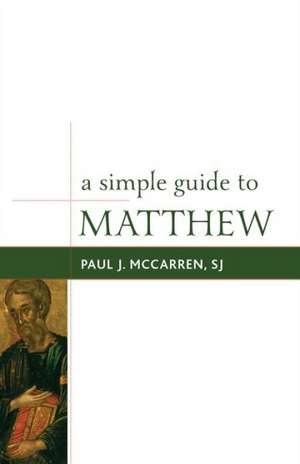
A Simple Guide to Matthew: Simple Guides to the Gospels
Autor Paul J. McCarren, SJen Limba Engleză Paperback – 21 noi 2012
The books in the Simple Guides to the Gospels series are available individually or together as a complete set.
Preț: 177.18 lei
Preț vechi: 237.66 lei
-25%
Puncte Express: 266
Carte tipărită la comandă
Livrare economică 23 noiembrie-07 decembrie
Livrare prin curier în România Termenul estimat este afișat lângă disponibilitate.
Transport gratuit de la 400.00 lei Plată online sau ramburs, în funcție de opțiunile comenzii.
Retur gratuit în 14 zile Comandă securizată și suport în română.
Specificații
ISBN-13: 9781442218888
ISBN-10: 1442218886
Pagini: 163
Dimensiuni: 136 x 214 x 14 mm
Greutate: 0.24 kg
Editura: Bloomsbury Publishing
Colecția Rowman & Littlefield
Seria Simple Guides to the Gospels
Locul publicării:New York, United States
ISBN-10: 1442218886
Pagini: 163
Dimensiuni: 136 x 214 x 14 mm
Greutate: 0.24 kg
Editura: Bloomsbury Publishing
Colecția Rowman & Littlefield
Seria Simple Guides to the Gospels
Locul publicării:New York, United States
Cuprins
Introduction
Who Needs a Simple Guide to Matthew's Gospel?
A Simple Message
Some Big Questions Answered by Matthew's Gospel
Acknowledgments
The Gospel According to Matthew
Chapter 1 - The Ancestry and Birth of Jesus
1:1-7 - Jesus' ancestors
1:8:25 - Jesus is born
Chapter 2 - Jesus' Infancy
2:1-12 - Visitors from the east
2:13-23 - Jesus' family flees; Herod tyrannizes; the family returns
Chapter 3 - Baptism
3:1-12 - John preaches Baptism
3:13-17 - Jesus accepts Baptism
Chapter 4 - Turning to the Father
4:1-11 - Jesus turns to the Father
4:12-25 - Jesus teaches others to turn to the Father-i.e., to repent
Chapter 5 - Jesus Teaches on the Mountain
5:1-12 - Reasons to rejoice
5:13-20 - Rejoicing should be expressed and taught
5:21-26 - How to rejoice in the Covenant
5:27-37 - Keeping promises; taking oaths
5:38-48 - Loving
Chapter 6 - On the Mountain, Jesus Continues to Teach about the Covenant
6:1-8 - What's the right relationship with God?
6:9-15 - How to pray
6:16-24 - More advice on keeping a right relationship with God
6:25-34 - Anxiety about our relationship with God
Chapter 7 - On the Mountain, Jesus Continues to Teach about the Covenant
7:1-12 - Our relationships with others
7:13-23 - Accepting the Covenant means acting on it
7:24-29 - Jesus concludes his teaching on the mountain
Chapter 8 - Jesus is Sought as a Healer
8:1-4 - A healing as Jesus descends from the mountain
8:5-13 - Reaching Capernaum, Jesus is again asked for a healing
8:14-23 - Healing should lead to trust-but does it?
8:24-34 - No trust on a boat trip; no trust in Gentile territory
Chapter 9 - What Is Healing; Why Do We Need It?
9:1-8 - Healing the human spirit
9:9-17 - Who follows Jesus?
9:18-26 - Two more healings
9:27-38 - Faith expresses itself in cries for help and healing
Chapter 10 - The Mission of a Disciple of Jesus
10:1-4 - Jesus commissions twelve disciples
10:5-15 - Instructions for the disciples
10:16-23 - How should disciples deal with opposition?
10:24-31 - Giving witness in the face of opposition
10:32-42 - Choose to trust-as Jesus does
Chapter 11 - Jesus Again Teaches Repentance
11:1-11 - Praise for John the Baptist's call to wait and watch
11:11-19 - Waiting and watching is over; turn to the Good News now
11:20-30 - How to receive the Good News now
Chapter 12 - Despite More Healing, Jesus Meets More Resistance
12:1-14 - What's sin - What's service?
12:15-29 - God's work is healing
12:30-37 - Accepting and rejecting God's Spirit
12:38-50 - The signs of believing are repentance and reconciliation
Chapter 13 - Back in Capernaum, Jesus Keeps Talking about Accepting God's Word
13:1-15 - A parable about a richly rewarding idea
13:16-30 - Jesus explains one parable and tells another
13:31-43 - Jesus teaches the Kingdom will come-slowly, but surely
13:44-58 - Jesus advises choosing the Kingdom NOW
Chapter 14 - After a Flashback, Matthew Describes More Traveling and Powerful Work
14:1-21 - An example of lack of faith; Jesus' belief
14:22-36 - Do people trust in God's power?
Chapter 15 - How Do We See Our Needs - How Does God See Our Needs?
15:1-9 - Do you need to see yourself as righteous?
15:10-20 - Evil comes from the heart
15:21-28 - Faith comes from needing it
15:29-39 - Back home, Jesus heads up the mountain again, and teaches
Chapter 16 - Rejecting and Accepting Jesus' Message
16:1-12 - No one seems to understand Jesus' message of repentance
16:13-20 - A glimmer of accepting Jesus' message
16:21-28 - Jesus' message of repentance seems bleak
Chapter 17 - Lessons in Trusting
17:1-13 - Divine glory doesn't look like human glory
17:14-27 - Divine power, unlike human power, isn't pushy
Chapter 18 - Divine Power is Seen in Humility, Patience, and Forgiveness
18:1-9 - What it means to be lowly and weak
18:10-20 - Patience and forgiveness are divine work
18:21-35 - We are called to share the divine work of forgiveness
Chapter 19 - On the Way to Jerusalem: Meeting Challenges, and Teaching
19:1-12 - More challenges
19:13-30 - Jesus reviews his basic teaching
Chapter 20 - Reviewing Lessons about the Kingdom, Suffering, Greatness, and Healing
20:1-16 - What's the Kingdom like?
20:17-34 - Suffering, serving, and healing
Chapter 21 - First Days in Jerusalem
21:1-17 - Acclaim; indignation
21:18-32 - Jesus teaches again about faith and repentance
21:33-46 - Jesus teaches about judgment
Chapter 22 - In Jerusalem, Jesus Continues Proclaiming Good News
22:1-14 - Good News for those who seek the Kingdom
22:15-22 - Jesus turns a trap into a lesson
22:23-33 - Another trap; another lesson
22:34-46 - One more confrontation; two more lessons
Chapter 23 - The Price of Lessons Not Learned
23:1-12 - Jesus warns against bad example
23:13-22 - A lament about bad teaching
23:23-39 - The lament continues
Chapter 24 - Learning More about Repentance
24:1-14 - Repentance takes a lifetime
24:15-28 - Repentance and faithfulness will be necessary right to the end
24:29-35 - The teachings of Jesus, the Son of Man, will prove true
24:36-51 - So, wait for Jesus' teaching to prove true
Chapter 25 - Repentance-i.e., Accepting the Covenant-Will Transform You
25:1-13 - Do you take the Covenant seriously?
25:14-30 - Is the Covenant a good deal?
25:31-46 - The Covenant affects all you do
Chapter 26 - Passover, and the Rejection of Jesus
26:1-16 - Examples of accepting and rejecting the Good News
26:17-30 - Jesus celebrates Passover with his disciples
26:31-46 - Jesus feels abandoned by all but his Father
26:47-56 - Jesus is arrested; the disciples flee
26:57-68 - Jesus is rejected by Jerusalem's officials
26:69-75 - Peter rejects Jesus, then repents
Chapter 27 - Accomplishing Jesus' Death
27:1-10 - Judas regrets his choice
27:11-26 - Another pretense at justice
27:27-44 - The official sentence is carried out
27:45-56 - Jesus dies
27:57-66 - Jesus is buried
Chapter 28 - Jesus is Raised from the Dead; He Sends His Disciples to Proclaim the Good News
28:1-10 - Risen from the dead
28:11-20 - Doubts about the Good News
Index
Who Needs a Simple Guide to Matthew's Gospel?
A Simple Message
Some Big Questions Answered by Matthew's Gospel
Acknowledgments
The Gospel According to Matthew
Chapter 1 - The Ancestry and Birth of Jesus
1:1-7 - Jesus' ancestors
1:8:25 - Jesus is born
Chapter 2 - Jesus' Infancy
2:1-12 - Visitors from the east
2:13-23 - Jesus' family flees; Herod tyrannizes; the family returns
Chapter 3 - Baptism
3:1-12 - John preaches Baptism
3:13-17 - Jesus accepts Baptism
Chapter 4 - Turning to the Father
4:1-11 - Jesus turns to the Father
4:12-25 - Jesus teaches others to turn to the Father-i.e., to repent
Chapter 5 - Jesus Teaches on the Mountain
5:1-12 - Reasons to rejoice
5:13-20 - Rejoicing should be expressed and taught
5:21-26 - How to rejoice in the Covenant
5:27-37 - Keeping promises; taking oaths
5:38-48 - Loving
Chapter 6 - On the Mountain, Jesus Continues to Teach about the Covenant
6:1-8 - What's the right relationship with God?
6:9-15 - How to pray
6:16-24 - More advice on keeping a right relationship with God
6:25-34 - Anxiety about our relationship with God
Chapter 7 - On the Mountain, Jesus Continues to Teach about the Covenant
7:1-12 - Our relationships with others
7:13-23 - Accepting the Covenant means acting on it
7:24-29 - Jesus concludes his teaching on the mountain
Chapter 8 - Jesus is Sought as a Healer
8:1-4 - A healing as Jesus descends from the mountain
8:5-13 - Reaching Capernaum, Jesus is again asked for a healing
8:14-23 - Healing should lead to trust-but does it?
8:24-34 - No trust on a boat trip; no trust in Gentile territory
Chapter 9 - What Is Healing; Why Do We Need It?
9:1-8 - Healing the human spirit
9:9-17 - Who follows Jesus?
9:18-26 - Two more healings
9:27-38 - Faith expresses itself in cries for help and healing
Chapter 10 - The Mission of a Disciple of Jesus
10:1-4 - Jesus commissions twelve disciples
10:5-15 - Instructions for the disciples
10:16-23 - How should disciples deal with opposition?
10:24-31 - Giving witness in the face of opposition
10:32-42 - Choose to trust-as Jesus does
Chapter 11 - Jesus Again Teaches Repentance
11:1-11 - Praise for John the Baptist's call to wait and watch
11:11-19 - Waiting and watching is over; turn to the Good News now
11:20-30 - How to receive the Good News now
Chapter 12 - Despite More Healing, Jesus Meets More Resistance
12:1-14 - What's sin - What's service?
12:15-29 - God's work is healing
12:30-37 - Accepting and rejecting God's Spirit
12:38-50 - The signs of believing are repentance and reconciliation
Chapter 13 - Back in Capernaum, Jesus Keeps Talking about Accepting God's Word
13:1-15 - A parable about a richly rewarding idea
13:16-30 - Jesus explains one parable and tells another
13:31-43 - Jesus teaches the Kingdom will come-slowly, but surely
13:44-58 - Jesus advises choosing the Kingdom NOW
Chapter 14 - After a Flashback, Matthew Describes More Traveling and Powerful Work
14:1-21 - An example of lack of faith; Jesus' belief
14:22-36 - Do people trust in God's power?
Chapter 15 - How Do We See Our Needs - How Does God See Our Needs?
15:1-9 - Do you need to see yourself as righteous?
15:10-20 - Evil comes from the heart
15:21-28 - Faith comes from needing it
15:29-39 - Back home, Jesus heads up the mountain again, and teaches
Chapter 16 - Rejecting and Accepting Jesus' Message
16:1-12 - No one seems to understand Jesus' message of repentance
16:13-20 - A glimmer of accepting Jesus' message
16:21-28 - Jesus' message of repentance seems bleak
Chapter 17 - Lessons in Trusting
17:1-13 - Divine glory doesn't look like human glory
17:14-27 - Divine power, unlike human power, isn't pushy
Chapter 18 - Divine Power is Seen in Humility, Patience, and Forgiveness
18:1-9 - What it means to be lowly and weak
18:10-20 - Patience and forgiveness are divine work
18:21-35 - We are called to share the divine work of forgiveness
Chapter 19 - On the Way to Jerusalem: Meeting Challenges, and Teaching
19:1-12 - More challenges
19:13-30 - Jesus reviews his basic teaching
Chapter 20 - Reviewing Lessons about the Kingdom, Suffering, Greatness, and Healing
20:1-16 - What's the Kingdom like?
20:17-34 - Suffering, serving, and healing
Chapter 21 - First Days in Jerusalem
21:1-17 - Acclaim; indignation
21:18-32 - Jesus teaches again about faith and repentance
21:33-46 - Jesus teaches about judgment
Chapter 22 - In Jerusalem, Jesus Continues Proclaiming Good News
22:1-14 - Good News for those who seek the Kingdom
22:15-22 - Jesus turns a trap into a lesson
22:23-33 - Another trap; another lesson
22:34-46 - One more confrontation; two more lessons
Chapter 23 - The Price of Lessons Not Learned
23:1-12 - Jesus warns against bad example
23:13-22 - A lament about bad teaching
23:23-39 - The lament continues
Chapter 24 - Learning More about Repentance
24:1-14 - Repentance takes a lifetime
24:15-28 - Repentance and faithfulness will be necessary right to the end
24:29-35 - The teachings of Jesus, the Son of Man, will prove true
24:36-51 - So, wait for Jesus' teaching to prove true
Chapter 25 - Repentance-i.e., Accepting the Covenant-Will Transform You
25:1-13 - Do you take the Covenant seriously?
25:14-30 - Is the Covenant a good deal?
25:31-46 - The Covenant affects all you do
Chapter 26 - Passover, and the Rejection of Jesus
26:1-16 - Examples of accepting and rejecting the Good News
26:17-30 - Jesus celebrates Passover with his disciples
26:31-46 - Jesus feels abandoned by all but his Father
26:47-56 - Jesus is arrested; the disciples flee
26:57-68 - Jesus is rejected by Jerusalem's officials
26:69-75 - Peter rejects Jesus, then repents
Chapter 27 - Accomplishing Jesus' Death
27:1-10 - Judas regrets his choice
27:11-26 - Another pretense at justice
27:27-44 - The official sentence is carried out
27:45-56 - Jesus dies
27:57-66 - Jesus is buried
Chapter 28 - Jesus is Raised from the Dead; He Sends His Disciples to Proclaim the Good News
28:1-10 - Risen from the dead
28:11-20 - Doubts about the Good News
Index
Recenzii
McCarren, a Jesuit priest, attempts to make the gospels more accessible. Here he looks at the Gospel of Matthew, the first in the New Testament (though not the first to be written; that would be Mark). In his introduction , McCarren explains why a simple guide might be helpful, recalling his own frustrations making his way through some of the more confusing aspects of the writing. In the body of the work, readers will immediately note a friendlier translation; the writing may not soar, but it does give a clearer idea of what's going on. This is extended by the commentary after each section. Sometimes the commentary just reiterates what's in the text, but often McCarren goes beyond. For instance, in the parable about the workers in the vineyard who are quarrelsome over their pay, the commentary makes the point that it's easy to understand "the aggrieved response of the all day workers," but then explains the story's broader context. A basic guide, especially for beginners; volumes on Mark, Luke, and John are also available in the Simple Guides series.
Written in a lively style with fresh translations and original insights, this guide should appeal to a wide spectrum of contemporary readers and especially to those teaching the Gospels. Readers will be stimulated to think creatively about familiar texts.
Rather than follow the standard form of Bible commentaries, which often don't reproduce the passages under consideration, Father McCarren presents each of the four Gospels piece by piece, accompanied by his helpful explanations to the texts. With a Simple Guide to the Gospels, readers will be able to make their way through Matthew, Mark, Luke, and John in order, along with the author's insights on every page. Reading these books is like studying the Gospels with a learned, literate, and lively guide who will help you better understand the most important books ever written.
Father Paul McCarren's simple guides to the Gospels of Matthew, Mark, John, and Luke are exactly what their titles claims they are, clearly written guides to the four canonical Gospels that makes them accessible to the everyday reader. Drawing on the best critical resources of New Testament scholarship, McCarren introduces the Gospels without encumbering the reader with an excess of technical exegetical details. These valuable guides may be profitably used for ones' s own spiritual growth and prayer life, or in group study of the Gospels at the parish or catechetical level. They may also serve as a preparation for further exploration of the Gospels.
With many years of background in ministry, Jesuit author Paul McCarren has simplified each gospel for readers to understand the important messages that often go unnoticed. . . . McCarren provides commentary to each gospel writer's style, how each is engaged in the reader's life today, and how the sections in each gospel relate to each other.
This four-volume set is intended to serve a general audience interested in reflecting on the meaning of the gospels for everyday Christian life.
McCarren's reflections are a weave of exegesis of the biblical text and considerations of its meaning for Christian life. This is a form of lectio divina that lay readers will find attractive and nourishing.
Written in a lively style with fresh translations and original insights, this guide should appeal to a wide spectrum of contemporary readers and especially to those teaching the Gospels. Readers will be stimulated to think creatively about familiar texts.
Rather than follow the standard form of Bible commentaries, which often don't reproduce the passages under consideration, Father McCarren presents each of the four Gospels piece by piece, accompanied by his helpful explanations to the texts. With a Simple Guide to the Gospels, readers will be able to make their way through Matthew, Mark, Luke, and John in order, along with the author's insights on every page. Reading these books is like studying the Gospels with a learned, literate, and lively guide who will help you better understand the most important books ever written.
Father Paul McCarren's simple guides to the Gospels of Matthew, Mark, John, and Luke are exactly what their titles claims they are, clearly written guides to the four canonical Gospels that makes them accessible to the everyday reader. Drawing on the best critical resources of New Testament scholarship, McCarren introduces the Gospels without encumbering the reader with an excess of technical exegetical details. These valuable guides may be profitably used for ones' s own spiritual growth and prayer life, or in group study of the Gospels at the parish or catechetical level. They may also serve as a preparation for further exploration of the Gospels.
With many years of background in ministry, Jesuit author Paul McCarren has simplified each gospel for readers to understand the important messages that often go unnoticed. . . . McCarren provides commentary to each gospel writer's style, how each is engaged in the reader's life today, and how the sections in each gospel relate to each other.
This four-volume set is intended to serve a general audience interested in reflecting on the meaning of the gospels for everyday Christian life.
McCarren's reflections are a weave of exegesis of the biblical text and considerations of its meaning for Christian life. This is a form of lectio divina that lay readers will find attractive and nourishing.