
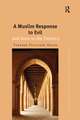
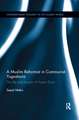
A Muslim Response to Evil: Said Nursi on the Theodicy: Contemporary Thought in the Islamic World
Autor Tubanur Yesilhark Ozkanen Limba Engleză Hardback – 28 noi 2015


Preț: 1068.19 lei
Preț vechi: 1302.66 lei
-18%
Puncte Express: 1602
Carte tipărită la comandă
Livrare economică 06-20 iunie
Specificații
ISBN-13: 9781472457752
ISBN-10: 1472457757
Pagini: 224
Dimensiuni: 156 x 234 x 14 mm
Greutate: 0.52 kg
Ediția:Revised
Editura: Taylor & Francis
Colecția Routledge
Seria Contemporary Thought in the Islamic World
Locul publicării:Oxford, United Kingdom
ISBN-10: 1472457757
Pagini: 224
Dimensiuni: 156 x 234 x 14 mm
Greutate: 0.52 kg
Ediția:Revised
Editura: Taylor & Francis
Colecția Routledge
Seria Contemporary Thought in the Islamic World
Locul publicării:Oxford, United Kingdom
V-ar putea interesa
-
 Preț: 366.49 lei
 -
 -15%Preț: 409.65 lei481.94 lei
 -
 -15%Preț: 442.81 lei520.96 lei
 -
 The Islamic WorldAndrew Rippin-15%Preț: 474.55 lei558.29 lei
 -
 -15%Preț: 441.05 lei518.88 lei
 -
 -15%Preț: 399.13 lei469.56 lei
 -
 -5%Preț: 1189.39 lei1251.99 lei
 -
 Islamic State: Rewriting HistoryMichael GriffinPreț: 139.39 lei
 -
 -27%Preț: 86.58 lei117.83 lei
 -
 -18%Preț: 97.21 lei118.31 lei
 -
 Art of CoexistanceDr Salih Yücel-18%Preț: 97.72 lei118.66 lei
 -
 A Fundamental Fear: Eurocentrism and the Emergence of IslamismProfessor S. Sayyid-17%Preț: 118.06 lei142.08 lei
 -
 The Fall of the Turkish ModelCihan TugalPreț: 199.86 lei
 -
 The French IntifadaOBE Andrew HusseyPreț: 89.70 lei
 -
 Horn, Sahel, and RiftStig Jarle Hansen-21%Preț: 199.78 lei251.81 lei
Cuprins
Preface; Introduction. Part I Sharr in The Qur’an and in General Muslim Thought: The perspective of the Qur’ān on Sharr; Mainstream Muslim thought; Avicenna, Averroes and Al-Ghazālī on Sharr; As we approach the topic: oneness (tawhīd), being (wujūd) and non-being (‘adam), life after death. Part II The Nature of Sharr: The nature and definition of Sharr according to the Risale-i Nur; Why God creates Sharr; Human being’s function in regards to Sharr. Part III The Moral Aspect of Sharr: The notion of the divine trust (amānah); Free will (juz’ῑ ikhtiyār) and divine determining (qadar); Existential theodicy in Nursi. Conclusion
Notă biografică
Tubanur Yesilhark Ozkan holds the degree of Doctor of Philosophy from Durham University. She graduated in Islamic Studies and Christian-Muslim Relations (MA) from Hartford Seminary, USA.
Recenzii
’At last a new and distinctive young female Muslim voice has emerged. Tubanur Yesilhark Ozkan has written a bold, fascinating, deep study of Islamic theodicy. She has taken the concept of sharr, combined it with the exegesis of Said Nursi, to produce a distinctive and compelling theodicy. Naturally scholars of Islamic studies will want to have this book on their bookshelves, but it should be read more widely by philosophers and theologians. It is a truly great book.’ Ian Markham, Virginia Theological Seminary, USA ’Evincing an impressive command of the Risale-i Nur, Tubanur Yesilhark Ozkan provides in this book an astute and insightful study of Said Nursi’s theodicy. In ten crisply argued chapters Ozkan explores the Qur’Änic conception of evil before going on to analyse the creative way Nursi addresses the challenge with which evil confronts the believer. This fine study will be an important resource not only for Nursi scholars and students of Islam, but for all thoughtful people struggling with the challenge the problem of evil poses to theism.’ David Law, University of Manchester, UK
Descriere
While Christian approaches to the problem of evil have been much discussed, the issue of theodicy in Islam is relatively neglected. This book discusses possible solutions to theodicy and the problem of evil through the early philosophy and theology of Islam as well as through a semantic analysis of evil in the Qur’Än. Reflecting on Said Nursi’s magnum opus, the Risale-i Nur Collection (Epistles of Light), Yesilhark Ozkan puts Nursi’s theodicy into discourse with so called ’secular’ theodicy or ’anthropodicy’. Her study offers a fascinating new perspective on the problem of evil for scholars of comparative religion, philosophy of religion, and Islamic thought.