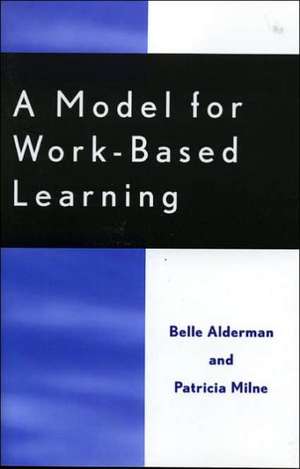
A Model for Work-Based Learning
Autor Belle Alderman, Patricia Milneen Limba Engleză Paperback – 26 sep 2005
Part 1 describes the research base for all aspects of the model and shows how a program based on the theoretical model can be implemented, bringing together facilitated mentoring and theory. Part 2 contains a range of activities that can be used by educators during all aspects of the work experience, from preparing students and mentors through assisting the student's move into the professional workforce. The conclusion explores the crucial success factors of the work-based learning model. This volume is an invaluable guide to educators and mentors in the workplace.
Preț: 405.63 lei
Preț vechi: 596.58 lei
-32%
Puncte Express: 608
Carte tipărită la comandă
Livrare economică 21 noiembrie-05 decembrie
Livrare prin curier în România Termenul estimat este afișat lângă disponibilitate.
Transport gratuit pentru acest produs Plată online sau ramburs, în funcție de opțiunile comenzii.
Retur gratuit în 14 zile Comandă securizată și suport în română.
Specificații
ISBN-13: 9780810850200
ISBN-10: 0810850206
Pagini: 210
Dimensiuni: 136 x 214 x 12 mm
Greutate: 0.28 kg
Ediția:New.
Editura: Bloomsbury Publishing
Colecția Scarecrow Press
Locul publicării:New York, United States
ISBN-10: 0810850206
Pagini: 210
Dimensiuni: 136 x 214 x 12 mm
Greutate: 0.28 kg
Ediția:New.
Editura: Bloomsbury Publishing
Colecția Scarecrow Press
Locul publicării:New York, United States
V-ar putea interesa
-
 -22%Preț: 269.21 lei343.36 lei
 -
 Volunteer Engagement 2.0Robert J RosenthalPreț: 256.87 lei
 -
 Human Resources Management in the Hospitality IndustryDavid K Hayes-18%Preț: 866.13 lei1056.26 lei
 -
 Workplace Wellness That WorksLaura PutnamPreț: 217.98 lei
 -
 HR in the BoardroomW. WrightPreț: 401.24 lei
 -
 People DataTine HuusPreț: 202.76 lei
 -
 The Little Book of Big Coaching ModelsBob BatesPreț: 93.97 lei
 -
 Preț: 123.86 lei
 -
 Standout 2.0Marcus BuckinghamPreț: 153.99 lei
 -
 -20%Preț: 61.07 lei76.77 lei
Cuprins
Part 1 List of Tables and Figures
Part 2 Preface
Part 3 Part I
Chapter 4 1. Introduction: Linking Worlds of Learning for Enhanced Learning Outcomes
Chapter 5 2. Experiential Learning: Theory and Practice
Chapter 6 3. Strategies for Enhancing Student Learning
Chapter 7 4. Facilitated Mentoring: Enhancing Student-Centered Learning
Chapter 8 5. Monitoring Levels of Learners' Achievement and Evaluating the Model
Chapter 9 6. Practical Application of the Model
Chapter 10 7. Conclusion
Part 11 Part II
Chapter 12 8. Supplementary Material
Chapter 13 9. Overview of Student Modules
Chapter 14 10. Creating Resumes
Chapter 15 11. Example of a Plan of Learning
Chapter 16 12. Handbook
Chapter 17 13. Charting Student Progress
Chapter 18 14. Journal
Part 19 References
Part 20 Index
Part 21 About the Author
Part 2 Preface
Part 3 Part I
Chapter 4 1. Introduction: Linking Worlds of Learning for Enhanced Learning Outcomes
Chapter 5 2. Experiential Learning: Theory and Practice
Chapter 6 3. Strategies for Enhancing Student Learning
Chapter 7 4. Facilitated Mentoring: Enhancing Student-Centered Learning
Chapter 8 5. Monitoring Levels of Learners' Achievement and Evaluating the Model
Chapter 9 6. Practical Application of the Model
Chapter 10 7. Conclusion
Part 11 Part II
Chapter 12 8. Supplementary Material
Chapter 13 9. Overview of Student Modules
Chapter 14 10. Creating Resumes
Chapter 15 11. Example of a Plan of Learning
Chapter 16 12. Handbook
Chapter 17 13. Charting Student Progress
Chapter 18 14. Journal
Part 19 References
Part 20 Index
Part 21 About the Author
Recenzii
Overall this is a well written and clearly presented volume that will be particularly useful to anyone involved in developing an internship or similar program, regardless of discipline. Even those with more experience in the area will find this a useful tool for assessing their own programs.
...a useful work...the authors have not only made a good case for formalising the learning aspects, but have produced a handy introduction to how this may be done.
Work-based learning, where professional work experience is closely integrated with professional studies, now forms an important component of many higher education courses, though the design, implementation, and monitoring of such learning is subject to much debate. Alderman and Milne (communication and education, U. of Canberra, Australia) offer educators a work-based learning model designed to enhance the experience through facilitated mentoring and reflective learning, based on a successful internship for an undergraduate course in library and information science used at the U. of Canberra over the past decade. In addition to the detailed discussion of the model and its components, the text features an extensive section of supplementary activities and sample documents, which educators can use during all aspects of the work experience.
...a useful work...the authors have not only made a good case for formalising the learning aspects, but have produced a handy introduction to how this may be done.
Work-based learning, where professional work experience is closely integrated with professional studies, now forms an important component of many higher education courses, though the design, implementation, and monitoring of such learning is subject to much debate. Alderman and Milne (communication and education, U. of Canberra, Australia) offer educators a work-based learning model designed to enhance the experience through facilitated mentoring and reflective learning, based on a successful internship for an undergraduate course in library and information science used at the U. of Canberra over the past decade. In addition to the detailed discussion of the model and its components, the text features an extensive section of supplementary activities and sample documents, which educators can use during all aspects of the work experience.